5 Things You Must Know Before Buying Warrants in Malaysia

WARRANTS are one of the instruments available in the stock market for generating profits.
Besides warrants, there are other instruments such as BONUS ISSUES, DIVIDENDS, RIGHT ISSUES, and many more.
That is why the STOCK MARKET is fantastic for those who have the knowledge, and terrible for those who trade shares by simply following friends or other people's 'buy calls' without proper understanding.
So this time, we will share 5 THINGS YOU MUST KNOW BEFORE BUYING WARRANTS when you are looking to purchase WARRANTS.
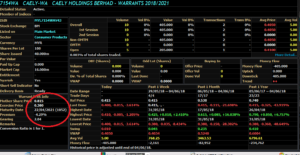
– Exercise price– Conversion ratio– Expiry date– Gearing– Premium
**BONUS**
Techniques for Buying Warrants
- Ensure the Maturity date is more than 6 months or 1 year away.
- Premium should be below 30%.
- Gearing value should be 0, 1, or 2.
- Choose an exercise price that is lower than the mother share price.
Further Reading
In our warrant series, we have produced several other articles to help clarify the confusion many people have regarding calculations or risks involved in buying and selling warrants.
Here are some articles you can read:
Interested in learning more about stock investing on Bursa Malaysia?
An ebook worth RM299, over 100 pages thick, given away absolutely free by Mahersaham!
This ebook is over 100 pages long.
What are you waiting for? Register for a CDS account with Mahersaham and you can join exclusive classes for Mahersaham clients.
FAQ: Frequently Asked Questions About Warrants
What is a warrant in the Malaysian stock market?
A warrant is a derivative instrument listed on Bursa Malaysia that gives the holder the right to buy the underlying (mother) share at a predetermined exercise price before the expiry date. Warrants typically trade at a lower price than the mother share, offering leveraged exposure to the stock's price movement.
What are the 5 key factors to check before buying a warrant?
Before buying any warrant, you must check: (1) Exercise price — the price you pay to convert the warrant into the mother share, (2) Conversion ratio — how many warrants are needed for one share, (3) Expiry date — the deadline before which you must sell or convert, (4) Gearing — a measure of leverage where higher gearing means higher risk, and (5) Premium — indicating how expensive the warrant is relative to the mother share.
What happens if I forget to sell my warrant before expiry?
If you do not sell your warrant before the expiry date, you will be required to convert it into the mother share by paying the exercise price on top of your original purchase cost. If the combined cost is still lower than the current mother share price, you will still make a profit. However, if the mother share price has fallen, you could face a loss.
How do I calculate whether a warrant is worth buying?
To evaluate a warrant, compare the total cost of buying and converting the warrant (warrant price + exercise price) against the current mother share price. If the total conversion cost is significantly lower, the warrant offers good value. Also ensure the premium is below 30%, the gearing is manageable (ideally 0–2), and the maturity date is at least 6 months away.