IPO Prospectus Analysis: Why Company Overview Matters for Investors

This article is a comprehensive guide for retail investors, new investors, and anyone who wants to understand how to properly analyse an IPO prospectus — not just follow market hype.
Investing in IPOs certainly looks attractive. Who does not love seeing a share price rise 30-50% on the first day? Many feel as though they have "struck gold". But the reality on Bursa Malaysia is not as sweet as imagined. Many IPOs also fall after a few weeks of listing because investors entered without doing their research.
In the real world of investing, success is not about who is the luckiest to subscribe to the most IPOs. It depends on who best understands the company they are buying.
And to understand a company, you must know how to read and analyse the IPO Prospectus.
Investing in an Initial Public Offering (IPO) is often considered a "shortcut" to making quick money. On social media, we always hear about shares being "oversubscribed" and prices soaring up to 50% on the first listing day.
But for every big profit story, there are many more tales of investors getting stuck at the peak when share prices plummet not long after.
What distinguishes an IPO that becomes a champion from one that falls short? The answer is actually right in front of you, hidden within the IPO Prospectus.
Many new investors (newbies) subscribe straightaway without conducting basic prospectus research. But seasoned investors know that numbers are only half the story.
The real indicator of long-term success lies in the Company and Business Overview section of the prospectus.
In this guide, we shall dissect how to perform prospectus analysis, why the business model matters for IPO share price performance, and how to spot red flags before you commit your capital.
This lengthy article will take you step by step through:
- What is a prospectus overview
- What is a Company Overview
- What investors should study before buying an IPO
- How to assess risks
- How to determine whether an IPO is worthwhile or not
This is not a hype article.
This is a guide to help you manage risk, avoid falling into promoter traps, and understand businesses in a professional manner.
What Is an IPO Prospectus & Why MUST Investors Read It?
An IPO prospectus is the official document issued by a company before it is listed on Bursa Malaysia. It is not a marketing brochure. It is not an advertisement. It is a legal document that must disclose everything important about the company.
Products, customers, risks, finances, ownership structure, strategy — it is all there.
Why Is Prospectus Information More Important Than Social Media?
Because this is where:
- The company cannot deceive
- All figures must be audited
- All risks must be written and explained
- All strategies must be clarified
Social media tells the "best" story.
The prospectus reveals the "real" story.
A wise investor reads the prospectus before investing.
A careless investor reads the prospectus after suffering losses.
In this article, we shall not elaborate at length about the prospectus. A surface-level explanation will suffice.
This article focuses on the company overview analysis technique, which is among the key components in a company's IPO prospectus.
Company Overview: The Most Important Section in the Prospectus
The Company Overview is the "heart" of the prospectus — where the company tells you:
- Who they are
- What they do
- Who their customers are
- Who their suppliers are
- How their business operates
- What their strategy is
- What their competitive advantages are compared to rivals
If financial reports are like "events that have already occurred", the Company Overview is the "forecast of the company's future".
In investing, the future is more important than the past.
Common Mistakes New Investors Make When Reading a Prospectus
Many retail investors:
- Only look at whether revenue went up or down
- Only look at net profit
- Only know what the company does, but do not understand how it makes money
- Are overly influenced by buzzwords like "AI", "Green Energy", "Smart Tech", "IoT"
Whereas the real questions are:
- How does the company generate revenue?
- Who are their customers?
- What is the biggest risk?
- Is this industry growing or already in "sunset"?
- Is the business easy to replicate or does it have a "moat" (competitive advantage)?
- Only the Company Overview section can answer all of these.
What Should Be Studied in the Company Overview?
This section is the most critical. This is the checklist used by institutional analysts, large funds, and professional investors, as well as retail investors.
Business Model
This is the most important part.
The business model is the "engine" of the company.
Ask these questions:
How does the company make money?
Does revenue come from:
- Product sales?
- Long-term services?
- Maintenance contracts?
- One-off projects?
- Commissions?
Is the revenue "recurring" or "one-off"?
Recurring revenue = more stable
One-off revenue = cannot sustain for long
Is the business scalable or not?
Scalable = can grow without significantly adding costs (capex)
Example of scalable: software
Example of not scalable: manpower-based services
Industry & Market Size
Industry fluctuations determine the company's future.
Important questions:
- Is the industry growing or declining?
- Is the company in the right niche?
- How large is the market?
- Who is the strongest competitor? — We shall focus on this in another article: Peer Review
Example:
The print media industry is experiencing a decline — companies in that industry will follow suit. Examples: Utusan, The Star, Washington Post.
The property industry is in a downturn, many houses remain unsold, thus company revenue is also affected.
Customers & Revenue Sources
This is the section most investors overlook.
If a company has customers:
- Only 1
- Or 70% of revenue comes from just 1 customer
- Or 50% of sales go to just one country
That is a "ticking bomb".
Concentration Risk: If the prospectus shows Customer A contributes 70% of total sales, this is a MAJOR RED FLAG. If Customer A leaves, the company could potentially collapse.
Professional investors have little interest in companies with concentration risk.
Diversification: Ideally, no single customer should hold more than 10-15% of the company's revenue.
Suppliers & Supply Chain
A sole supplier also poses a high risk.
If the supplier is from a politically unstable country (e.g. war, sanctions) — costs will surge — profit margins will certainly drop.
You need to know:
- How many suppliers does the company have
- Which countries are the suppliers from
- What are the critical raw materials
- Supply chain risks
Management Quality
Management determines the future direction of the company.
For a company about to be listed, we are betting on the "jockey", not just the horse.
Ask:
- Track record: Is the founder experienced? Or still a novice?
- Has management failed before?
- Is there a succession plan?
- Are there internal conflicts?
A company with weak management will certainly struggle to progress.
Business Risks
In the prospectus, there is one chapter you must know: Risk Factors.
It may appear boring, but this is the most honest section where the company must inform potential investors.
Other risks:
- Currency risk (companies that pay for imports in USD)
- Operational risk
- Technology risk
- Legal risk
- Labour risk
- Export market risk
- Customer dependency risk
If there are too many major risks — avoid it.
Competitive Advantage (Moat)
A moat is the company's "defensive moat", also known as a competitive advantage.
This is what differentiates an ordinary company from an exceptional one.
Examples of moats:
- Patents
- Exclusive licences
- Proprietary technology
- Government contracts
- Premium brand
- High entry barriers
| Criteria | Positive Sign (Green Flag) | Warning Sign (Red Flag) |
| Revenue Source | Many diverse customers | 1 or 2 customers hold >50% of sales |
| Industry Trend | Industry rising (e.g. Green Energy, Tech) | Saturated or declining industry (e.g. Print Media) |
| Suppliers | Multiple local supplier options | Sole supplier or import-dependent |
| Contracts | Long-term & recurring contracts | One-off projects, short-term orders |
| Competition | Difficult to replicate (Patents/Special Licence) | Easy to replicate (Anyone can do this business) |
If a business is easy to replicate, the profit margin will suffer and deteriorate severely.
How the Company Overview Influences Share Price After IPO
Many ask: "How can reading a company's history tell you whether the share price will go up or not?"
The answer is Institutional Sentiment (Big Funds/Sharks).
Institutional investors (such as EPF, PNB, or Mutual Funds) do not buy shares because of hype; they buy because of strong company fundamentals. Their analysts will thoroughly examine the Company Overview section.
If they like what they see (a moat exists, recurring revenue, a solid business model), they will buy in large quantities. This demand is what stabilises and drives up the share price.
If the company overview early on shows a weak business model, institutions will not touch it. Without institutional support, share prices typically fall after retail investors finish "riding" the hype on the first day.
Example A: A Success Story with a Strong "Moat"
- Business: An engineering company with exclusive patents and a 5-year maintenance contract with the government.
- Analysis: High entry barriers (others cannot replicate) and guaranteed income (contract).
- Performance: Institutions held this share for a long time. The opening price was high and continued to rise steadily for months.
Example B: The "Single Customer" Trap
- Business: A furniture factory exporting 90% of goods to one supermarket brand in the US.
- Analysis: Financials look attractive (in the past). But the overview shows a major risk if the US raises import duties or the supermarket cancels orders.
- Performance: Retail investors bought because "profits look big". A month later, news broke that the US customer reduced orders. The share price plummeted below the IPO price.
Conclusion: Proper analysis allows you to know whether an IPO is a "long-term keeper" or a "do not touch at all" type.
How to Analyse a Prospectus Step by Step
Below are the simplest steps for beginners to conduct a brief analysis of the company and business overview segment:
Tip: All the data and information can be obtained from reading the Prospectus.
Step 1: Download the Prospectus
Obtain the Prospectus Download the full prospectus from the Bursa Malaysia website (under "Listing Circulars" or "Prospectus") or from your investment bank portal (such as M+ Online, CGS, etc.).
Step 2: Find & Focus on These 3 Key Chapters First
- Overview of the Company/Business (Main focus)
- Industry Overview (Independent market research — IMR)
- Risk Factors (For a reality check)
Step 3: Write the Company's Business Model in One Sentence
Example:
"The company makes money by manufacturing automotive components and selling them to car manufacturers through long-term contracts."
If you cannot summarise it as simply as possible — this indicates the company's business is unclear or overly complex.
Let us take the advice from a quote by Warren Buffett, one of the world's most renowned investors:
"Never invest in a business you don't understand."
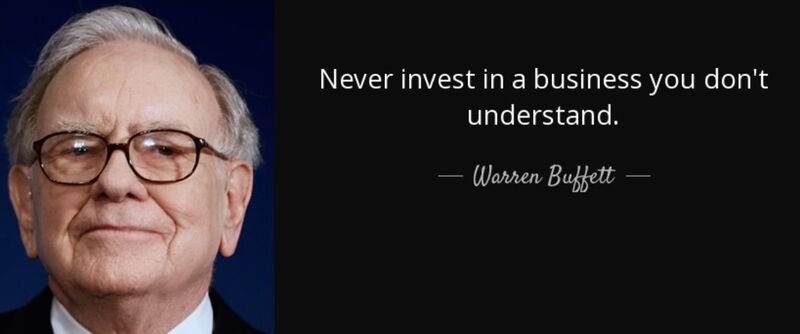
Before investing, ensure you clearly understand how an asset or business generates returns and what risks come along with it. If you do not understand, it is better to avoid it first rather than regret it later.
Read more about Warren Buffett: 7 Warren Buffett Investment Principles That Led Him to Mega Billionaire Status
Step 4: Conduct a Mini SWOT
This Mini SWOT helps us see the big picture of a company — what supports its growth and what could be an obstacle.
Strengths — What are the company's strengths and advantages such as a strong brand, low costs, large market share, solid management
Weaknesses — What are the company's internal weaknesses and shortcomings such as high debt, thin margins, dependence on a single product
Opportunities — What opportunities and room for growth does the company have such as emerging industries, new technologies, markets that are still expansive
Threats — What threats exist to the market for products/services offered by the company such as intense competition, government policy changes, economic downturn
Tip: All the data and information is already available in the prospectus — be diligent enough to read and extract it.
Step 5: Compare with Competitors (Peers)
Look at companies already listed in the same industry.
If competitors:
- Are larger
- Are more stable
- Are cheaper (lower P/E)
It may be better to buy the competitor rather than the new IPO.
The key idea is this: do not evaluate an IPO on a "standalone" basis. See who the closest competitor is that has long been in the same industry.
These companies typically have a clearer track record, years of complete financial reports, and we can differentiate whether the IPO is truly worthwhile or merely being sold at a premium because of hype.
What should be compared?
Company size
If competitors are far larger and more established, this is a sign that the IPO company is still small within the industry ecosystem. Large companies are typically more stable during uncertain economic times, have more customers, easier access to capital, and greater resilience.
Operational stability & profitability
Look at the competitor's track record: have they been consistently profitable? Are margins healthy? Are sales increasing year on year?
New IPOs are typically unproven. If competitors have been profitable for a long time, they may be a safer choice.
Lower valuation (e.g. lower P/E)
If the IPO is being sold at a high valuation, but a more mature competitor is cheaper (e.g. a much lower P/E), you are paying a premium for something that has not been tested. In many situations, it makes more sense to buy a company that has already proven itself and at a more attractive price.
If competitors are larger, more stable, and cheaper — it may be wiser to invest in the competitor first. An IPO is not necessarily bad, but hype can make the price expensive without a strong foundation.
Our task as investors is to choose the most worthwhile opportunity, not the newest one.
Step 6: Then Look at Valuation
After we have clearly understood how the company makes money — who their customers are, what the main product or service is, and what the business risks are — only then do we move to the financial highlights section provided.
Many people jump straight to financial ratios without understanding the business model at all — figures carry no meaning without the story behind them.
What should be examined after understanding the company's story:
- P/E (Price to Earnings)
Measures whether a share is expensive or cheap relative to the profits generated. A high P/E is not necessarily bad — the business might be growing rapidly. But if you do not know why it is high, you are merely guessing. - Margin (Profit Margin)
Margins show the company's efficiency. A high margin means the company can retain more profit for every ringgit of sales. If margins are low or declining each year, costs may be rising or competition intensifying. - Revenue Growth
Check whether sales are increasing consistently. A healthy business typically grows rather than remaining static or declining. But growth must also be realistic, not temporary or dependent on a one-off contract. - Gearing (Company Debt)
High debt means higher risk, especially when interest rates rise or the economy slows. Companies with low gearing are more flexible and less exposed to financial pressure.
The bottom line is, understand the business first. Only then can the numbers tell the correct story. Without the story, numbers are merely numbers — and that is what often causes investors to misstep.
Tip: There are many more ratios to consider, but elaborating on them in this article would make it far too lengthy. You can read our article: Fundamental Analysis in Shares
What Can Beginners Learn from This?
Studying an IPO Prospectus is not merely about reading and analysing a thick document.
It is the art of understanding the business, risks, and future of a company.
A wise investor does not look for cheap IPOs.
A wise investor looks for quality companies.
The Company Overview is the compass to the company's future.
If you truly understand this section, you will know:
- Whether the company is robust or fragile
- Whether the business is scalable or not
- Whether the risk is large or small
- Whether the IPO is an opportunity or a trap
A wise investor gets to know the business first.
A losing investor chases hype.
Interested in Learning More About Share Investing on Bursa Malaysia?
Download our free ebook packed with share investment knowledge. Help transform yourself from zero to hero in understanding the fundamentals of Malaysian and global share investing.
Want to Buy and Sell Shares but Do Not Have a CDS Account Yet?
What are you waiting for? Register for a CDS account with Mahersaham and you can join a special class for Mahersaham clients.

Ready for the Next IPO?
The IPO market always attracts investors. Make sure you are prepared with the right knowledge and account.
Investment Fundamentals:
Master the fundamentals before applying for an IPO. Download our free ebook for a complete guide.
Open a CDS Account:
Do not have an account yet? Open a CDS account now to start applying for IPOs.
Also Read:
Learn about IPO trading strategies to generate profits.