IPO Prospectus for Beginners: What New Malaysian Investors Must Know

What is an IPO Prospectus?: Investing in an Initial Public Offering (IPO) is often a hot topic amongst retail investors on Bursa Malaysia.
When a company announces its listing, there is often a phenomenon where investors scramble to apply for the shares, hoping the price will surge on the first day of trading.
However, behind the excitement and market hype, there is one critical document that is frequently overlooked or glossed over by new investors: the IPO Prospectus.
Buying IPO shares without reading the prospectus is like buying a second-hand car without inspecting its engine first.
You might be lucky and the car runs perfectly, or you might suffer major losses when the engine breaks down in the middle of the road.
In the investment world, the prospectus is that "engine manual". It is a roadmap that tells you where the company wants to go, where it came from, and what obstacles it might face.
This article, "Introduction to IPO Prospectus Malaysia", is specifically designed as a comprehensive guide to help you understand this thick document.
We will dissect the prospectus structure, understand how to read critical sections, and avoid common mistakes often made by beginners.
For beginners who are still unclear about what an IPO is, you can refer to our previous article here: What Is an IPO or Initial Public Offering?
What Is an IPO Prospectus?
Before we go further, we need to understand the basic definition of this document in the context of the Malaysian capital market.
Definition and Key Functions
In brief, an IPO prospectus is an official legal document issued by a company that wishes to offer securities (shares) to the public.
It is not merely a marketing brochure or an attractive company profile. It is a disclosure document that must be prepared in accordance with the law.
Its primary function is to provide complete, honest, and transparent information about the company to potential investors. This enables investors to make informed decisions.
In the prospectus, the company must disclose everything -- from the profits generated, debts incurred, who the true owners are, right down to the risks that could cause the company to go bankrupt.
Role of the Securities Commission Malaysia (SC)
In Malaysia, the issuance of prospectuses is strictly regulated under the Capital Markets and Services Act 2007 (CMSA).
Before a prospectus can be distributed to the public, it must be registered with the Securities Commission Malaysia (SC).
Many new investors mistakenly assume that when the SC approves or registers a prospectus, it means the SC has confirmed that the share is "good" or "safe". This is a misconception.
The SC's role is to ensure that the company has complied with the prescribed standards for information disclosure and corporate governance.
The SC ensures the company does not conceal material facts. However, the SC does not assess whether the investment will be profitable or not.
Evaluating the profit potential is your responsibility as an investor.
You can download and read the Prospectus Exposure -- RESOURCES on the official SC website.
Relationship Between Prospectus and Bursa Malaysia Listing
The prospectus is a mandatory requirement for listing on Bursa Malaysia, whether on the Main Market or ACE Market.
For the LEAP Market, a similar document known as the Information Memorandum is used, but for public retail investors, the prospectus is the document you will encounter on Bursa Malaysia's website or through investment banks.
Without an approved prospectus, no IPO can be conducted.
You can download the official prospectus of soon-to-be-listed companies for free here: IPO Summary
Why the Prospectus Is Crucial for Investors
Why should you go through the trouble of reading a document that sometimes runs into hundreds of pages? The answer is simple: Capital Protection.
Access to Official Information Without "Sugar Coating"
Out there, you might hear rumours or analysis from "stock gurus" on social media. Such information may be biased or inaccurate.
The prospectus is the only source of official and legally accountable information.
If the company's directors provide false information in the prospectus, they can be prosecuted in court. Therefore, the information within it is the most reliable compared to third-party sources.
Assessing Risk, Valuation, and Return Potential
Every investment carries risk. The prospectus allows you to weigh the risks you will face against the potential returns.
Is the company worth its price? Is the price expensive (overvalued) or cheap (undervalued)?
The answers lie in the financial statements and business strategies presented.
Transparency and Governance
The prospectus reveals who is steering the company. You can examine the background of the Board of Directors and Key Management. Do they have a good track record? Are there conflicts of interest (for example, the company renting a building from the CEO's spouse at an inflated price)? This transparency is important to ensure you are not investing in a company managed unethically.
Full Structure of an IPO Prospectus Document
For this beginner IPO guide, understanding the document structure is the first step. Although each prospectus may have a slightly different arrangement depending on the investment bank that prepares it, the majority of prospectuses in Malaysia follow the standard format set by the SC Equity Guidelines. Here are the key segments you must know:
Prospectus Summary
Usually located at the beginning, this is the "Executive Summary". It encompasses the entire key content of the prospectus in 5 to 10 pages. For investors wanting a quick overview, this is the first section to read. It contains a summary of the business, finances, and use of proceeds.
Corporate Directory
This page lists technical information: Registered office address, company secretary's name, the investment bank managing the IPO (Principal Adviser), auditors, and lawyers. Although it appears mundane, it confirms the company's legitimacy.
History & Background
Here the company tells its origin story. How long have they been operating? How did they start? A long track record usually instils greater confidence compared to a company that has only been established for a year or two.
Business Overview
This is the "heart" of the prospectus. It answers the question: How does the company make money? Here you will find:
- Products or services offered.
- Who their main customers are (B2B or B2C).
- Operating locations (domestic or export).
- Competitive Advantages -- what differentiates them from competitors.
Business Segments & Growth Strategy
The company will break down their revenue by segment (e.g., manufacturing vs distribution) and geography. The growth strategy (Future Plans) section describes what they will do in the next 2-3 years. Will they open a new factory? Enter another country's market? Or launch new products?
Financial Information
This section is packed with numbers. It presents Audited Financial Statements for the past 3 to 4 years. You need to look at:
- Revenue: Are sales increasing every year?
- Profit After Tax (PAT): Is the company profitable or making losses?
- Profit Margins: Are their margins stable?
- Cash Flow: Is the company generating real cash or only paper profits?
Investment Risk Factors
This is the most "frightening" but most important section. The company must list all possibilities that could cause the business to fail. Examples of risks include dependence on a single major customer, raw material price fluctuations, changes in government policy, or foreign currency risks.
Who were the company's owners before the IPO? And how much of their shareholding remains after the IPO? You can see whether the original owners are "cashing out" a large portion of their holdings or still holding a majority stake (skin in the game).
Use of Proceeds
This is a critical section. What will the money collected from public investors be used for? Generally, it is divided into three categories:
- Business Expansion (CAPEX): Building factories, buying machinery, opening branches. (Positive)
- Working Capital: Buying stock, paying salaries, daily operational costs. (Neutral)
- Bank Debt Repayment: Reducing debt burden. (Neutral/Positive depending on the amount).
- Listing Expenses: Fees to investment banks and related costs.
IPO Offer Structure (Particulars of the IPO)
This section explains how many shares are being offered, the price per unit, and the allocation for retail investors (Malaysian Public), institutional investors, and directors/employees (Pink Form).
Dividend Policy
Does the company plan to pay dividends? Some companies set a dividend policy (e.g., 30% of net profit will be distributed), whilst some companies (especially high-growth companies) may not promise any dividends in order to reinvest profits.
Industry Market Report (IMR Report)
This is an independent report prepared by a market research firm (such as Frost & Sullivan, Smith Zander, etc.). It provides data on industry size, competitors, and industry growth projections. This helps investors understand how to read an IPO prospectus from a macroeconomic perspective.
Directors & Management Information
Complete profiles of board members and senior management. You can review their academic qualifications, work experience, and tenure of service in the company.
Legal Information & Litigation
Is the company being sued? Or is the company suing another party? Any ongoing court cases that could have a material impact on the company's finances will be disclosed here.
Capital Structure
Shows the total number of shares issued before and after the IPO. This is important for calculating the company's Market Capitalisation.
Valuation
Although rarely stated explicitly as "Our P/E Ratio is 15x", you can calculate it using the Earnings Per Share (EPS) data and IPO offer price provided.
How to Read & Analyse an IPO Prospectus for Beginners
Having the structure in hand is one thing, but knowing how to analyse it is a different skill altogether. Here is a step-by-step approach to dissecting a prospectus:
Step 1: Business Model Analysis (Qualitative)
Read the "Business Overview" section. Ask yourself:
- Is this business easy to understand? (As Warren Buffett says, do not invest in what you do not understand).
- Are their products a necessity or a want?
- Is this business seasonal?
- Who are their competitors? Is this company a market leader or a small player? Refer to the IMR Report to see their market share.
Step 2: Financial Dissection (Quantitative)
Go to the "Financial Information" section.
- Growth Trend: Look at revenue over 3 years. Is it increasing consistently? If there is a year with a decline, look for the explanation in the "Management Discussion and Analysis" (MD&A) section.
- Profit Margins: Compare the net profit margin. If margins are very thin (e.g., 2-3%), the company is very sensitive to cost increases. High margins (20% and above) usually indicate the company has pricing power.
- Debt: Look at the Gearing ratio. Is the company's debt too high relative to equity?
Step 3: Evaluate Use of Proceeds
This is a signal of management's intent.
- Best Scenario: The majority of funds (e.g., 60-70%) are used for business expansion. This indicates the company wants to grow.
- Less Attractive Scenario: The majority of funds are used to repay debt or cover sunk costs (listing expenses). If the company is going public solely to pay off old debts, the growth potential may be limited. However, debt repayment can also be positive if it saves on high interest costs.
- Red Flag Scenario: Too much funding allocated to "Working Capital" without clear specifications.
Step 4: Understand the Risks (Risk Factors)
Do not skip this section. Look for risks specific to the company, not general risks (such as global economic risks).
- Example of specific risk: "80% of the company's revenue depends on a single customer." This is a major risk (concentration risk). If that customer leaves, the company collapses.
- Another example: Absence of long-term contracts with key suppliers.
Step 5: Determine the Valuation
Use the basic Price-to-Earnings Ratio (P/E Ratio) formula.
P/E = IPO Share Price / Earnings Per Share (EPS)
Compare the IPO's P/E with the industry average or competitors already listed on Bursa Malaysia.
- If IPO P/E = 10x, and industry average = 20x, it may be undervalued (cheap).
- If IPO P/E = 50x, and industry average = 15x, it may be overpriced (expensive), unless the company has extremely explosive growth.
Real IPO Company Case Studies for Reference
To understand a Bursa Malaysia prospectus more clearly, let us examine a few case studies from companies that have been successfully listed. (Note: These are historical reviews based on their prospectuses at the time of launch, not current buy/sell recommendations).
Example 1: MR D.I.Y. Group (M) Berhad (Retail)
When MR D.I.Y. launched their prospectus, one of the key strengths highlighted in the "Business Overview" was their massive operational scale and highly recognised brand.

- What was attractive in the prospectus: They showed historical data of aggressive new store openings and consistent profitability. "Same Store Sales Growth" (SSSG) was an important metric disclosed, showing that their existing stores were still growing in sales, not merely relying on new stores.
- Use of Proceeds: A large portion of funds was for bank loan repayment, which at the time became a hot topic of discussion. However, because their operating cash flow was extremely strong (cash cow), the market received it positively.
Example 2: Farm Fresh Berhad (FMCG/Dairy)
Farm Fresh is a classic example of a company with a "Grass-to-Glass" business model.

- Business Model: In the prospectus, they emphasised full supply chain control -- from dairy farms in Malaysia and Australia, processing plants, to the distributor network (Home Dealers). This is their moat or competitive advantage.
- Risks: Their prospectus disclosed risks related to raw material prices (cattle feed) and biological risks (cattle diseases). These are examples of industry-specific risks that investors must understand.
- Use of Proceeds: Funds were used to build a new manufacturing hub and dairy farms, showing a focus on capacity expansion (Growth).
Example 3: CTOS Digital Berhad (Technology/Credit)
As a credit reporting agency, the CTOS prospectus was very unique.
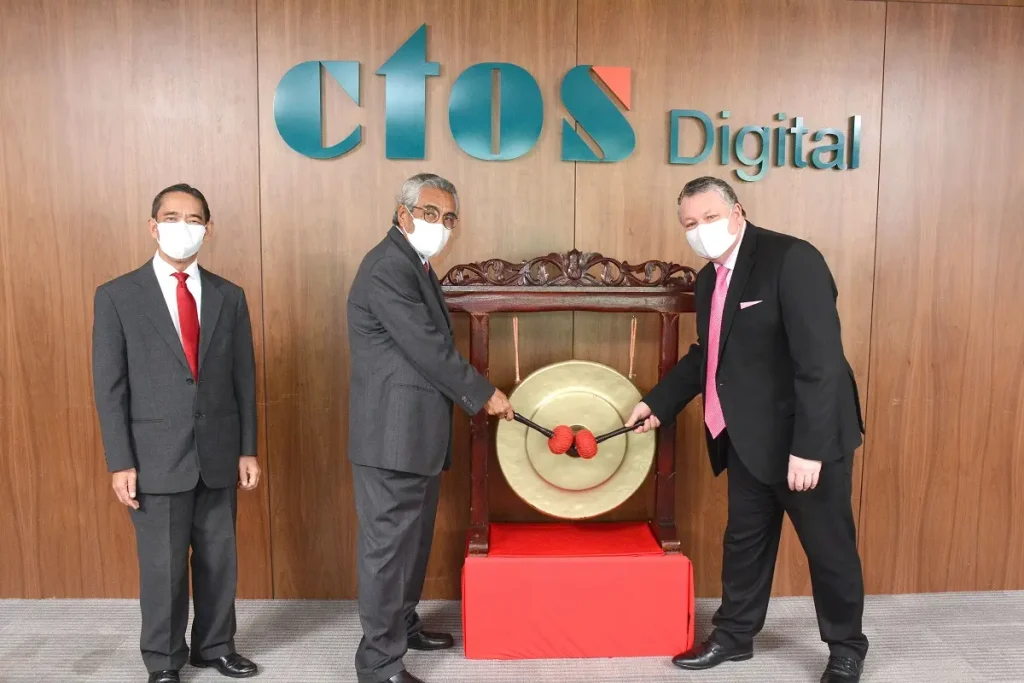
- Financials: They presented a high recurring revenue model. Customers (banks and companies) pay subscriptions for data.
- IMR Report: The market report showed CTOS held a dominant market share in the credit reporting industry in Malaysia, making them near-monopolistic in certain segments. This gave investors confidence in their stability.
Common Beginner Mistakes When Reading an IPO Prospectus
Many new investors end up with losses or disappointment because they make simple mistakes when examining this document.
Overlooking the "Risk Factors" Section
Investors often only read the "Growth" and "Profit" sections, then become overly optimistic. They fail to see risks such as dependence on a government licence that needs to be renewed every year. If the licence is not renewed, the business ends. The risk section is your "reality check".
Not Understanding the "Pro Forma" vs "Audited" Difference
Sometimes, companies present "Pro Forma" financial statements (adjusted with certain assumptions) that may look more attractive than the actual "Audited" statements. Investors need to be astute in distinguishing actual figures from simulated figures.
Focusing on Hype and Brand Only
Just because you recognise the brand does not mean the stock is good. There are companies with impressive brands but bleeding financial statements (losses) or excessively high debt burdens. The prospectus reveals the true financial health behind a popular brand.
Misinterpreting "Use of Proceeds"
Seeing a company repay bank debts using IPO funds is often viewed as entirely negative. This is not necessarily true. If the company pays off debt to reduce interest costs (interest saving) and improve the balance sheet so it can borrow again for future projects, it could be a wise move. Context matters.
Ignoring the Offer Structure (Offer for Sale vs Public Issue)
- Public Issue: New shares are issued. Money goes into the company for working capital/projects. (Good for growth).
- Offer for Sale: Existing owners sell their shares to new investors. Money goes into the pockets of old owners, not the company. (Less attractive if the percentage is too high compared to Public Issue). Savvy investors will examine the ratio between these two types of offerings.
Why the Prospectus Is a "Must-Read" Document
Understanding how to read an IPO prospectus is not an enjoyable process like watching a stock chart go green.
It demands time, focus, and a bit of mental sharpness. However, the prospectus is your only line of defence against making blind investment decisions.
As a new investor, do not follow the crowd or friends who invite you to buy an IPO simply because "it will definitely profit".
The history of the Malaysian stock market has proven that not all IPOs deliver positive returns.
There are those that fall below the offer price (IPO price) on the first day of listing due to weak fundamentals that were actually already clearly displayed in the prospectus.
Make it a habit to download the prospectus from the Bursa Malaysia website. Start by reading the Prospectus Summary, understand the Business Model, check the Risks, and scrutinise the Use of Proceeds.
By doing so, you will not only become a wiser investor, but also an investor who sleeps more soundly knowing where your money is placed.
The best investment is an investment in knowledge. The prospectus is a free textbook provided by the company for you -- so make the effort to read it.
Learn IPO Stock Basics with Mahersaham
Start your first step into the world of IPO stock investing on Bursa Malaysia through Mahersaham's PenDrive Ajaib.
In one pendrive packed with recorded stock class videos.
Help transform yourself from Zero to Hero regarding basic knowledge of Malaysian & Global Stock Investing. Get it quickly, stock is very limited.

FAQ: IPO Prospectus Malaysia
What is an IPO prospectus?
An IPO prospectus is an official document that must be published by a company before listing on Bursa Malaysia. It contains comprehensive information about the business, financials, risks, and use of proceeds collected from investors.
Where can I download an IPO prospectus?
IPO prospectuses can be downloaded free of charge from the official Bursa Malaysia and Securities Commission Malaysia websites before the application closing date.
Which sections are most important in the prospectus for beginners?
The most important sections include the Prospectus Summary, Business Model, Risk Factors, and Use of Proceeds. These sections provide a clear picture of whether an IPO company is worth investing in.
Why do some IPOs fall on the first day of listing?
IPOs can fall below the offer price due to weak fundamentals, which are actually already displayed in the prospectus. This is why it is important to read the prospectus before applying for an IPO.
Level Up Your Investing Knowledge
After understanding how to read a prospectus, the next step is to prepare an account to apply for IPOs.
Open your CDS account via Register CDS Account with Mplus to start applying for IPO shares on Bursa Malaysia.
New to investing? Download the Free Stock Basics Ebook to understand the fundamentals of stock investing before you begin.
Further reading: