Land Investment in Malaysia: Ownership Types, Strategies and Key Risks

Many investors in Malaysia are drawn to land investment for one simple reason - land cannot be reproduced. Supply is increasingly limited, especially in strategic areas like Klang Valley, Johor Bahru, and Penang. When demand keeps rising while supply stays the same, land prices will naturally appreciate over the long term.
But before you jump into buying your first plot of land, there are several fundamentals you need to understand. Not all types of land can be easily purchased, and not all land is suitable for investment. This article will walk you through the types of land ownership in Malaysia, smart investment strategies, and the risks you need to consider.
Types of Land Ownership in Malaysia
Under the National Land Code 1965, every plot of land in Malaysia has a specific ownership status. This determines who can own the land and for how long.
Freehold Land
Freehold land means you own the land permanently with no time limit. This is the most valuable type of ownership because:
- No expiry date - ownership is permanent
- Can be transferred to anyone, including non-Bumiputera
- Price appreciation is typically higher compared to leasehold
- Buying and selling process is easier and faster
For long-term investment purposes, freehold land is the safest choice. You do not need to worry about lease renewals or losing ownership after a certain period.
Leasehold Land
Leasehold land is leased from the state government for a fixed period, typically 99 years. Key points to note:
- You are not the absolute owner - you are only leasing for a set period
- After the lease expires, the land reverts to the state government (unless the lease is renewed)
- Prices are usually 10-30% lower than freehold land in the same area
- Transfer of ownership requires state authority consent, which can take 3-6 months
However, do not dismiss leasehold land entirely. In premium locations like Mont Kiara or Bangsar, leasehold land can still deliver good returns because the location factor outweighs the ownership limitation.
Malay Reserve Land / Bumiputera Lots
Malay Reserve Land is allocated exclusively for Malay and Bumiputera ownership. This means:
- Can only be owned by Bumiputera
- Cannot be sold or transferred to non-Bumiputera
- Usually priced lower due to a smaller buyer market
- Price appreciation potential is limited compared to unrestricted land
From an investment perspective, Malay Reserve Land has a more limited market. However, it can be an opportunity for Bumiputera buyers looking to acquire land at lower prices in strategic areas.
Trust Land and Government Land
Besides the three main types above, there is also land held by trust bodies (such as waqf land) and government land that cannot be purchased by the public. These lands are not for individual investment, but it is important to know about them so you do not fall victim to parties attempting to sell land with such status.
Land Use Categories
Besides ownership status, every piece of land also has a designated use category under Section 52 of the National Land Code. This determines what you can do with the land.
Agricultural Land
- Can only be used for agricultural activities such as farming, livestock, or aquaculture
- Cannot build houses or commercial buildings without land conversion approval
- Lowest price among all three categories
- Popular for land banking - buy cheap, wait for area development, then apply for conversion
Building Land
- Can be used for residential, commercial, or mixed-use construction
- Higher price as it is already development-ready
- Easiest to resell because buyers do not need to go through the conversion process
- Suitable for investors who want faster returns
Industrial Land
- Designated for manufacturing, warehousing, and related industrial activities
- Prices depend on industrial zone and logistics accessibility
- High demand in areas like Kulim Hi-Tech Park, Pengerang, and the Selangor industrial corridor
- Typically purchased by commercial investors or companies, not individual investors
Advantages of Land Investment
Why do many experienced investors choose land over built properties? Here are the key advantages:
1. Lower initial capital
Compared to buying a house or commercial premises, vacant land can be acquired at a much lower price. Agricultural land in rural areas like Perak or Kedah can be obtained for as low as RM2-5 per square foot, while suburban areas cost around RM20-50 per square foot.
2. Minimal maintenance costs
Vacant land does not require maintenance like a house - no painting, no leaking pipes, no problematic tenants. You only need to pay annual land tax (quit rent) which is usually very low (a few hundred ringgit per year).
3. Long-term value appreciation potential
Data from the National Property Information Centre (NAPIC) shows that land prices in Malaysia have on average increased annually over the long term, especially in areas experiencing new infrastructure development.
4. Usage flexibility
Land offers flexibility that built properties cannot. You can choose to develop it yourself, lease it for agriculture, or sell when prices have risen. With proper planning, a single plot of land can be developed into multiple housing units, generating multiplied returns.
5. RPGT exemption after the sixth year
According to LHDN (Inland Revenue Board), Malaysian citizens and permanent residents are no longer subject to Real Property Gains Tax (RPGT) for property disposals from the sixth year onwards. This means if you hold the land for more than 5 years, your sale profit is completely tax-free.
Disadvantages and Risks of Land Investment
However, land investment is not without risks. Here are the things to watch out for:
1. No passive income
Unlike rental properties that provide monthly cash flow, vacant land typically does not generate income. You need to be prepared to wait years before seeing returns.
2. More difficult financing
Banks usually impose stricter conditions for land loans compared to housing loans. The financing margin is typically only 60-70% (compared to 90% for a first home), and interest rates are slightly higher. According to CIMB, vacant land financing requires a deposit of at least 30-40%.
3. High land conversion costs
If you buy agricultural land with the intention of developing it later, the conversion process involves premium costs that can reach tens of thousands of ringgit. According to PropertyGuru, this process also takes months and approval is not guaranteed.
4. Risk of encroachment and unauthorized occupation
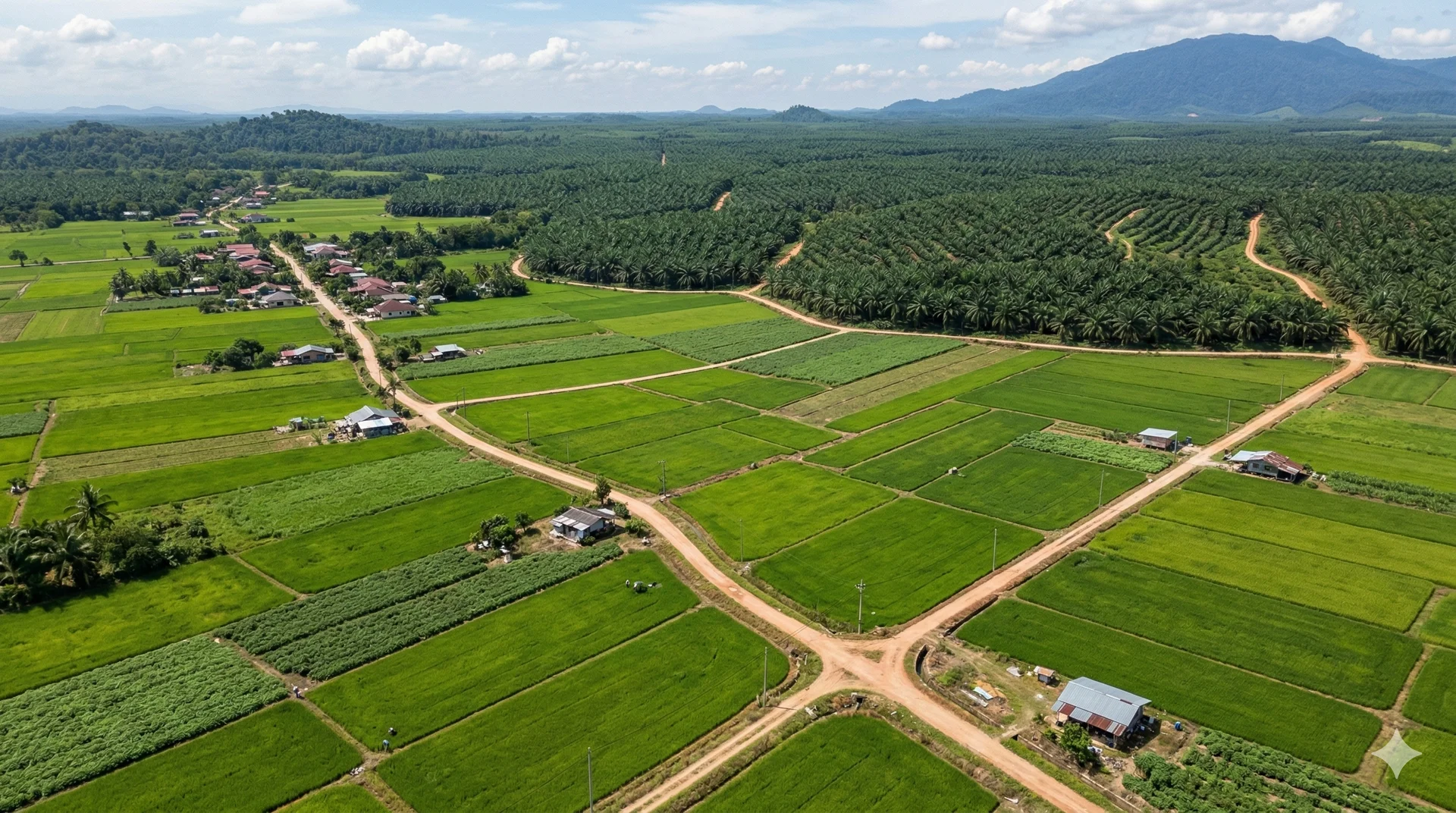
Vacant land that is not fenced or monitored is at risk of being encroached by third parties. In worse cases, encroachers may claim rights through the doctrine of adverse possession if they occupy the land continuously for an extended period.
5. Fraud risk
Cases of land transaction fraud are not uncommon in Malaysia. Buyers may be deceived by fake land titles, land that is already mortgaged, or land that actually belongs to the government. Always engage a licensed property lawyer to conduct an official search before paying any money.
6. Low liquidity
Vacant land is harder to sell compared to built properties. The buyer market is smaller, and the transaction process can take months or even years.
Smart Land Investment Strategies
Now that you understand the types of land and the risks involved, here are strategies that can maximize your investment returns:
1. Land Banking in New Development Areas
Land banking means purchasing land in areas expected to undergo development within the next 5-10 years. The key is identifying areas that will receive new infrastructure such as highways, MRT/LRT stations, or special economic zones.
Examples of rapidly developing areas:
- Johor - RTS Link project and Johor-Singapore Special Economic Zone
- South Selangor - KLIA Aeropolis development and logistics corridor
- Perak - Lekir, Sitiawan, and Manjung industrial areas
- Kedah - New industrial zones related to semiconductor factories
2. Buy Agricultural Land, Convert Later
This strategy involves purchasing agricultural land at a low price, then applying for conversion to building land once the area starts developing. The price difference between agricultural and building land can be 3-5 times.
However, this strategy requires:
- Capital for conversion costs (land premium)
- Patience to wait for approval (6-18 months)
- Thorough research that the area is indeed in the development plan
3. Buy and Lease for Agriculture
If you purchase agricultural land, it can be leased to local farming operators. While rental returns are not as high as residential property, it generates passive income while you wait for the land value to appreciate.
Suitable land for this strategy includes oil palm plantations, rubber estates, or flat land suitable for vegetable farming.
4. Joint Venture with Developers
If you own a large plot of land (1 acre or more) in a strategic area, you can enter a joint venture with housing developers. The developer covers the construction costs while you contribute the land. Profits are shared according to the agreement - typically the landowner receives 20-30% of the completed project value.
5. Subdivide and Sell
Buying one large plot and subdividing it into smaller lots to sell individually can yield significant returns. The price per square foot for smaller lots is typically higher than for large plots.
This strategy requires local authority approval and survey costs, but the profit potential can reach 50-100% of the original purchase price.
Hidden Costs Most People Overlook
| Cost | Estimate |
|---|---|
| Stamp Duty | 1-4% of purchase price |
| Legal Fees | 0.5-1% of purchase price |
| Quit Rent (annual) | RM50-500 depending on size & location |
| Land Conversion Premium | RM10,000-100,000+ (varies by state & size) |
| Survey & Subdivision Costs | RM5,000-30,000 |
| RPGT (if sold < 6 years) | 10-30% of profit |
| Fencing & Maintenance | RM5,000-20,000 (optional but recommended) |
Land vs Built Property: Which Is Better?
This question depends on your investor profile:
| Aspect | Vacant Land | Built Property |
|---|---|---|
| Initial capital | Lower | Higher |
| Passive income | None / minimal | Yes (monthly rental) |
| Maintenance costs | Very low | Moderate-high |
| Capital gain potential | High (long-term) | Moderate |
| Liquidity | Low | Moderate-high |
| Bank financing | More difficult (60-70%) | Easier (up to 90%) |
| Damage risk | None | Yes |
| Return period | Long (5-15 years) | Moderate (3-7 years) |
In summary: land is suitable for investors who have cash capital, are willing to wait long, and want substantial capital gains. Built property is better for investors who want monthly cash flow and faster returns.
Frequently Asked Questions (FAQ)
Can non-Bumiputera buy land in Malaysia?
Yes, non-Bumiputera can purchase freehold and leasehold land in Malaysia, subject to the minimum price threshold set by each state. However, Malay Reserve Land and Bumiputera Lots cannot be purchased by non-Bumiputera.
What is the minimum land price for investment?
Land prices vary greatly depending on location. In rural areas of Perak or Kedah, agricultural land can be found for as low as RM2-5 per square foot. In suburban Selangor, prices can reach RM20-80 per square foot. There is no minimum amount, but associated costs (lawyer, stamp duty, survey) make purchases below RM50,000 less economical.
Do banks provide loans for land purchases?
Yes, but the conditions are stricter. Most banks only finance 60-70% of the land value, meaning you need a 30-40% cash deposit. Interest rates are also typically 0.5-1% higher than standard housing loans. Banks like CIMB, Maybank, and Bank Muamalat offer vacant land financing products.
What is land conversion and how much does it cost?
Land conversion is the process of changing the land use category, for example from agricultural land to building land. It requires an application to the district land office and involves premium payments. The cost depends on the state and land size, but can range from RM10,000 to RM100,000 or more.
How long should you hold land before selling?
From a tax perspective, hold land for more than 5 years so you are exempt from RPGT. From an investment standpoint, the ideal holding period depends on the area's development - typically 5-15 years to see significant value appreciation.
How do you ensure the land you are buying is not problematic?
Always engage a property lawyer to conduct an official search at the land office. Ensure there are no caveats, charges, or claims on the land. Visit the site physically to check for encroachment. Also review the district development plan to ensure the land is not involved in government acquisition.
What is the difference between building lots and agricultural lots for investment?
Building lots can be developed immediately without conversion, so their value is higher and the sales process is faster. Agricultural land is cheaper to buy, but requires additional cost and time if you want to develop it. The best strategy depends on your budget and investment horizon.
Can I buy land online in Malaysia?
You can search and make offers online through platforms like PropertyGuru, iProperty, or Mudah.my. However, the legal process (sale and purchase agreement, ownership transfer) must be done through a licensed lawyer and the land office officially.
Conclusion
Land investment in Malaysia offers attractive return potential, especially for investors with a long-term horizon and the patience to wait for value appreciation. The key to success is understanding land types, choosing the right location, and calculating all costs involved before making a decision.
If you are also interested in diversifying your investment portfolio beyond property, the first step is understanding the capital market.
Open a CDS trading account through our platform to start investing in Bursa Malaysia as well as international stocks in the US and Hong Kong - all from a single account.
Download our free Stock Market Basics Ebook to understand the fundamentals of stock investing before you begin.