MSCI Removes 6 Stocks from Malaysia Index: RM2 Billion Wiped from Market

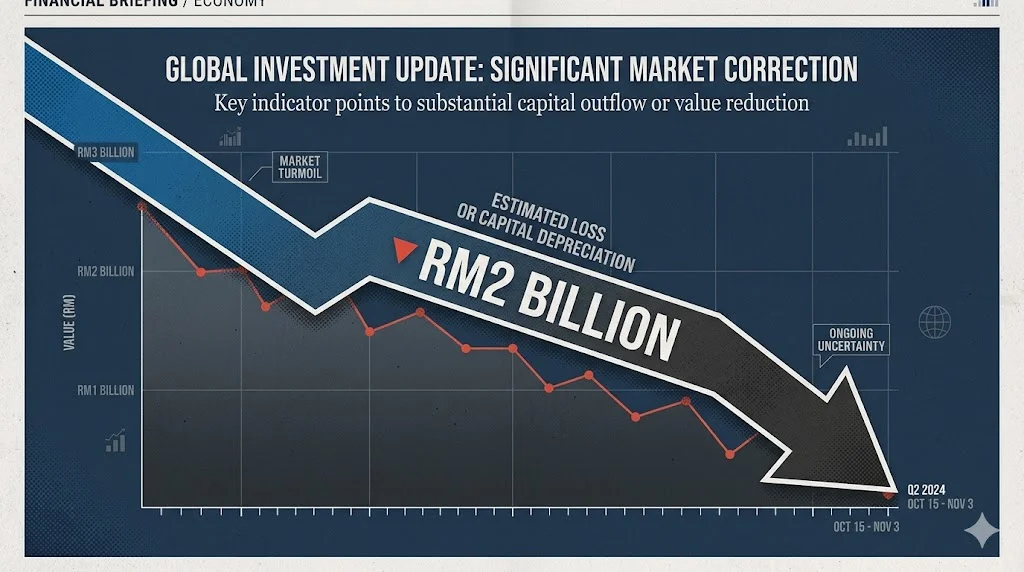
The Malaysian stock market took another hit when MSCI (Morgan Stanley Capital International) announced the removal of six stocks from the MSCI Malaysia Index in its May 2026 quarterly review. The announcement on May 13, 2026 has triggered a follow-on selldown that wiped out over RM2 billion in market capitalisation in just a few days, according to The Edge Malaysia.
For retail investors at Bursa Malaysia, this event isn't just news - it shows how global passive fund flows can place enormous pressure on local stocks, even when company fundamentals remain solid. Four stocks were removed entirely from the main index, while two were relegated to the MSCI Malaysia Small Cap Index.
In this article, we unpack:
- The full list of 6 stocks removed and their implications
- What MSCI Malaysia Index is and why it matters
- Removal criteria - why blue-chips like Axiata and Nestle got cut
- The forced selling mechanism by passive funds and ETFs
- Practical actions for retail investors at Bursa Malaysia
- Complete list of changes including the Small Cap Index
List of 6 Stocks Removed from MSCI Malaysia Index
Effective at the close of trading on May 29, 2026, the following six stocks will exit the MSCI Malaysia Index composition:
Four Stocks Removed Entirely
-
Axiata Group Bhd (AXIATA, 6888) - A regional telecommunications operator. The removal reflects declining market capitalisation following regional asset divestments and margin pressure in its core markets.
-
YTL Corporation Bhd (YTL, 4677) - An infrastructure and energy conglomerate. While subsidiaries YTL Power and YTL REIT remain active, the parent YTL Corp faced MSCI's re-evaluation.
-
Petronas Dagangan Bhd (PETDAG, 5681) - The major domestic petroleum products distributor. The share price has slumped over 6% in the recent period, reflecting retail margin pressure.
-
Nestle (Malaysia) Bhd (NESTLE, 4707) - The Shariah-compliant consumer goods giant. The stock declined nearly 9% before the announcement, eroding its market cap eligibility to remain in the main index.
Two Stocks Relegated to Small Cap Index
-
QL Resources Bhd (QL, 7084) - An integrated food producer (eggs, marine products, palm oil). An 8% drop in share price caused QL to fail in maintaining its position in the main index.
-
Mr D.I.Y Group (M) Bhd (MRDIY, 5296) - Malaysia's largest DIY retailer. The stock fell over 10% before the MSCI announcement, reflecting intense competition in the retail segment and margin concerns.
Important note: Stocks "relegated to Small Cap" are not removed from the MSCI ecosystem entirely - they simply move to an index tracking smaller-cap companies. However, the fund flow impact remains significant because passive funds tracking the main index will sell their positions.
What Is the MSCI Malaysia Index?
The MSCI Malaysia Index is one of the most influential equity benchmarks for the Malaysian market. It is designed to measure the performance of the large and mid-cap segment of the Malaysian market, and covers approximately 85% of the free-float adjusted market capitalisation at Bursa Malaysia, according to MSCI documents.
The index is managed by MSCI Inc., a New York-based global financial data provider. Unlike the FBM KLCI which is a local index, the MSCI Malaysia Index is an international benchmark tracked by global institutional investors.
Why Do MSCI Indices Matter for the Malaysian Market?
-
Passive fund flows: ETFs like iShares MSCI Malaysia ETF (EWM) by BlackRock automatically buy or sell stocks according to MSCI's composition. Index changes mean forced buying or selling occurs.
-
Institutional benchmark: Many pension funds, sovereign wealth funds, and global institutional investors use this index as a performance reference. Stocks removed will receive less institutional attention.
-
Market perception: Removal from the main index is often viewed as a "negative signal" that impacts retail and domestic investor sentiment.
Why Did MSCI Remove These Stocks?
According to Free Malaysia Today, MSCI reviews index composition quarterly based on several key criteria:
1. Declining Market Capitalisation
MSCI has a minimum market cap threshold for stocks to remain in the Standard Index. When share prices decline persistently, the free-float adjusted market cap falls below the threshold, triggering removal. This is what happened to Nestle Malaysia, MR DIY, and QL Resources which experienced significant price drops in the six months before the review.
2. Low Liquidity
MSCI requires stocks to meet minimum trading volume criteria to ensure institutional funds can buy and sell without moving prices dramatically. Stocks with low daily trading volumes are considered for removal.
3. Foreign Ownership Accessibility
Stocks that have reached or reduced foreign ownership caps face removal risk. MSCI measures "investability" from a foreign investor's perspective - if they can't buy the stock, it's less relevant for a global index.
4. Free Float Requirements
Free float refers to the percentage of shares freely tradable (not held by insiders, government, or strategic holders). MSCI sets a minimum free float to ensure stocks have adequate market liquidity.
The RM2 Billion Selldown Mechanism: How It Happens
Announcement of removal from an MSCI Index triggers a phenomenon known as MSCI rebalancing flow. This is forced selling by passive funds tracking the index. Here's how it works:
Step 1: Advance Announcement (T-16 days)
MSCI announces composition changes on May 13, while the effective date is May 29 - giving fund managers about 16 days to rebalance their portfolios.
Step 2: Early Sellers (Front-running)
Hedge funds and active funds anticipating this move will sell early to avoid taking losses when passive funds sell en masse. This is what caused stocks like Mr DIY and Nestle to slump before the effective date.
Step 3: Passive Selling on the Effective Date
At the close of May 29, ETFs and tracker funds will sell all their positions in removed stocks, and buy the replacement stocks. This can cause trading volume to spike 5-10 times the daily average on rebalancing day.
Cumulative Impact: RM2 Billion Wiped Out
According to The Edge Malaysia estimates, this follow-on selling has wiped over RM2 billion from the collective market capitalisation of the 6 affected stocks. This is partly due to:
- Large institutional holdings in stocks like Nestle, Axiata, and YTL
- Lack of organic buyers able to absorb selling volumes in a short timeframe
- Domino sentiment effects on other Bursa component stocks
Other Changes in MSCI Malaysia Index
Beyond the 6 stocks removed from the main index, several other changes occurred:
Stocks Removed from Small Cap Index
- Nationgate Holdings Bhd (NATGATE, 0270) - A technology products and EMS (electronic manufacturing services) producer
- Sunway Healthcare Holdings Bhd - A private hospital operator
- UEM Sunrise Bhd (UEMS, 5148) - A property developer
Stocks Added to Small Cap Index
- AirAsia X Bhd (AAX, 5238) - A long-haul low-cost carrier
- KLCC Property Holdings (KLCC, 5235SS) - A premium commercial REIT (Suria KLCC, Menara Maxis)
Stocks Demoted from Standard to Small Cap
- QL Resources and Mr DIY as noted above - they remain in the MSCI ecosystem but on the index that tracks smaller-cap companies.
What Are the Implications for Bursa Malaysia Retail Investors?
For retail investors holding these stocks or considering them for purchase, there are several important things to understand.
1. Short-term Price Pressure (1-3 Months)
Selling pressure from passive funds can continue for several weeks after the effective date, especially if organic buyers don't emerge to absorb volume. Short-term investors may face continuing paper losses.
2. Company Fundamentals Haven't Changed
Removal from the MSCI Index is not a negative judgment on the company's operations. Nestle Malaysia still dominates the consumer goods market, and Axiata is still a regional telecom operator. What's changed is market perception and fund flow mechanics. Fundamental investors can see this as a buying opportunity at lower prices - but only if the investment thesis remains intact.
3. Risk of Re-evaluating Bursa Sentiment
When blue-chip stocks are removed from international indices, it adds sentiment pressure to the entire Bursa Malaysia. Foreign investors may question the quality of our market, which can impact capital inflows in the medium term.
4. Opportunities in Replacement Stocks
Added stocks like AirAsia X and KLCC Property will receive passive inflows when ETFs and tracker funds buy them. This can trigger short-term price spikes - but investors should be careful about buying purely based on MSCI inclusion without a fundamental thesis.
How Retail Investors Should Respond
Here are strategic approaches based on your investor profile.
For Long-term Investors (Buy & Hold)
- Don't panic sell just because of an MSCI announcement - company fundamentals matter more than index labels
- Review your original investment thesis - if you bought Axiata for dividend yield and regional operations, check whether that's still valid
- Consider topping up if prices fall to attractive valuation levels (low PE, high dividend yield)
For Active Investors / Traders
- High volume and volatility around the rebalancing date (May 29) offers swing trading opportunities for experienced traders
- Use tight stop losses - passive selling pressure can last beyond expectations
- Consider mean reversion plays in the 2-4 weeks after rebalancing when selling pressure subsides
For New / Conservative Investors
- Avoid making rushed decisions based on news headlines - wait for the dust to settle
- Focus on dollar cost averaging into quality stocks whose fundamentals remain solid
- Consider diversification into Bursa Malaysia ETFs to get broad exposure without single-stock risk
Broader Trend: Continued Pressure on Southeast Asian Stocks
The removal of these 6 Malaysian stocks happens alongside a major rebalancing for Indonesian stocks, where outflows are estimated at US$1.8 billion based on pre-rebalancing analysis.
Previously, mahersaham reported on the MSCI Indonesia situation that caused Bursa Malaysia to become a beneficiary of foreign fund spillover. However, MSCI's latest May 2026 review shows that Malaysia is not exempt from rebalancing pressure either - indicating a broader trend of foreign investors re-evaluating Southeast Asian exposure.
Expected foreign inflows haven't been a full savior - particularly when issues like US-China geopolitical risk, ringgit pressure, and domestic economic slowdown continue to weigh on our market.
Frequently Asked Questions (FAQ)
What is the MSCI Malaysia Index and why does it matter?
The MSCI Malaysia Index is an international equity benchmark tracking approximately 85% of free-float adjusted market capitalisation at Bursa Malaysia. It matters because many ETFs, pension funds, and global institutional investors use it as a portfolio reference - making MSCI inclusion and deletion decisions highly influential on fund flows.
When is the effective date for the removal of these 6 stocks?
All changes will take effect at the close of trading on May 29, 2026. MSCI announced these changes on May 13 to give fund managers time to restructure their portfolios.
Does removal from the MSCI Index mean the stock is "bad"?
Not necessarily. MSCI evaluates based on technical criteria such as market cap, liquidity, free float, and foreign ownership accessibility - not the operational quality of the company. Stocks like Nestle Malaysia remain dominant companies in the consumer goods segment, even though they're removed from the index.
What's the difference between "removed entirely" and "relegated to Small Cap"?
Stocks removed entirely (Axiata, YTL, Petronas Dagangan, Nestle) exit all MSCI Malaysia indices. Stocks relegated (QL Resources, Mr DIY) move from the main MSCI Malaysia Index to the MSCI Malaysia Small Cap Index - still tracked, but by a different fund category.
Should I sell my stocks on the removal list?
It depends on your original investment thesis. If you bought based on dividend yield and operational fundamentals, fundamentals haven't changed. If you bought because index inclusion is a quality indicator, reconsider. Many long-term investors view the MSCI selldown as a buying opportunity at lower prices.
What stocks replace the ones removed?
MSCI doesn't directly replace one-for-one. However, AirAsia X and KLCC Property Holdings are added to the MSCI Malaysia Small Cap Index. Other stocks already in the Small Cap Index will receive higher weightings when tracker fund portfolios are rebalanced.
How often does MSCI review its indices?
MSCI reviews index composition quarterly - typically in February, May, August, and November. Each review can produce composition changes based on predetermined technical criteria.
Can retail investors profit from MSCI rebalancing?
Yes, but it requires the right strategy. Experienced traders can capitalize on volatility around the rebalancing date for swing trading. Value investors can take advantage of depressed prices to accumulate quality stocks. However, this isn't a strategy for beginners without strict risk management.
Conclusion
The removal of 6 stocks from the MSCI Malaysia Index in May 2026 triggered a RM2 billion selldown, demonstrating how influential global passive fund flows are on our market. For retail investors, the key lesson isn't to fear MSCI, but to understand the fund flow mechanism and distinguish between technical index issues and company fundamental quality.
For long-term investors, events like this often provide opportunities to acquire quality stocks at more attractive prices - as long as the original investment thesis remains intact. For new investors, the biggest lesson is the importance of diversification and understanding the influence of institutional funds on the local market.
If you're new and want to start investing at Bursa Malaysia and overseas markets, the first step is opening a suitable trading account.
A CDS account allows you to invest in Bursa Malaysia stocks as well as overseas stocks like US and Hong Kong markets - open your CDS account here to start building a diversified portfolio.
For stock investing basics from scratch, download the free Stock Market Basics Ebook that will help you understand important concepts before investing real money.
Further Reading
- MSCI Indonesia Issue: Bursa Malaysia Now on Radar for Foreign Fund Spillover
- What Is FBM KLCI? Malaysia's Key Stock Market Index
- ETF Malaysia: Easy Way to Invest Like Unit Trusts
- Stocks for Beginners 2026: 7 Criteria to Pick Your First Bursa Stock
- Local Institutions Keep Buying While Foreign Funds Continue Selling Bursa Stocks