Penang Secures RM4.9 Billion in Manufacturing Investment in Q1 2026: What It Means for Bursa Investors

Penang has once again proven its standing as the manufacturing heart of the nation. In the first quarter of 2026 (January to March), the state attracted RM4.9 billion in approved manufacturing investments, making it the second-highest state in Malaysia for the manufacturing sector. For Bursa Malaysia investors, this figure is more than a state economic statistic - it offers an early signal of where global capital is flowing, and which listed companies could ride the momentum.
This article breaks down the numbers: where the investment comes from, which sectors are in focus, and most importantly for our readers - how it connects to your stock portfolio on Bursa Malaysia.
RM4.9 Billion: What Actually Happened
According to a report by The Edge Malaysia citing data from the Malaysian Investment Development Authority (MIDA), Penang secured RM4.9 billion in approved manufacturing investments in the first quarter of 2026. This places the state second-highest in Malaysia for the manufacturing sector, reinforcing its reputation as a high-technology production hub.
It is important to understand what "approved investments" means. It refers to the value of projects approved by the authorities for implementation - not necessarily money already fully spent. It is a leading indicator of upcoming factory construction, hiring, and demand for local suppliers over the next 12 to 36 months.
This is exactly why stock investors should pay attention. When new factories are approved today, companies in the supply chain - from automation equipment suppliers to chip packaging firms - could see increased orders in the future.
Investment Composition: FDI Dominates at 70 Percent
One of the most interesting details is the source composition. Of the RM4.9 billion, roughly RM3.4 billion or 70 percent was Foreign Direct Investment (FDI). The remainder, about RM1.5 billion (30 percent), came from domestic investors.
This FDI dominance means global players continue to choose Penang as their regional production base. Amid geopolitical tensions and the "China Plus One" strategy where multinationals diversify their supply chains out of China, Malaysia - and Penang in particular - has become a key beneficiary.
For investors, high FDI inflows are a positive sign because they bring not just capital, but also technology, expertise, and international customer networks. Local companies that become suppliers to these foreign giants often gain long-term benefits in the form of recurring contracts and technology transfer.
E&E and Machinery: The 74 Percent Pillar
Unsurprisingly, the electrical and electronics (E&E) sector together with machinery and equipment were the main drivers. These two subsectors contributed RM3.6 billion or 74 percent of total approved manufacturing investments in Penang for the first quarter of 2026.
This focus on E&E aligns with Penang's identity as a semiconductor hub. According to InvestPenang, the state's E&E industry has grown over more than five decades since companies like Intel and AMD opened factories in Penang in the 1970s, creating what is now dubbed the "Silicon Valley of the East".
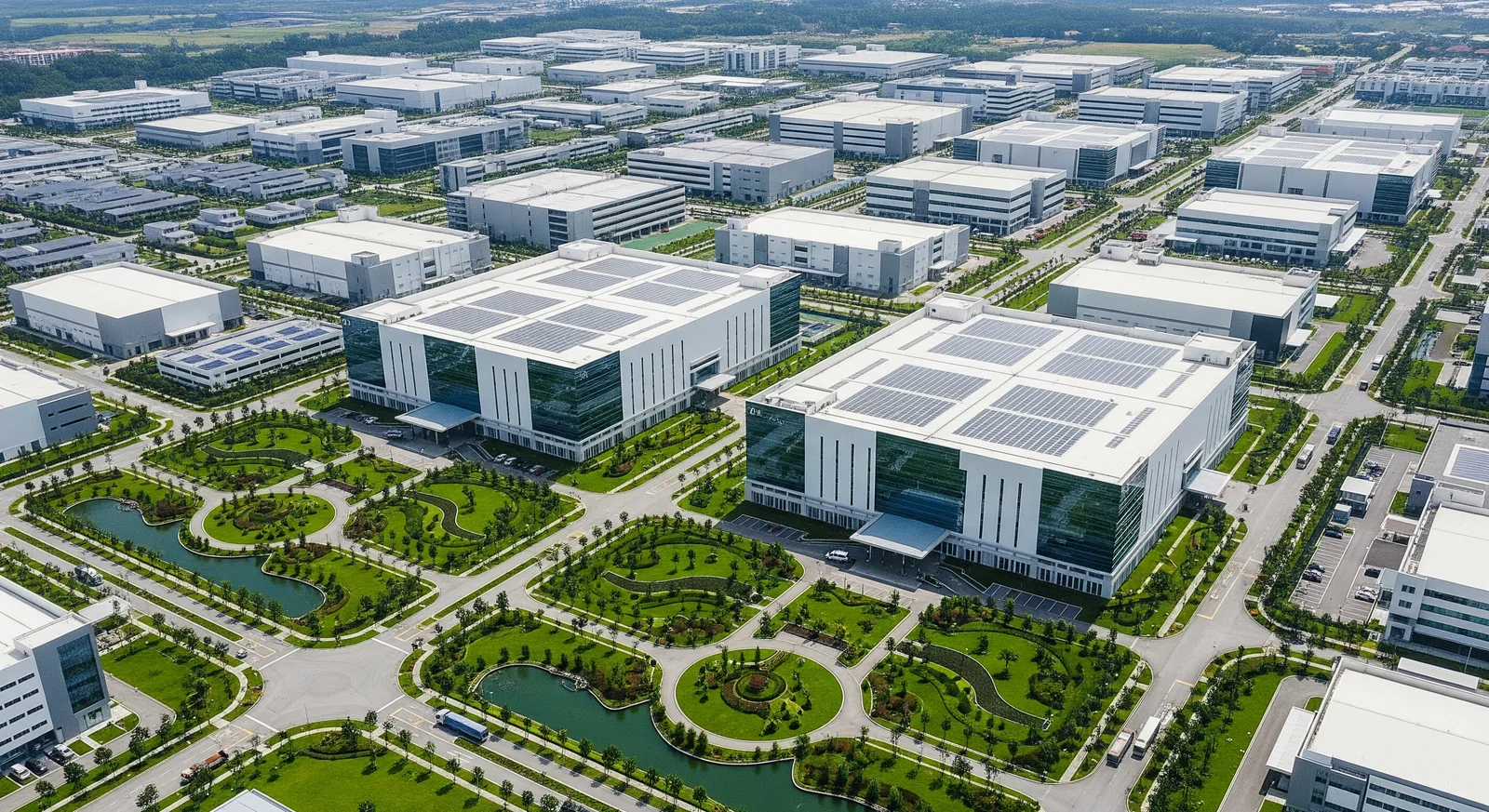
Among the major projects announced during this period was an investment by MKS Instruments, a US semiconductor equipment company, which is investing more than RM400 million and is expected to create over 1,000 high-value jobs once all phases are complete. Projects like these further strengthen Penang's advanced manufacturing ecosystem.
Penang in the National Context
To appreciate Penang's achievement, we need to see the big picture. In the first quarter of 2026, Malaysia as a whole secured RM92.8 billion in approved investments across all sectors, involving 1,249 projects and expected to create 50,226 new jobs - a 46.7 percent increase year-on-year.
Of the national total, foreign investment contributed RM56.2 billion (60.5 percent) while domestic investment made up RM36.6 billion (39.5 percent). By sector, services led with RM60.8 billion (65.5 percent), followed by manufacturing at RM24.1 billion (26 percent) and the primary sector at RM7.9 billion (8.5 percent).
Looking at states across all sectors, Penang recorded RM6.2 billion in total approved investments, placing it fourth nationwide. Here are the top five states:
- Selangor - RM33.5 billion
- Johor - RM16.9 billion
- W.P. Kuala Lumpur - RM16.9 billion
- Penang - RM6.2 billion
- Sarawak - RM4.0 billion
Although Penang ranks fourth in total value, it leaps to second place when we focus specifically on the manufacturing sector (RM4.9 billion). This shows the state's core strength: it does not merely attract varied investment, but dominates the most valuable high-technology manufacturing segment.
At the country-of-origin level, Japan emerged as the largest foreign investor with RM21.5 billion - a nearly 14-fold surge year-on-year - followed by China (RM10.1 billion), the United States (RM10.1 billion), Singapore (RM6.7 billion) and Thailand (RM2.5 billion).
Why Penang Remains a Global Semiconductor Hub
Penang's position is no accident. The state accounts for roughly 80 percent of Malaysia's "backend" semiconductor output (assembly, testing and packaging). Globally, Malaysia is the world's sixth-largest semiconductor exporter and commands about 13 percent of the global assembly, testing and packaging (ATP) market - the majority of which is based in Penang.
Throughout 2025, Penang's manufacturing sector attracted RM22.38 billion in approved investments, driven primarily by the E&E industry, according to a Bernama report. The momentum carrying into the first quarter of 2026 shows this trend has not slowed.
Factors that sustain Penang's appeal include a mature supplier ecosystem, a skilled workforce, operating costs that are competitive versus developed countries, relative political stability, and a strategic geographic position within ASEAN. This combination is hard for new locations to replicate in a short time.
Major Projects Strengthening the Ecosystem
Besides MKS Instruments, several other major projects are reinforcing Penang's semiconductor ecosystem in the near term:
- AIXTRON SE (Germany) - This semiconductor deposition equipment supplier acquired land at Bandar Cassia Technology Park and will build a new 8.5-acre manufacturing facility. The first phase is expected to create around 450 jobs, half of them in engineering and R&D, according to MIDA.
- Chipbond Technology (Taiwan) - This chip packaging company opened an advanced manufacturing facility at Valdor Industrial Park, Batu Kawan in February 2026 with an investment of close to US$200 million (around RM800 million), offering processes such as wafer bumping and wafer-level chip-scale packaging (WLCSP), as reported by MIDA.
- MKS Instruments (United States) - An investment exceeding RM400 million with more than 1,000 high-value jobs, supporting the production of wafer fabrication equipment.
The pattern of these investments is worth noting: they come from various countries (Germany, Taiwan, the United States) and concentrate on the higher end of the value chain - advanced equipment and packaging, not just basic assembly. This signals that Penang is moving "up" the semiconductor value chain.
What It Means for Bursa Malaysia Investors
This is where the story becomes relevant to your portfolio. Large foreign investment in Penang's E&E sector does not exist in a vacuum - it drives a local supply chain full of companies listed on Bursa Malaysia.
When foreign giants like AIXTRON, Chipbond and MKS build factories, they need suppliers of automation equipment, testing systems, engineering services, packaging, and materials. Many of these suppliers are local listed companies. Among the names frequently associated with Malaysia's E&E and semiconductor supply chain, with many based in Penang itself, are:
- Inari Amertron (INARI) - RF and optoelectronics packaging and assembly
- ViTrox (VITROX) - automated inspection systems (machine vision)
- Pentamaster (PENTA) - automation and testing solutions
- Greatech Technology (GREATEC) - automation for solar and semiconductors
- Malaysian Pacific Industries (MPI) - semiconductor packaging
- Unisem (UNISEM) - chip assembly and testing
- Frontken (FRONTKN) - surface cleaning engineering services
- QES Group (QES) - testing and inspection equipment
- UWC Berhad (UWC) - precision engineering
- Kobay Technology (KOBAY) - precision engineering and automation
It is important to stress: an inflow of approved investments does NOT automatically mean these stocks will rise. The link between macro news like this and individual stock performance is complex and indirect. It is just one of many factors. Treat this information as a starting point for your own research, not a buy signal.
A healthier approach is to understand that the long-term structural theme - the global supply chain shift to Malaysia - supports the prospects of the E&E sector as a whole. For a broader view of this sector's outlook, you can refer to our analysis of the outlook for Malaysia's technology and semiconductor sector in 2026.
Risks and Things to Monitor
Every investment story has two sides. Before getting too excited about the RM4.9 billion figure, smart investors should consider several risks:
- Gap between approval and execution - "Approved" investment is no guarantee it will be implemented fully or on schedule. Some projects may be delayed or scaled back.
- Semiconductor cycle - The chip industry is famously cyclical. Demand can plunge quickly during a global downturn, affecting local supplier orders.
- Regional competition - Vietnam, India and other countries are also competing fiercely for the same semiconductor investment. More attractive incentives elsewhere could divert future capital flows.
- Geopolitical and tariff risk - US trade policy and US-China technology tensions can have a two-way impact on Malaysia's chip industry.
- Stock valuations - Many Malaysian E&E stocks have traded at high price-to-earnings (PE) ratios. Good news may already be "priced in" to current prices.
This is why fundamental analysis of each company remains important. Macro news provides context, but investment decisions should be based on a company's individual financials, management, and valuation.
Approved Investment vs Trade and Exports
Many readers may confuse two types of economic data that are often reported: approved investment and total trade (exports-imports). The two are different and tell different stories.
Approved investment (like this RM4.9 billion) measures capital commitment to build new capacity - factories, equipment, facilities. It is a forward-looking indicator of future activity.
Total trade measures the value of goods actually exported and imported - economic activity that is currently happening. To understand the trade side, see our analysis of Malaysia's total trade hitting RM3.1 trillion in 2025.
These two metrics complement each other. Today's investment becomes tomorrow's production capacity, which in turn generates future exports. For investors, understanding both angles gives a complete picture of the health of the nation's manufacturing sector. You can also refer to the national investment context in our Malaysia H1 2025 investment report.
Frequently Asked Questions (FAQ)
How much approved manufacturing investment did Penang secure in Q1 2026?
Penang recorded RM4.9 billion in approved manufacturing investments in the first quarter of 2026, making it the second-highest state in Malaysia for the manufacturing sector during that period.
What percentage of the investment came from foreign investors (FDI)?
About RM3.4 billion or 70 percent of the total was Foreign Direct Investment (FDI), while the remaining roughly 30 percent came from domestic investors.
Which sectors were the main focus of this investment?
The electrical and electronics (E&E) sector together with machinery and equipment were the main pillars, contributing RM3.6 billion or 74 percent of total approved manufacturing investments.
Does this news mean Bursa Malaysia E&E stocks will rise?
Not necessarily. Approved investment is a macro indicator that supports the long-term theme of the E&E sector, but individual stock performance depends on many other factors including company earnings, valuation, and market conditions. Use this information as a research starting point, not a buy signal.
Why is Penang a focal point for semiconductor investment?
Penang accounts for about 80 percent of Malaysia's backend semiconductor output and has a mature supplier ecosystem built since the 1970s. A skilled workforce, competitive costs, and a strategic position within ASEAN sustain its appeal.
What is the difference between approved investment and total trade?
Approved investment measures capital commitment to new capacity (a forward indicator), while total trade measures the value of exports and imports actually taking place (current activity). The two are different but complementary.
Conclusion
The RM4.9 billion in approved manufacturing investment in Penang in the first quarter of 2026, with 70 percent FDI and 74 percent concentrated in E&E and machinery, confirms that the state remains a global semiconductor hub attracting international capital. For Bursa Malaysia investors, this reinforces the long-term structural theme of the local technology sector - but every investment decision should still be based on careful fundamental research, not macro news alone.
If you are interested in participating in the growth potential of Malaysia's E&E and semiconductor sector, the first step is to have an account to trade stocks.
Open your CDS and trading account to start investing in stocks on Bursa Malaysia, as well as foreign stocks such as the United States and Hong Kong markets.
Before you start, download our stock investing basics ebook for free to understand the key concepts before investing.
Further Reading
- 2026 Economic Outlook: Why Malaysia's Technology & Semiconductor Sector Is Set to Bite Again
- Malaysia's Trade Hits RM3.1 Trillion in 2025: What It Means for Bursa Investors
- Malaysia H1 2025 Investment: RM190.3 Billion Approved, a Surge in Foreign Investor Confidence
- Pentech Holdings Opens IPO at 20 Sen: Penang ICT Infrastructure Firm Heads to ACE Market
- Who Is Dato' Seri Koay Hean Eng? Founder of Kobay Technology from Penang