True Story: Remisier Bears RM40K Client Loss

Recalling the Story of Bearing RM40K in Client Losses at the Melaka State Library
Today, my team and I visited the Melaka Public Library Corporation (PERPUSTAM) in Bukit Baru, Melaka. The purpose was to scout this location as a venue for group coaching the following week.
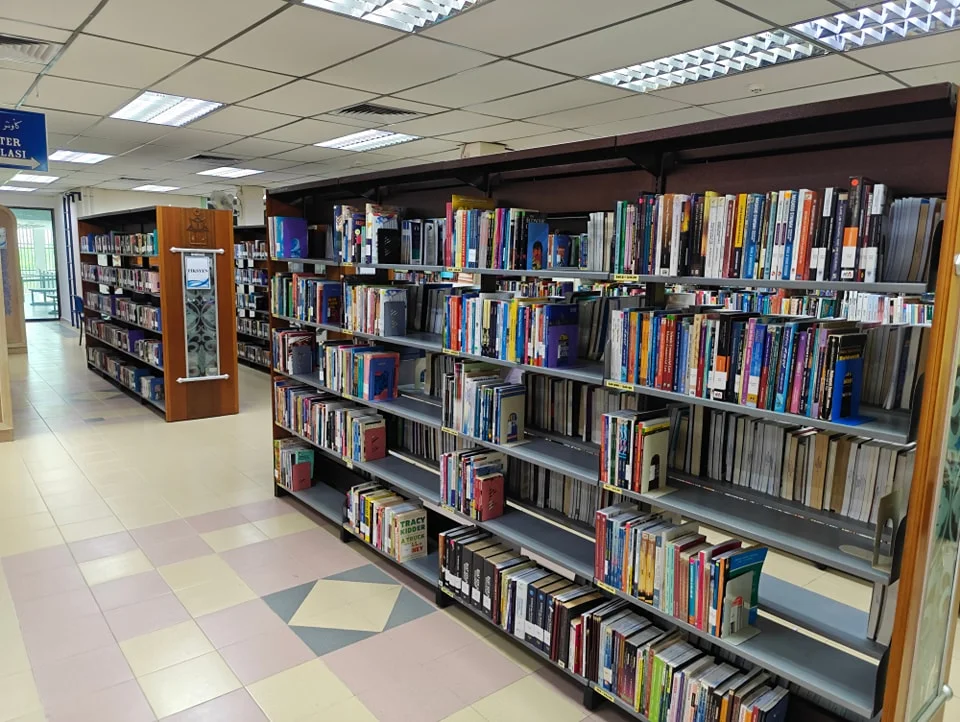
I've been living in Melaka for nearly 8 years, yet I had never set foot in this place. It's a wonderful spot for book lovers. The room rental rates for meetings are also very reasonable.

Before heading to the library, I noticed a client asking questions about a company called BPURI that was about to undergo a share consolidation. To me, share consolidation is a routine matter — I've explained it many times before. Nevertheless, I prepared an explanation based on the announcement on Bursa Malaysia and posted it on Telegram and Facebook.
Without realising it, the client had actually mentioned that the number of units in their portfolio remained the same as before the share consolidation took effect.
Something seemed off, so I checked the Skype group where we raise queries and refer matters to HQ regarding this issue. Sure enough, other remisiers had already asked about the same problem.
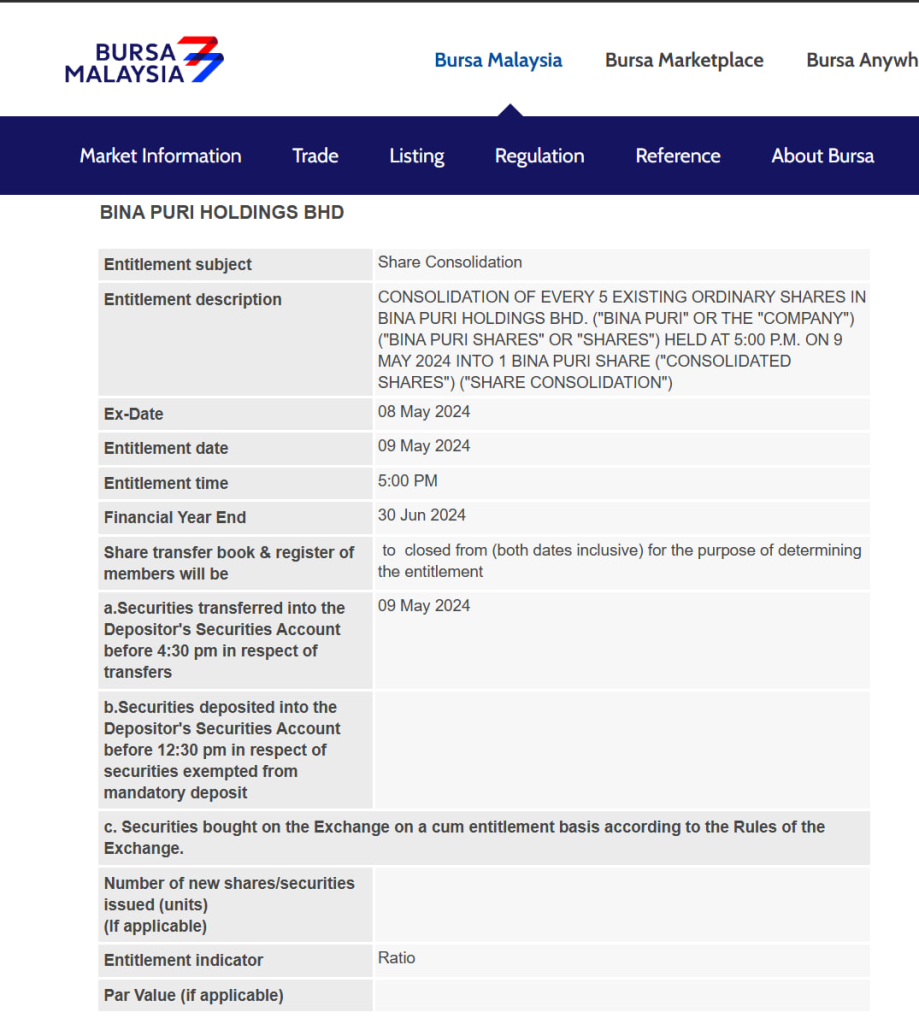
Due to technical reasons, the number of units in the client's portfolio had not yet been updated. All sales of BPURI shares were temporarily frozen, and within a few minutes to roughly an hour, the client's portfolio was updated with the correct figures.
I had planned to discuss a different agenda for Mahersaham at the library meeting, but instead found myself scrambling to resolve this issue.
Once upon a time, in January 2020, a situation occurred where most brokers were caught off guard by a corporate exercise carried out by a particular company. Many remisiers also fell victim to this incident.
I'm not saying they were "scammed" — although some people did float conspiracy theories about it. The truth was that broker systems simply were not prepared for the corporate exercise of this particular company. It carried out a share consolidation on a massive scale: in January 2020, every 50 units would become 1 unit. The price on the ex-date would roughly increase 50 times from the price before the ex-date.
For example, Ali held 5,000 units of Stock C on 21 January 2020. On 22 January 2020, those shares should have become just 100 units. The price would also increase by approximately 50 times. For instance, on 21 January 2020 the price was 3.5 sen, but on 22 January 2020 everyone would see Stock C priced at RM1.75 or thereabouts.
If the number of units had been correctly adjusted to 1,000 units on 22 January 2020, nobody would have batted an eye because the total profit or loss would not have differed much from the previous day.
In this example, holding 50,000 units at 3.5 sen = RM1,750. On 22 January 2020, Ali should have had 1,000 units at RM1.75 = RM1,750. Same value.
The problem was that the system still showed 50,000 units instead of the new figure of 1,000 units.
Ali looked at his portfolio: 50,000 units at RM1.75 = RM87,500, or a gain of 4,900%.
Without questioning why he had suddenly made a 4,900% profit, without finding it odd that there was an "X" mark (indicating the ex-date) next to Stock C's name, he went ahead and sold everything.
How many units did he oversell beyond what he actually owned?
He should have only been able to sell 1,000 units, but he sold 50,000 units. That meant he oversold by 49,000 units.
Those remisiers who managed to inform their clients about the actual situation in time tried to buy back the shares.
The selling price was RM1.75. When everyone rushed to buy back their oversold units, demand surged while supply was insufficient. The price would not stay at RM1.75 — it climbed to RM1.95.
49,000 units x 20 sen (difference between buy and sell price) = RM9,800 loss, purely from having sold and needing to buy back. That was with just a 20 sen or 11% difference. What if the price rose even higher? The loss would be even greater.
As I recall, by that afternoon the stock hit limit up — the maximum daily price increase. For stocks priced above RM1, the limit up is a 30% rise. In other words, Stock C had risen to RM2.27. The price difference was 52 sen compared to RM1.75.
This means that if a client had to buy back that afternoon, 49,000 units x 52 sen = RM25,480. That was the total loss — purely from selling units they didn't actually have and being forced to buy them back.
For cases where the remisier could not reach the client in time, or where the client sold and then felt "high" from the big profit and disappeared to enjoy themselves — the client would be penalised. The penalty was calculated as the number of oversold units multiplied by 10 ticks above the closing price on that day.
And because the share price had hit limit up, most clients could not buy back even if they wanted to. You can search for "limit up" on Mahersaham to understand what it means.
So let's calculate the penalty. The closing price that day was RM2.27. Adding a 10-bid penalty brings it to RM2.37. The difference from the selling price (sold early in the morning upon seeing a 4,900% gain) was 62 sen. Multiply that by the 49,000 oversold units: RM30,380.
RM30,380.
That is the amount the client had to pay back as a penalty for overselling units they did not actually own.
And what was the total value of their shareholding before all this happened?
RM1,750.
A Cash Upfront account is not like a margin account where you can end up owing more than the money you deposited.
But when a situation like this arises, even a Cash Upfront account can be severely affected.
So all manner of things happened. Clients blamed brokers, remisiers blamed Bursa, blamed the brokerage firm... the brokerage firm blamed remisiers, clients blamed remisiers... some brokerages even blamed the clients.
Long story short, if the client cannot pay, who bears the cost? The remisier — it is first deducted from the remisier's deposit. The remisier can then proceed with legal action against the client to recover the money... but if the client is someone who could only afford to deposit RM1,000 in the first place, where are you going to find RM30K?
I was floored at that time. The actual amount — I honestly cannot remember exactly — was somewhere between RM40K and RM60K. That was not a small sum; it took several months' worth of earnings to cover it — roughly 7 months.
Sometimes you think your business is growing, stable, looking good. Then a "black swan" event like this comes along and brings you crashing back to reality. Looking back, that was the level I had to face at that time. Over time, the scale of losses you encounter grows in tandem with your income and experience. You cannot aspire to earn RM1 million if you can only stomach a RM3K loss, for example.
This all happened at the end of January 2020. The fallout continued into February 2020. Then in March 2020, a brand new crisis emerged — COVID. But that is a story for another day.

I am Maher Alias, a remisier with Mplus.
Frequently Asked Questions (FAQ)
What happens if a client cannot pay their stock market losses?
If the client fails to pay, the remisier must bear the loss first — it is deducted from the remisier's deposit. The remisier may then initiate legal proceedings to recover the amount from the client.
What are the risks of being a stock remisier?
Key risks include bearing the losses of clients who fail to pay, facing volatile market conditions such as black swan events, and the emotional stress of dealing with large sums of money.
What is a black swan event in the stock market?
A black swan event is an extremely rare and unpredictable occurrence that has a massive impact on financial markets. Examples include the COVID-19 pandemic and the global financial crisis, both of which caused sharp declines in stock prices.
How can investors manage the risk of losses?
Investors should be prepared to accept losses proportional to the potential gains they are targeting. Set a maximum loss limit, diversify your portfolio, and always learn from past mistakes.
Real stories like this highlight the importance of knowledge and mental preparedness in the world of stock investing.
Open your CDS account today with our step-by-step guide here to start investing in the stock market.
Download our free stock basics ebook to learn the fundamentals of stock investing from scratch.