Shariah-Compliant Stocks Requirements in Malaysia: SAC Criteria Explained

Are Stocks Really Haram?
"Shariah-compliant stocks? No way, I don't believe it."
"Stocks? That's haram, don't join."
"I don't invest in stocks because it's haram."
"Why are you learning about stocks? It's haram!"
Have you ever heard statements like these?
What do you think is the biggest obstacle preventing Malaysians today from joining stock market investing?
None other than the lack of investment knowledge.
Not only is there a shortage of investment knowledge, but people even claim that stock investing is haram, despite the existence of Shariah-compliant stocks.
Due to the lack of proper investment education, many people fall victim to various schemes promising the moon and stars, such as guaranteed multiple returns every month.
I know those of you reading this are not among those who have been deceived. May you always be among those who continuously seek proper stock investment knowledge.
Where can you find proper investment knowledge? In today's increasingly advanced world, everything is at your fingertips.
Want an easy and reliable source? Follow Youtube Mahersaham, Telegram Channel and Facebook Mahersaham to keep up with weekly updates and information about stocks from us.
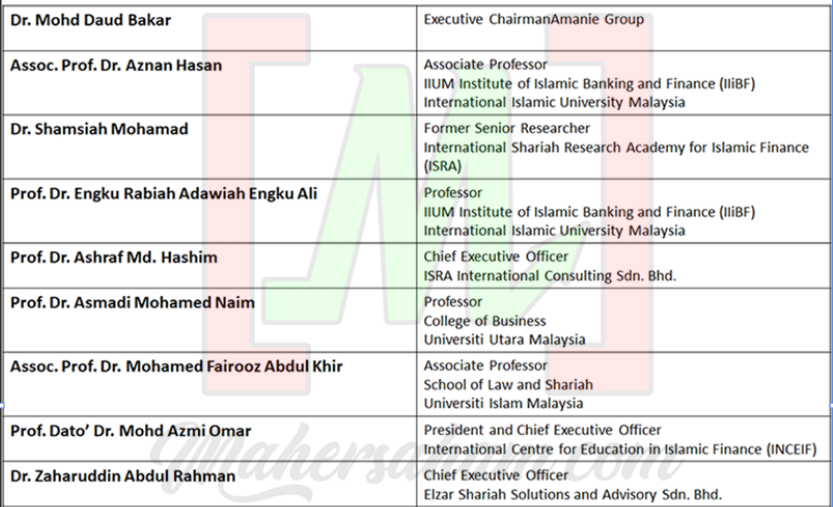
Members of the Shariah Advisory Council of the Securities Commission (1 July 2020 - 30 June 2023)
The following are the members of the SAC of the Securities Commission who were appointed from 1 July 2020 until 30 June 2023.
The SAC members comprise Shariah experts, Islamic finance practitioners, and legal professionals.
Role of the Shariah Advisory Council of the Securities Commission Malaysia
As we know, the Securities Commission Malaysia functions as the sole regulatory body overseeing the capital market in Malaysia.
So who should be referred to on Shariah-related matters concerning the Islamic capital market?
None other than the SAC, which serves as the sole reference point for Shariah matters in the Islamic capital market.
This is because the SAC is mandated to advise the Securities Commission (SC) on all matters relating to the comprehensive development of the Islamic capital market.
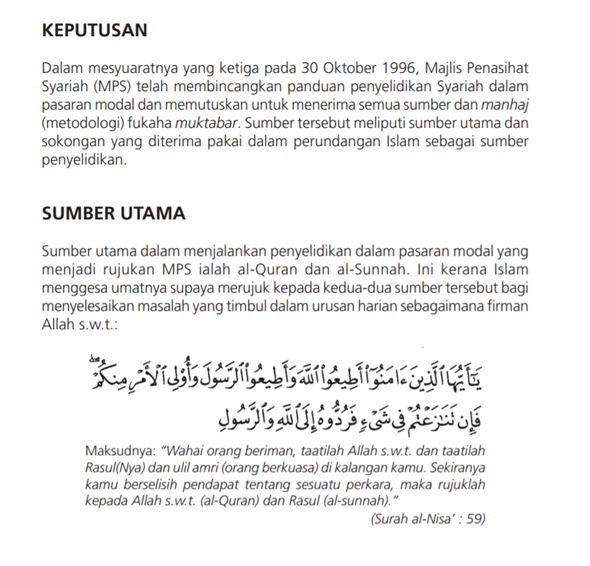
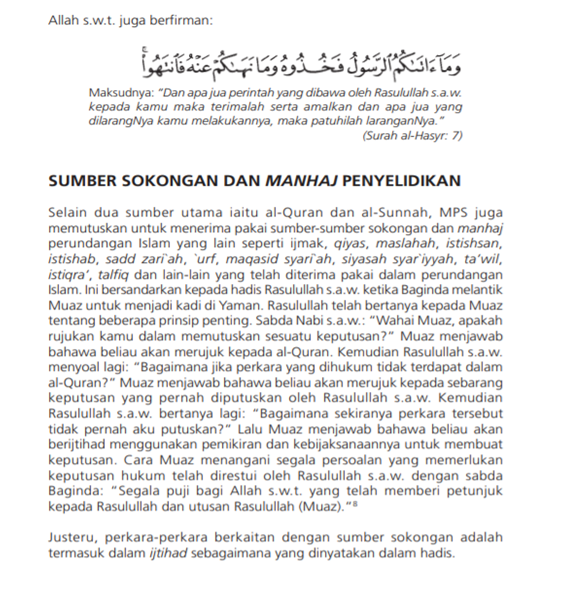
Based on the criteria outlined, a company's securities are classified as non-Shariah compliant if the company's core activities are not in line with Shariah, as follows:
a. Financial services based on riba (interest),
b. Gambling and betting,
c. Manufacturing or selling non-halal products or related goods,
d. Conventional insurance,
e. Entertainment activities that are not in line with Shariah,
f. Manufacturing or selling tobacco-based products or related goods,
g. Brokerage or trading of non-Shariah compliant securities, and
h. Other activities deemed not in line with Shariah.
First Criterion
The company's main activities are based on riba, such as those carried out by conventional financial institutions including commercial banks, merchant banks, finance companies, and others.
(a) Evidence from the Quran based on verses 275-276 of Surah al-Baqarah.
(b) Evidence from the consensus of Islamic jurists (Ijma') across all schools of thought who have agreed that riba is forbidden. Due to this consensus, the prohibition of riba has become a matter of unanimous agreement.
Second Criterion
The company's main activities involve gambling, such as casinos, lottery, and similar activities.
The prohibition of gambling is clear in the Quran. Allah SWT commands the believers to abstain from it, as stated in Surah al-Maidah, verse 90.
Third Criterion
The company's main activities involve the production and sale of goods and services that are forbidden in Islam, including:
(a) Processing, producing, and marketing alcoholic beverages
(b) Supplying non-halal meat such as pork and similar products
(c) Providing immoral services such as prostitution, pubs, discos, and similar establishments
Evidence from the Quran regarding food: Islam urges all of humanity to consume food that is halal and good.
This urging can be seen from the words of Allah SWT in Surah al-Baqarah, verse 168.
Additionally, evidence for the prohibition of alcohol can be found in Surah al-Maidah, verse 90, and the prohibition against immoral activities in Surah al-Isra', verse 32.
Fourth Criterion
The company's main activities involve gharar (uncertainty), such as conventional insurance business.
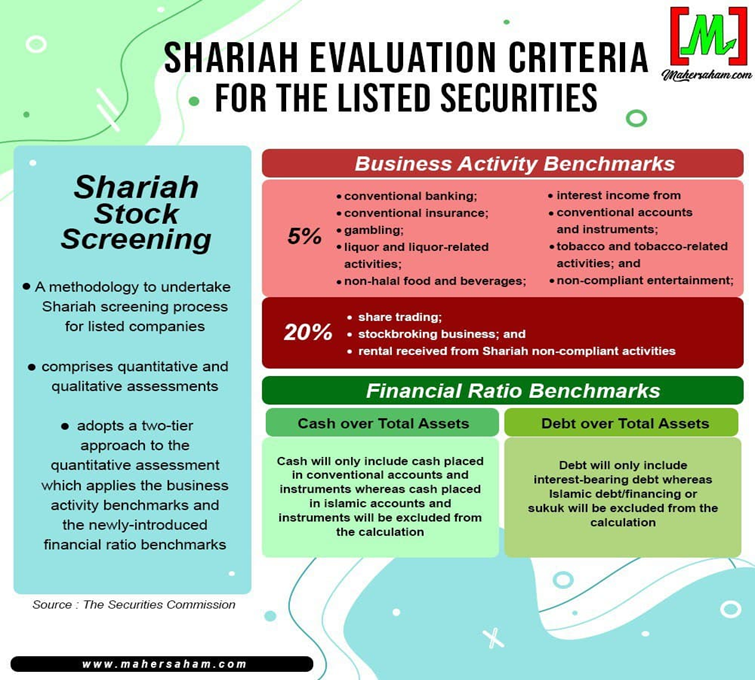
Each ratio above, which aims to evaluate riba and riba-based elements in a company's financial position statement, must be less than 33 percent.
In addition to the two-tier quantitative criteria above, the SAC also takes into account qualitative aspects involving the general public's perception or the image of the company's activities from the perspective of Islamic teachings.
For all traders' information, the audit process conducted by the SECURITIES COMMISSION takes place twice a year, in MAY and NOVEMBER.
The SAC, through the SC, will continue to review the Shariah status of securities listed on Bursa Malaysia every year, based on the latest audited annual financial statements of the companies.
What should we do if a stock we have purchased was originally Shariah-compliant but has changed to non-Shariah compliant after the audit process?
Don't panic!
Don't worry, let's read and look at the example situations below.
Example 1: Profit Scenario
You bought shares of Company A on 2 November 2020 at 20 sen, which was originally Shariah compliant.
Then on 11 November 2020, a new list from the SAC was released stating that Company A's shares had been removed from the Shariah-compliant list.
This means Company A's shares are now non-Shariah compliant. At that time, the share price had risen and the current price was 45 sen.
You've made multiple returns, but the stock has become non-Shariah compliant. As a trader who is faithful to their religion, what can you do?
Once the status has changed to non-Shariah compliant, you must sell your shareholding and only take back your capital amount.
The remaining profit should be donated (wakaf and sadaqah) to funds available at mosques or suraus.
You don't lose out, because you get your capital back.
Example 2: Loss Scenario
You bought shares of Company B on 2 November 2020 at 30 sen, which was originally Shariah compliant.
Then on 11 November 2020, a new list from the SAC was released stating that Company B's shares had been removed from the Shariah-compliant list.
This means Company B's shares are now non-Shariah compliant. At that time, the share price had dropped and the current price was 10 sen.
What can you do in this situation?
If you sell, you'll suffer significant losses, but the stock has become non-Shariah compliant.
In a situation like this, you can hold the stock until the share price returns to the purchase price.
Islam makes things easy, doesn't it? You don't lose out, because you can hold the stock until your capital is recovered.
Why is Shariah-Compliant Status So Important?
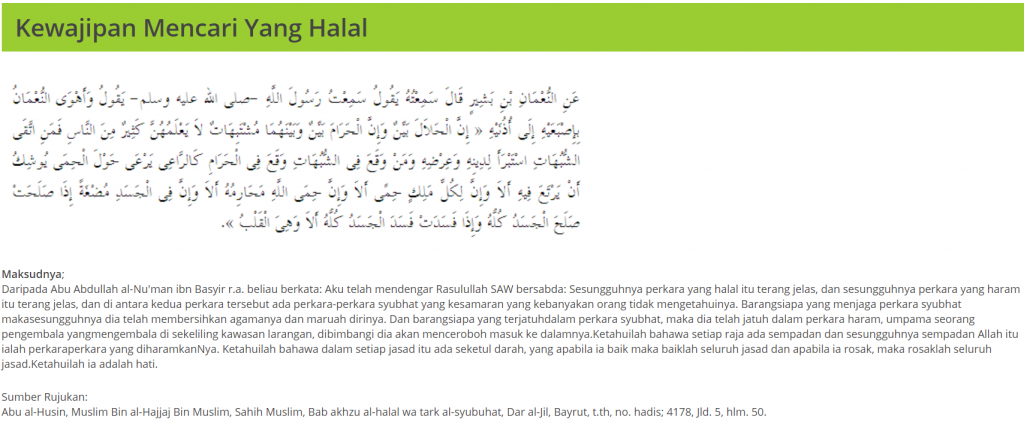
As Muslims, we are obligated to choose halal stocks.
Do not hesitate to buy Shariah-compliant stocks, as they must go through a rigorous audit process.
We hope this has been beneficial!
You may also read these articles: Is the stock you bought Shariah-compliant? and How to switch your EPF from conventional to Shariah online.
FAQ: Shariah-Compliant Stocks in Malaysia
What are the main requirements for Shariah-compliant stocks in Malaysia?
Shariah-compliant stocks must meet several key requirements set by the Shariah Advisory Council of the Securities Commission Malaysia. These include: the core business activities must be halal, the ratio of riba-based debt must not exceed the prescribed threshold, and income from non-Shariah compliant sources must be below the permitted threshold.
Who determines the Shariah-compliant status of a stock?
The Shariah Advisory Council (SAC) under the Securities Commission Malaysia is responsible for determining Shariah-compliant status. The SAC releases the list of Shariah-compliant stocks twice a year, in May and November.
What should I do if my stock changes to non-Shariah compliant status?
If a stock changes to non-Shariah compliant status, investors may continue holding the stock until the price returns to the original purchase price. Islam makes things easy, as investors are not forced to sell at a loss in this situation.
Where can I check the latest Shariah-compliant stocks list?
The latest list can be checked on the official Securities Commission Malaysia (SC) website. Additionally, most stock broker platforms in Malaysia also display the Shariah-compliant status for each stock counter.
Level Up Your Investing
Ready to invest in Shariah-compliant stocks? Open your CDS account through our guide here.
Download the free stock basics ebook to understand the fundamentals of stock investing before you start.
Further reading: