What Are Stocks? Why You Should Start Investing

Stocks Are Investments That Generate Profit
The word 'stocks' is very popular among Malaysians. But how aware and knowledgeable are we really about stock investing?
Many people still have misconceptions about stock investing. Worse still, some can't tell the difference between get-rich-quick scams and legitimate stock investments that are regulated by law.
In reality, stocks are an investment vehicle for generating profit.
It is a form of business.
The Real Definition of Stock Investing
In simple terms, 'a stock is an ownership stake in a company in the form of equity.'
In Malaysia, most businesses are run by companies, apart from those operated under individual names.
Did you know that stocks can be owned either 'privately' or 'publicly'?
Stocks that can be owned by the public are companies listed on Bursa Malaysia.
These companies are classified as Berhad (Public Limited).
Look Around You
You probably fill up petrol regularly at either PETRON or PETRONAS stations.
We use electricity and pay our monthly electricity bills to TNB (Tenaga Nasional Berhad).
Most of us have ASTRO at home.
When it comes to cars, many Malaysians drive either a PROTON or PERODUA.
The reality is that every day we deal with or use services from the companies mentioned above.
Did you know that these companies are traded on Bursa Malaysia?
PETRONAS petrol stations are managed by PETDAG (Petronas Dagangan), while PETRON stations are linked to the PETRONM stock.
ASTRO and TENAGA (TNB) are also listed on Bursa Malaysia.
PROTON is a product of one of the subsidiaries under DRB-HICOM.
Cost of Living Rises Every Year — Prices Keep Going Up
The companies we mentioned also have to bear increasing costs.
However, these costs are partially passed on to consumers.
We complain about rising electricity bills and so on. Meanwhile, these companies continue to profit.
But if you learn about stocks, you'll stop complaining.
Because you're no longer just a consumer.
You become a business partner who shares in the wealth generated by these companies.
What's the Difference Between a Regular Business and Stocks?

To understand better, let's look at how a business works and what makes it similar or different from stocks.
In the image above, Hafiz is a young man who wants to succeed. He opens a business — a HIPSTER RESTAURANT.
Hafiz earns a profit whenever customers come in to eat at his restaurant.
This is the general concept of BUSINESS — the process of buying and selling products or services between consumers and sellers.
Now Let's Look at Company A
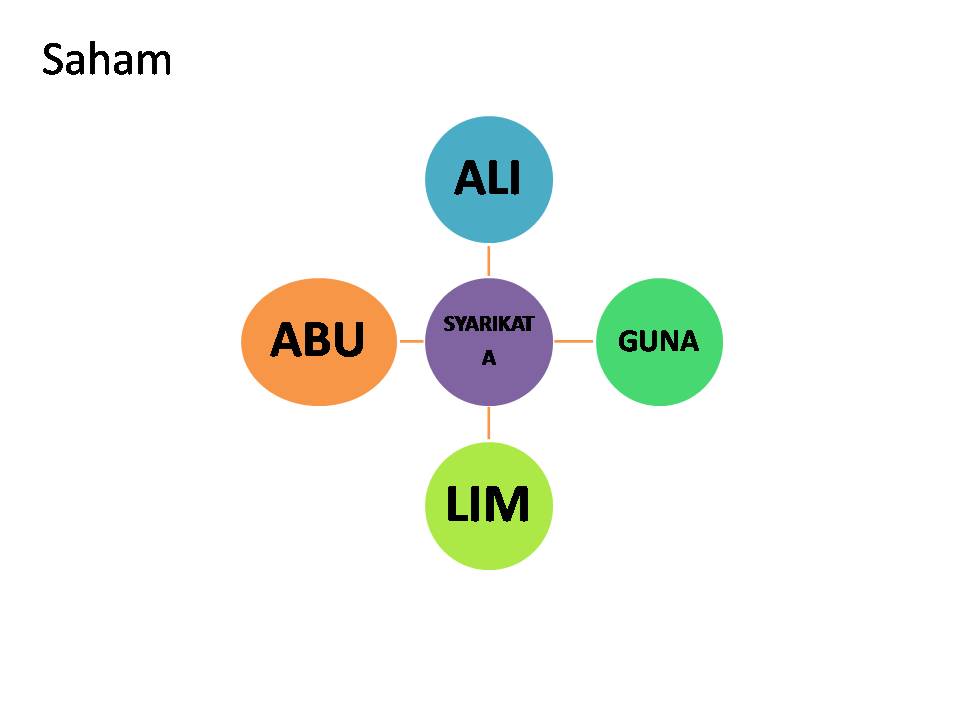
Company A sells kitchen equipment to customers. Abu is one of the company's customers.
Abu is very satisfied with Company A's service.
So Abu recommends his friends to buy Company A's products too.
Originally, Company A was founded by Ali. Due to high demand, Ali wants to expand his business.
But Ali doesn't have enough capital. Ali invites Guna and Lim to contribute capital, and in return,
Ali gives a portion of Company A's ownership to Guna and Lim.
Officially, Guna and Lim are now business partners of Ali.
When the company profits, a portion goes to Guna and Lim as well.
The money to pay staff salaries — part of it comes from the capital invested by Guna and Lim.
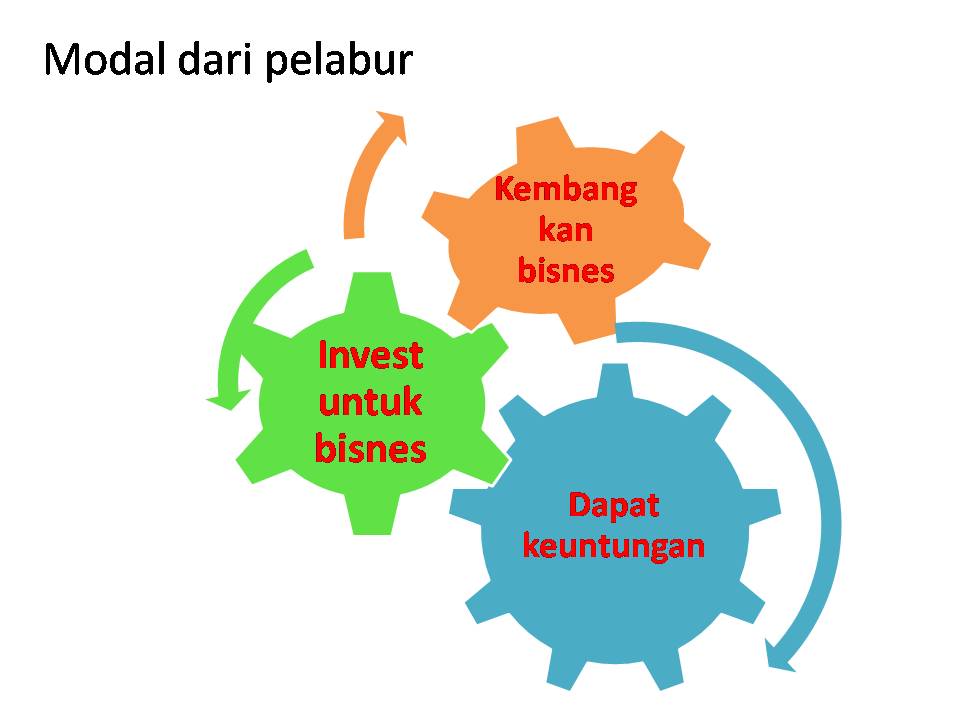
Company profits are not necessarily distributed entirely to investors right away.
Some are distributed as dividends, while some are reinvested by the company to grow the business further and generate even BIGGER profits!
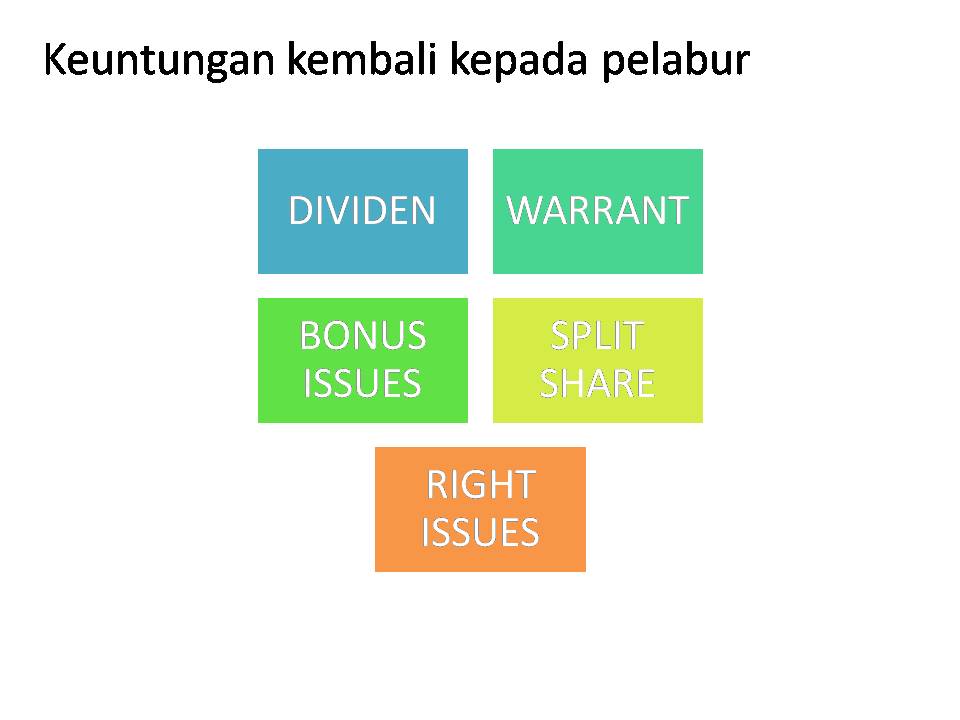
Companies also occasionally carry out various types of 'corporate exercises' to provide incentives to investors.
These include bonuses and warrants.
There's so much more to learn in the world of stocks as we work towards achieving financial freedom through passive income as investors.
Are you ready?
Interested in opening an account to start investing in stocks? Register online here
→
5 Advantages of Stock Investing
1. You Have the Choice
Unlike handing your money to unit trusts, ASB (Amanah Saham Bumiputera), or Tabung Haji for a fund manager or third party to manage, you can choose which stocks or companies to invest in yourself.
You can carefully select Shariah-compliant stocks over non-compliant ones.
2. Liquid — Easy to Buy and Sell
Imagine you buy property — a bungalow, for example.
If one day you urgently need cash, you might decide to sell that bungalow.
But how quickly can you actually sell it?
With stocks, you can sell with just a click of your mouse and keyboard.
Stock prices are market prices — clear and transparent for all investors to see.
3. Learn Corporate-Style Business Management
This is perfect for business owners.
Many courses out there try to fill this knowledge gap.
Business owners want to learn financial management, organisational structure, and strategies to grow their business.
Usually, they pay a premium for this knowledge.
Turns out?
It's all available in the Annual Reports of every company listed on Bursa Malaysia.
You can learn from CEOs who have proven themselves by taking their companies to the highest level — being listed on Bursa Malaysia.
4. Can Be Done Part-Time
What does this mean?
You don't need to monitor your stocks every moment.
Checking once a day or a few times a week may be enough.
That's if you invest long-term and have already done thorough analysis on the company you're investing in.
This is what we call passive income.
Your money works for you!
5. Profit from Multiple Angles
In other words, 'Multiple Sources of Income'.
Why do I say that?
Because stocks can generate profit in many ways.
Some people buy and hold, collecting dividends every quarter or year.
Others buy low, wait for the price to rise, and sell for a profit.
Many strategies, many opportunities.
It just depends on how creative you are.

Understood the Importance of Stock Investing? Here's What to Do Next
5 Steps to Start Stock Investing
1. Open a CDS Account
For online banking, you use your savings account.
To receive your salary or transfer money, it's usually through a bank.
In stock investing, you also need to open a special account called a CDS (Central Depository System) account.
There are several types of CDS accounts. Read more in Types of CDS Accounts.
2. Understand the Costs Involved in Stock Trading
In any business, you must account for the costs involved in buying and selling stocks.
One of the initial costs is opening a CDS account.
You can now open a CDS account 100% online.
Other costs you need to know include brokerage fees, clearing fees, and stamp duty.
These costs are explained in detail in Stock Trading Costs at Bursa Malaysia.
3. Investment Capital
Anyone who follows financial planning experts would know the term 'emergency fund'.
Here's the thing.
Stocks are an investment.
Like any other investment, before using money as investment capital, it's better to save an emergency fund of 3-6 months of your monthly salary first.
Only use surplus money for stock investing.
But can you start with small capital?
We explore the issue of capital for stock investing in Trading Stocks with Small Capital.
4. Learn the Types of Stock Analysis
You already have a CDS account and have deposited money into it.
Now, which stock should you buy?
Before buying any stock, you need to do your analysis first.
There are two popular types of analysis: Fundamental Analysis and Technical Analysis.
Learn about The Difference Between These Two Types of Stock Analysis here.
5. Stay Committed and Join a Stock Community
I've written about the importance of continuous learning and being part of a stock community before.
So let me emphasise it again here.
To succeed in the stock market, you need to show commitment and never give up halfway.
Steps You Can Take Right Now!
1. Join the free Mahersaham Telegram Channel at Mahersaham Telegram Channel (you need to install Telegram first)
2. Install Mahersaham.app on Google Play for Android users, or visit App.mahersaham.com on your laptop/PC
3. Visit this website regularly and leave comments for any questions
4. If you prefer videos, subscribe to Mahersaham on YouTube
5. Don't forget to Like us on Facebook!
Thank you to everyone who continues to support our efforts.
Conclusion
Stock investing plays a CRUCIAL role in achieving financial freedom.
Beyond that, stocks help us better understand the economy and businesses operating around us.
To learn about stocks, you must be patient, calm, and continuously improve your skills over time.
Never give up.
Because one day, you can pass on both the knowledge and wealth from stock investing to your children and grandchildren!
Start your stock investing journey by learning the fundamentals that help you evaluate a company's performance more effectively.
"The more we learn, the more we earn"
FAQ (Frequently Asked Questions)
What are stocks in simple terms?
A stock is an ownership stake in a company in the form of equity. When you buy stocks, you become a partial owner of the company and are entitled to profits through price appreciation or dividends.
What is the minimum capital to start investing in stocks on Bursa Malaysia?
On Bursa Malaysia, you can start investing with as little as 1 lot (100 shares). Depending on the stock price, your initial capital can start from just a few hundred Ringgit.
Is stock investing halal?
Yes, stock investing is legal under Malaysian law. For Muslim investors, the Securities Commission Malaysia publishes an updated list of Shariah-compliant stocks every year.
What is the difference between stocks and unit trusts?
Stocks allow you to directly own companies and make your own investment decisions, while unit trusts are managed by professional fund managers. Stocks offer higher potential returns but require knowledge and active monitoring.
The first step in stock investing is to open a CDS account and equip yourself with the right foundational knowledge.
If you don't have an investment account yet, open a CDS account through Mahersaham to start investing on Bursa Malaysia with the support of an investor community.
Just getting started? Download the free Stock Market Basics Ebook to understand the fundamentals of stock investing from A to Z.
Further Reading: