What Causes Stock Prices to Rise and Fall?

This article discusses why stock prices rise and fall. What do you think the reason is? The answer is "demand" and "supply".
Demand and Supply
How does it begin? Let us say a piece of news comes out stating that the economy is doing well and growing better than expected.
Or a particular company secures a large government contract -- then people will flock to queue up to buy shares of that company, outnumbering those who wish to sell.
Because there are now more buyers than sellers, buyers who anticipate increasingly positive price movements will purchase these shares even though the price offered by sellers is higher than the current market price.
This causes the price to trade higher and the stock price continues to rise.
Conversely, when bad news emerges -- for instance, the national economy is reported to be sluggish, or the country's debt is reported to be increasing, as happened recently -- many stocks have fallen.
This is because more shareholders have a high potential to sell compared with investors who have the potential to buy.
Relationship Between Supply, Demand and Stock Prices
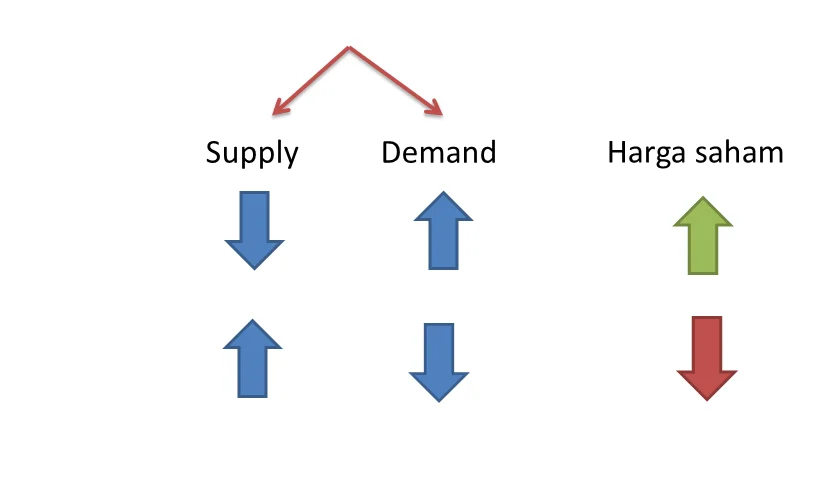 Diagram 1: Shows the relationship between supply and demand with price increases.
When demand exceeds supply, the stock price rises, and conversely when supply increases and demand falls, the stock price drops.
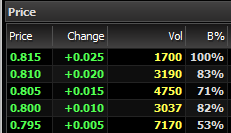
Diagram 2: Counter X showing high demand
Referring to Diagram 2, the buying percentage is high at every price level compared with the selling percentage.
This indicates that demand is increasing and causes the price to rise on that trading day.
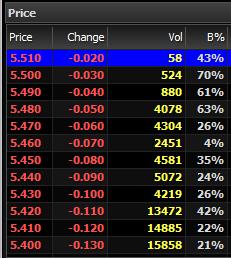
Diagram 3: Counter Y showing high supply
Referring to Diagram 3, the buying percentage has decreased and is overtaken by selling. This means supply has exceeded demand and pushed the price down on that trading day.
CONCLUSION
Stock price movements are actually driven by emotions from various groups of investors and traders.
These emotions are triggered by news about the economy or a particular company. When investors and traders are attracted and optimistic, they will push the stock price higher.
When they are worried and fearful, it pushes the stock price down. Short-term stock price increases do not reflect the true value of a company.
This provides an opportunity for savvy investors to buy at a discount and sell at a premium, generating profits for them.
Interested in Learning More About Stock Investing on Bursa Malaysia?
Want to buy and sell stocks but do not have a CDS account yet?
What are you waiting for? Register a CDS account with Mahersaham and you can join the exclusive class for Mahersaham clients.
Frequently Asked Questions (FAQ)
What is the main reason stock prices rise and fall?
The primary reason stock prices move up and down is due to demand and supply. When more investors want to buy a stock than sell it, the price rises. Conversely, when more investors want to sell than buy, the price falls. This basic economic principle applies to all stocks traded on Bursa Malaysia.
How does news affect stock prices on Bursa Malaysia?
Positive news such as strong economic growth or a company securing a large contract attracts more buyers, pushing prices up. Negative news such as economic slowdowns or rising national debt causes more investors to sell, driving prices down. Emotions and sentiment play a significant role in short-term price movements.
Does a rising stock price mean the company is doing well?
Not necessarily. Short-term stock price increases do not always reflect the true value of a company. Prices can be driven by market sentiment, speculation, or temporary news. Smart investors analyse fundamental factors like revenue, profit, and debt alongside price movements before making investment decisions.
How can beginners start investing in stocks on Bursa Malaysia?
Beginners should first open a CDS (Central Depository System) account through a licensed broker or remisier. Learning the basics of supply and demand, technical analysis, and fundamental analysis is essential. You can open a CDS account through Mahersaham to get started with access to exclusive investor classes.
Start your investment journey by opening a CDS account through Mahersaham for access to exclusive investor classes.
Get our free stock basics ebook to learn the fundamentals of stock investing from scratch.