What Is Financial Statement Analysis? A Beginner Guide for Malaysian Investors

The world of stock investing often seems intimidating to many Malaysians. When we hear terms like "Financial Statement Analysis," our minds often picture complicated numbers, mind-boggling mathematical formulas, and accounting jargon that only accounting graduates would understand.
However, the reality is far from what we imagine. To become a smart and safe stock investor, you do not need to be a certified accountant. You do not need to memorise complex mathematical formulas. All you need is a basic understanding of the "story" behind those numbers.
This article is written specifically for you — the beginner investor starting from zero. We will break down the basics of financial statement analysis in a casual, easy-to-understand way, without any technical calculations. Think of this as your first step towards investing with knowledge, not just luck.
Read more: Fundamental Analysis in Stocks
What Is Financial Statement Analysis, Really?
By definition, Financial Statement Analysis is the process of reviewing and evaluating a company's financial reports to understand the health of that business.
Imagine you want to buy a used car. Would you buy it simply because the body kit and sport rims look nice? Of course not. You would want to see the car's service record, check the mileage, inspect the engine condition, make sure it is not a cut-and-join car, and ensure there are no major hidden defects.
In the stock market, the company is that "car." The financial statements are the "service record" and engine inspection report of that company.
Financial statement analysis is simply a method for us to answer important questions such as:
- Is this company actually making money?
- Does this company have too much debt?
- Does the company have enough cash to operate next month?
It is not about calculating to the exact decimal point. It is about getting the real picture of whether a company is safe enough for you to invest your hard-earned savings in.
Why Investors Must Understand Financial Reports
Many new investors in Malaysia fall into the "follow the crowd" syndrome or get influenced by "buy calls" on Telegram channels and Facebook groups without doing their own due diligence. This is a recipe for disaster. Let us discuss the main reasons why you must understand the basics of financial reports.
Avoiding Major Losses
Stock investing is not a get-rich-quick scheme. It is business ownership. Without looking at financial reports, you are essentially handing your money to a stranger on the street and hoping they will return it with profit. Understanding financial reports acts as a shield that protects your capital from companies that are "on life support" or on the brink of bankruptcy.
Distinguishing "Trending" Stocks from Reality
Often, a company's share price shoots up simply because of rumours or speculation. However, when we dissect their financial reports, the company may actually be suffering huge losses. Financial reports give you the real picture of a company's performance, independent of management rhetoric or empty promises.
Peace of Mind
When you invest in a company that you know has strong financials, you can sleep well even when the stock market is volatile. You know that the company has strong assets and can survive an economic crisis. This reduces panic and allows you to make rational decisions.
Read more: Greatest Fundamental Investor Series: Warren Buffett
Common Misconceptions About Profit and Loss
Before we go further, we need to correct the biggest misconception among Malaysians about business and stocks.
Net Profit Is Not the Same as Cash
Many people assume that if a company reports RM1 million in profit, it means they have RM1 million in cash in the bank. This is not true.
Let us use a simple analogy. Imagine you open a nasi lemak stall.
- You receive a catering order worth RM10,000.
- The cost of raw materials is RM5,000.
- Theoretically, your profit is RM5,000.
However, the customer asks to pay next month (on credit).
In the profit and loss statement, you have already recorded a profit of RM5,000. But in your bank account, you have zero cash. In fact, you spent money upfront to buy the raw materials.
If this situation continues, your nasi lemak stall could go bust even though on paper you appear to be making great profits — because you have no cash for the next round of working capital.
This is why looking at the "profit" figure alone is not enough. We need to see the complete picture from the financial reports.
The Three Main Financial Statements
In any Annual Report of a company listed on Bursa Malaysia, there are three main components you must know. We will not go into the calculations, but it is enough for you to understand the function of each one.
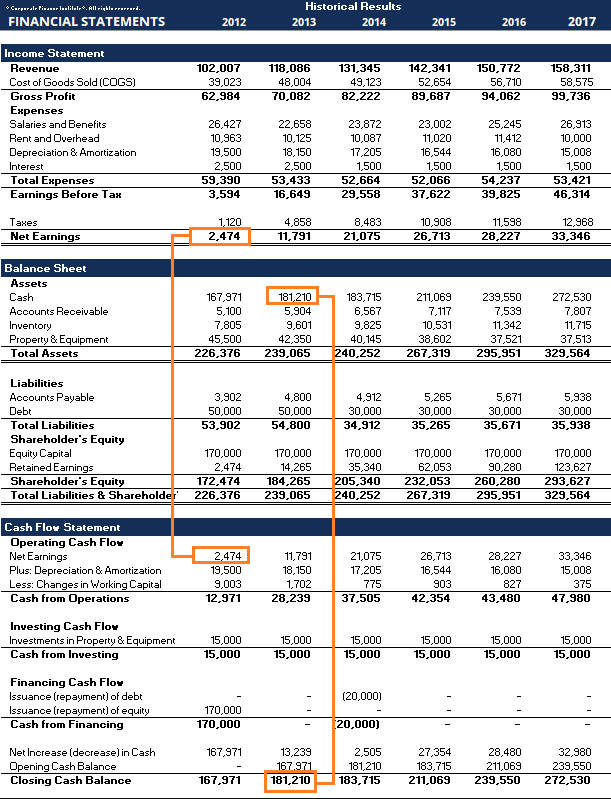
Income Statement (Profit and Loss Statement)
This is the most popular report. It is also known as the Profit and Loss Statement.
Function: It tells us the company's performance over a specific period of time (for example, from 1 January to 31 December).
Analogy: Think of it as a "School Report Card" or "Pay Slip." It tells you how much sales the company generated, how much was spent on employee salaries, rent, electricity, and finally how much remains as net profit.
What do we look for here? We want to see whether the company's revenue is increasing year after year. Is the business growing or shrinking?
Balance Sheet
This report is often overlooked by beginners, but it is very important.
Function: It shows the company's financial position at a specific date. It is a "snapshot" or "static image" of the company's wealth on that day.
Analogy: Imagine you are applying for a bank loan. The bank will ask for a list of your assets (house, car, savings) and a list of your debts (personal loans, credit cards).
- Assets: What the company owns (factories, machinery, cash in bank, inventory).
- Liabilities: What the company owes (bank loans, debts to suppliers).
- Equity: The remaining wealth for shareholders after deducting debts.
What do we look for here? We want to ensure the company has more Assets than Liabilities. A company with too much debt is at high risk of going bankrupt during an economic downturn.
Cash Flow Statement
This is the most honest report. As we discussed earlier, profit does not necessarily mean there is cash.
Function: This report tracks the actual movement of cash flowing in and out of the company's bank account.
Analogy: Think of it as your personal bank statement. It does not care about promises or unpaid invoices. It only records money that actually came in and money that actually went out.
What do we look for here? We want to see positive "Operating Cash Flow." This means the company's core business (e.g. selling gloves or making furniture) is truly generating cash, not just paper profits.
How to Think About Financial Reports
As a beginner investor, do not try to think like an accountant checking every sen. Instead, shift your mindset to an Investigator Mindset or Business Owner Mindset.
Look at Trends, Not a Single Number
Do not just look at this year's report. Look at the records from the past 3 to 5 years. Is the company consistent? A company that declares profit this year but had three consecutive years of losses before that may just be lucky this year. Consistency is the key to long-term investing.
Compare With Competitors
Company A made RM10 million profit. Is that good? We do not know until we compare it with Company B in the same industry, which might have made RM100 million. Numbers in financial reports become more meaningful when placed in the context of comparison with other companies in the same sector.
Read more: How to Compare Company Stocks: Peer Review Analysis for Beginners
Think About Sustainability
When reading reports, ask yourself: "Can this company continue making money like this or more for the next 10 years?"
If a company's profit comes from selling a piece of land (a one-off asset), that is not a profit that can be repeated next year (because the land is already sold). We want profits that come from recurring product or service sales.
Common Beginner Mistakes When Reading Financial Statements
Many new investors make simple mistakes when trying to read financial reports. Let us look at the traps you should avoid.
Being Dazzled by "Top Line" (Revenue)
Some companies record billions of ringgit in sales. Beginners are often excited by these big numbers. But if their operating costs are also in the billions leaving no profit behind, that huge revenue is meaningless to shareholders. "Revenue is vanity. Profit is sanity."
Ignoring Footnotes (Notes to Accounts)
Financial reports have many "small notes" at the back. This is where the real story is often hidden. Perhaps the company has an ongoing court case that could cause massive losses, or the company directors are selling their shares. Do not be lazy about reading these important notes even though they may seem boring.
Not Considering the Business Sector
The way you read financial reports for a construction company is not the same as for a technology company. Construction companies typically have high debt because their projects take a long time and require large capital. Technology companies may have no debt but very few assets. Do not apply the same standards across all companies.
Do You Need to Memorise Accounting Terms?
Short answer: No.
You do not need to memorise textbook definitions for every term like amortisation, depreciation, or non-controlling interest to start investing.
What you need to understand is the logic behind them.
- Depreciation is simply the accountant's way of saying "this machine is getting older and its value is decreasing." Just like your car that depreciates every year.
- Receivables simply means "people owe us money."
- Payables simply means "we owe money to others."
Use simple language to explain things to yourself. If you come across a term you do not understand, just Google its meaning briefly. Over time, you will naturally become familiar with these terms without needing to memorise them like a university student.
Why Financial Reports Matter for Malaysian Stock Investors
In Malaysia, Bursa Malaysia requires all public companies to publish financial reports every quarter (once every 3 months) and a complete annual report. This is your right as an investor.
This information is free and can be downloaded from the Bursa Malaysia website or the company's own website.
With this basic understanding, you no longer need to depend on fake "stock gurus" who promise the moon and stars. You can open financial reports yourself and see whether a company is on its deathbed or thriving. In Malaysia, many companies look impressive by name and brand, but when you strip open their financial reports, they have actually been accumulating losses for years. This basic knowledge is what saves your hard-earned money from evaporating.
Remember: If a company's fundamentals deteriorate, the stock can fall into PN17 status, which can lead to delisting. When a stock is delisted, its shares become worthless and your investment is lost completely.
Why This Article Does Not Go Into Deep Topics
Some may ask, why does this article not cover PE Ratio, ROE, Profit Margin, or Debt-to-Equity Ratio?
The reason is simple: Information overload leads to analysis paralysis.
For someone who is just starting out (with zero knowledge), being bombarded with formulas and financial ratios will only kill their interest. You will feel that stock investing is difficult and exclusive to people who are good at maths.
The purpose of this article is to build a strong foundation. Building "sense" and intuition about business is far more important than memorising formulas at this early stage. Once you are comfortable with the concepts of "Assets," "Debt," and "Cash Flow," you will be ready to move on to the next phase — Ratio Analysis.
Financial Statements as an Investor Protection Tool
In closing, remember that Financial Statement Analysis is not a boring academic subject. It is a survival tool in the world of stock investing.
It is the difference between "investing" and "gambling."
Financial statements were not created just for accountants, auditors, or bank analysts. They were written for you — the shareholder and business owner. They are performance reports from your employees (the company's management) to you (the boss).
Start with small steps. Try picking up an annual report of a company you are interested in (perhaps a food product company whose products you regularly buy), and try reading their financial statements section. See how much cash they have. See how much debt they carry.
Over time, those numbers will start to "speak" to you and tell you the real story behind the company.
Keep learning. Do not stop here. After you master these basic concepts, you can start learning more advanced topics step by step. The world of stock investing is a continuous journey of knowledge.
Happy smart investing!
FAQ — Financial Statement Analysis for Beginners
Do I need an accounting degree to read financial statements?
No. You only need to understand the basic logic: Is the company making money? Does it have too much debt? Does it have enough cash? You can learn these concepts without any formal accounting background.
Where can I find financial reports for Malaysian companies?
All publicly listed companies on Bursa Malaysia are required to publish quarterly and annual reports. You can download them for free from the Bursa Malaysia website or the company's investor relations page.
What is the most important financial statement to look at first?
Start with the Cash Flow Statement. It is the most honest report because it shows actual cash movement, not just paper profits. Many companies show profits on paper but have no cash — the cash flow statement reveals this.
What does PN17 status mean for a stock?
PN17 is a classification by Bursa Malaysia for companies in financial distress. If a company fails to recover, it may be delisted — meaning its shares become worthless and your investment is lost completely.
Level Up Your Investment Knowledge
Successful investing starts with solid knowledge. Continue your learning journey.
Investment Basics:
Download our free Stock Market Basics Ebook for a complete guide.
Open a CDS Account:
Ready to get started? Open a CDS Trading Account and put what you have learned into practice.