Consumer Spending, Inflation and Interest Rate Hikes

What Happens When Costs Rise?
When interest rates are raised by the central bank, the impact on household spending is very significant. Borrowing costs increase and purchasing power declines. This explains how inflation and interest rates can reduce consumer spending and business investment. Although this measure can ease price pressures, it can also slow economic growth. Investors who understand the relationship between consumer spending, inflation, and interest rates will be better prepared to restructure their portfolios — for instance, reducing exposure to rate-sensitive sectors like property and banking.
Latest Consumer Spending Data
The consumer spending announcement in the United States in April 2023 showed a 0.8% increase compared to the previous month. Household spending is heavily influenced by inflation and interest rates, two key factors that are closely interrelated. In the context of monetary policy, every change in lending rates affects consumer decisions and ultimately inflation levels.
Given that price fluctuations are influenced by supply and demand, consumer spending, inflation, and interest rate hikes often become the primary focus. This suggests that rising prices do not appear to significantly affect people's spending habits.
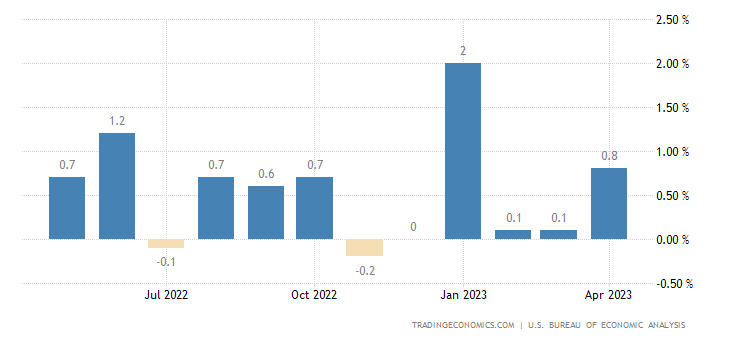
An increase in consumer spending signals that inflation and interest rates may rise, meaning inflation could remain elevated or continue climbing.
Relationship Between Inflation, Demand and Supply
Price fluctuations are determined by demand and supply. That is why inflation and interest rates are always in the spotlight because they shape consumer spending patterns and the direction of the economy.
To better understand this relationship, it is important to study interest rates and inflation rates along with their implications for the economy.
Enhance Your Investment Knowledge
Successful investing starts with solid knowledge.
Investment Basics:
Download our free ebook for a complete guide to stock investing.
Open a CDS Account:
Ready to start investing? Open a CDS account today.
Frequently Asked Questions (FAQ)
1. What is the impact of interest rate hikes on consumer spending?
Interest rate hikes increase borrowing costs, which in turn reduce consumer purchasing power. This means household spending will decrease as more money is used to pay loan interest.
2. How does inflation affect stock investors in Malaysia?
Inflation reduces the real value of investment returns. Investors need to choose stocks that can deliver returns exceeding the inflation rate to ensure their wealth does not depreciate over time.
3. Can stock investment protect money from inflation?
Yes, stock investment has the potential to deliver returns higher than the inflation rate over the long term. Strong companies are typically able to raise product prices in line with inflation, thereby protecting the value of your investment.
4. What is the first step to start investing in stocks as an inflation hedge?
The first step is to open a CDS account to enable you to buy and sell shares on Bursa Malaysia. After that, learn the basics of stock analysis before making investment decisions.
Conclusion
Consumer spending, inflation, and interest rate hikes are closely interconnected and directly impact your finances. As a savvy investor, understanding this relationship is crucial for making sound investment decisions and protecting your wealth from the erosion of inflation.
Do not let your money sit idle and lose value. Take your first investment step today by opening a CDS account and get the free stock basics ebook to build a solid investment foundation.