Foreign Stock Markets: Top Picks for Malaysian Investors

Over the past few months, we have been presented with news about the decline of the Malaysian stock market on Bursa Malaysia before a slight recovery in recent weeks, in contrast to foreign stock markets.
Foreign investors had pulled out their investments for 12 consecutive weeks before becoming net buyers last week.
This situation prompted me to take a closer look at foreign stock markets. Is the same decline happening elsewhere?
Are there more attractive investment prospects in overseas markets that we can take advantage of?
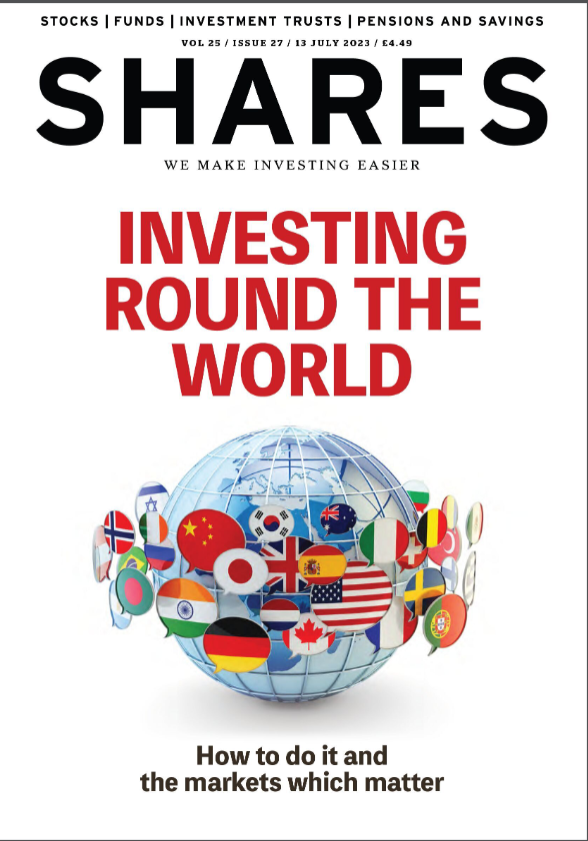
The financial magazine "Share" published an article titled "Investing around the world". I will summarise for you the attractions of these foreign markets as well as the risks to consider when diversifying your investments into overseas stock markets.
1. United States Stock Market (US Market)
The US market offers you the opportunity to participate in the world's most liquid stock market. This liquidity allows stock holdings to be sold quickly at a price close to the current market price.
Here you will also find global giants such as Meta, Tesla, Nvidia, and Alphabet — the company that owns the Google brand.
This highly dynamic market generates over 70% of its revenue domestically, higher than any other market.
Buying shares and bonds also exposes your investment to the world's reserve currency, the US Dollar (USD). The USD often appreciates and benefits during periods of global market uncertainty.
Although the US frequently faces financial scandals, the well-regulated American stock market provides strong protection for investors, backed by strict enforcement of its laws.
Risks to Watch Out For:
The US market has shown strong gains in recent months, alongside impressive annual returns over the last 10 years.
This means current market sentiment becomes a crucial gauge before investing, sometimes overshadowing the fundamental valuation of a company.
Several overvalued valuation components, such as the Adjusted PE Ratio, expose these stocks to potential future declines or pullbacks.
Over the past 10 years, the S&P 500 has risen by 10.7% and the Nasdaq 100 has recorded a gain of 17.7%.
2. United Kingdom Stock Market
Compared to other markets, the UK market has not been particularly impressive lately.
Nevertheless, the index continues to rise and is expected to deliver good returns to investors going forward.
One interesting aspect is that over 50% of these companies' revenue comes from outside the UK, thanks to the diversification of their businesses across different geographical regions.
Risks to Watch Out For:
The main challenge for this market — and indeed for the world — is inflation.
Additionally, persistently high interest rates increase business expenses and impact the cost of debt repayments.
In this situation, Brexit has not added value and has instead caused disruptions in the food supply chain, further increasing existing food costs.
Overall, over the past 10 years, the FTSE 100, the UK's main index, has risen by 5.5%.
3. European Stock Market
The world views the US market as a hub for continuously growing, high-technology companies.
However, the European market is often seen as a saturated market with less business dynamism.
Yet this market has its own strengths, as most European companies are able to sell their products globally.
Among the well-known companies are Adidas, Audi, Siemens, and Infineon Technology.
Risks to Watch Out For:
The main issue with European companies is that their valuations often do not match those of US companies.
Furthermore, the war in Ukraine and rising energy prices caused investors to pull out nearly USD 100 billion in investments from this market last year.
The MSCI Europe Index has recorded a gain of 6.5% over the past 10 years.
4. Japanese Stock Market
The Japanese market is considered a "home" for high-tech and high-quality companies due to the abundance of such companies listed on the Japanese stock exchange.
These companies are very investor-friendly, returning investments to shareholders through dividends and buybacks, supported by strong company balance sheets.
Japan also benefits from China's reopening and serves as a popular tourist destination.
Rising wages for local workers help boost domestic consumption.
Although many companies are not widely recognised globally, some produce products used extensively worldwide, such as Sony, Nintendo, and Toyota.
Risks to Watch Out For:
The strong performance of the Japanese stock market opens opportunities for investors to engage in profit-taking activities.
The foreign exchange rate for the Yen is also a risk factor that needs to be considered.
Despite the impressive market performance, the declining value of the Yen reduces profits for foreign investors.
Over the past 10 years, the Nikkei 225 has recorded a gain of 9.3%.

5. Emerging Markets
Emerging markets do not focus on a single country but encompass markets across developing nations worldwide.
Due to varying levels of development, the potential for growth is higher compared to developed nations.
This is driven by younger demographics that create a larger workforce.
20 to 30 years ago, the economic prospects in these markets were based on commodities, cheap labour, and low-cost exports.
However, today, some of these emerging markets have become home to innovative, high-technology companies. A prime example is the Taiwan Semiconductor Manufacturing Company.
Besides China, emerging markets are dominated by Asian countries such as India, Taiwan, and South Korea.
Emerging markets are typically more volatile and unpredictable.
Currency rates that may be undervalued and weaker corporate governance standards compared to Western countries are risks that investors need to be mindful of.
This is often the case in countries where property rights are not fully protected, possibly due to insufficient separation of power between the judiciary and the ruling government.
A key concern for emerging markets is the need for more peaceful transitions of power, as investors want to see more stable politics and governance.
Overall, the MSCI Emerging Markets Index has recorded a gain of 3% over the past 10 years.
What other options are available in foreign stock markets? Let us look at what comes next.
6. Chinese Stock Market
After facing ongoing Covid-19 challenges for over 2 years, China's economic recovery has shown improvement, driven by the consumer sector, green energy, and digital spending.
High consumer savings are expected to help boost market demand and subsequently lift the equity market for 2023.
Although the economy appeared to be growing in the first quarter of 2023, the "hype" surrounding the economic reopening or "restart economy" did not last long and has been fading. This is a risk that needs to be watched closely.
China's GDP forecast has been revised down from 5.5% to 5.2% by S&P Global, following unclear domestic demand and high youth unemployment rates.
The weak property sector and geopolitical tensions between the US and China are seen as hindering China's economic growth.
Additionally, another consideration is that many Chinese companies still do not meet ESG (Environmental, Social, and Governance) standards.
Overall, over the past 10 years, the MSCI China Index has delivered a return of 5.0%.
Frequently Asked Questions (FAQ)
What are the popular foreign stock markets among Malaysian investors?
Among the popular foreign stock markets are the United States (NYSE, NASDAQ), Hong Kong, Japan, and China. Each market has its own advantages and risks depending on the economic conditions of the respective country.
How can Malaysian investors invest in foreign stocks?
Malaysian investors can invest in foreign stocks through trading platforms such as Mplus Global, which provides access to international markets. You need to have a CDS account and register for global market access.
What are the main risks of investing in foreign stocks?
The main risks include currency exchange risk, differences in trading hours, the geopolitical situation of the country, and lack of understanding about local market regulations. Investors should also consider ESG (Environmental, Social, and Governance) factors.
Are returns from foreign stocks better than Bursa Malaysia?
Returns vary by market and investment period. Over the past 10 years, the US market has shown strong returns while the Chinese and Indian markets have had mixed performances. Diversifying investments across markets can help manage risk.
Investing in foreign stock markets can be a wise portfolio diversification strategy. However, make sure you understand the risks and opportunities of each market before making investment decisions.
Open your CDS account today with our step-by-step guide here to start investing in the stock market.
Download our free stock basics ebook to learn the fundamentals of stock investing from scratch.