Hostile Takeover - Corporate Raids in the Stock Market

What Is a Hostile Takeover?
This method differs from the usual takeover known as a friendly takeover.
Examples of Hostile Takeovers
Let me give you a story that is an important piece of history for Malaysia to this day.
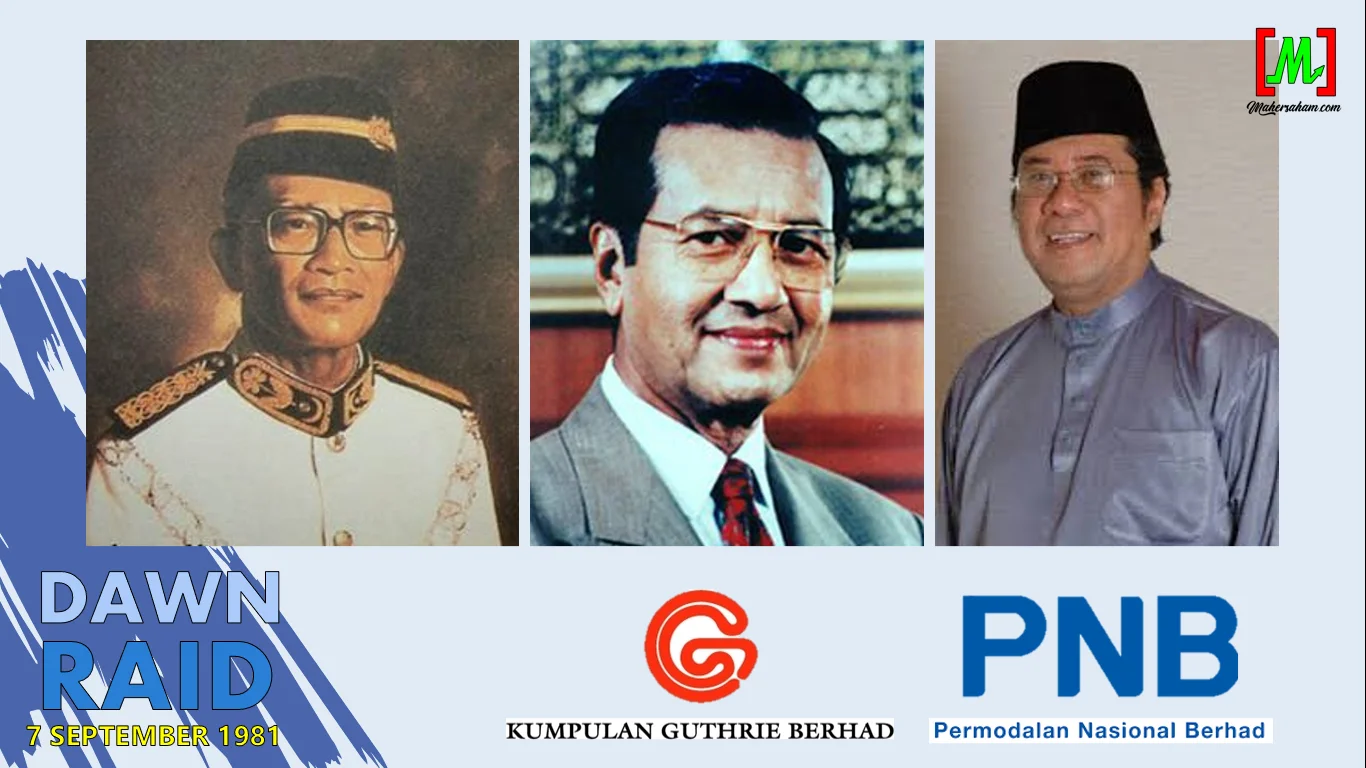
Dawn Raid
The raid took only 4 hours and was led by Tun Dr Mahathir, who was the Prime Minister of Malaysia at the time.
This event occurred just 2 months after Tun took office as Prime Minister of Malaysia.
The key figures in this raid were Tun Dr Mahathir, Tun Ismail Ali, and Tan Sri Khalid Ibrahim.
Why Guthrie?
The British company also frequently postponed meetings with Malaysian government representatives in attempts to resolve the matter.
This new regulation was limited to students from only a few countries, and Malaysia was one of them.
This action burdened 17,000 Malaysians who were studying in the UK, as they now faced significantly higher fees.
The Story of the Guthrie Takeover
Following all this, Tun Dr Mahathir and the Malaysian people felt these actions were unjust and burdensome.
It got even worse when the British supersonic aircraft Concorde violated Malaysia's international airspace in Subang while en route to Singapore.
PNB held a 25% stake in Guthrie at the time.
Planning the Guthrie Takeover
So Tun Dr Mahathir, together with Tun Ismail Ali and Tan Sri Khalid Ibrahim — who was an investment manager at a Malaysian government agency — planned the raid.
Tan Sri Khalid had previously worked at Barings, London — which was a financial advisory firm for Guthrie. Together with Malaysian investment experts and advisors from NM Rothschild & Sons Ltd., they were tasked with assessing whether Guthrie could be taken over and developing the strategy to execute it.
The RM1 billion required was sourced from Petronas, Pernas, and Amanah Saham Nasional.
Rothschild was appointed to purchase Guthrie shares from major overseas investors, while Rowe & Pittman was appointed as the broker to buy Guthrie shares from small investors, predominantly British citizens.
Even the CEO of PNB was not informed of the operation. Everyone involved secured approval from share sellers before the London Stock Exchange opened.
The Guthrie Takeover Raid
When the market opened, the Malaysian government would simply announce their ownership of Guthrie — which would shock the world — and handle the paperwork.
At the same time, Tun Ismail Ali travelled to Singapore to meet the chairman of OCBC Bank. They discussed over lunch. The discussion took a long time, and ultimately ended with disappointing news — OCBC rejected the offer.
Tun Ismail Ali immediately called Tan Sri Khalid to inform him of the bad news.
In London, the two appointed firms — Rothschild and Rowe & Pittman — awaited the green light from Tan Sri Khalid.
Upon receiving the go-ahead from Tan Sri Khalid, both firms immediately carried out the purchases as planned.
Rothschild successfully persuaded M&G Investment Trust to sell 11% of its 17% stake in Guthrie.
Meanwhile, Rowe & Pittman successfully purchased 5% of shares from small investors, consisting of British citizens.
Guthrie had finally fallen into Malaysian hands. The chairman of Guthrie, Mark Gent, only learned of the ownership change through the radio.
This event dealt a massive blow to the British.
FAQ - Hostile Takeover
1. What is a hostile takeover in the stock market?
A hostile takeover, also known as a corporate raid, is when a company takes over another company without the consent of the target company's management. It is carried out by purchasing a majority stake in the open market.
2. How does a hostile takeover happen?
A hostile takeover occurs when the acquiring party buys shares of the target company aggressively in the open market until they own a majority stake (more than 50%), thus gaining control of the company.
3. What is the most famous example of a hostile takeover in Malaysia?
The most famous example is the takeover of Guthrie by PNB Malaysia in 1981, known as the Dawn Raid. PNB successfully acquired 50.4% of Guthrie shares in just a few hours on the London Stock Exchange.
4. What is the impact of a hostile takeover on minority shareholders?
The impact on minority shareholders can be positive or negative. If the offer price is higher than the market price, they stand to profit. However, if the company does not perform well after the takeover, share prices may decline.
Want to learn more about stock investing and corporate strategies? Open a CDS account with us for complete guidance from basics to advanced. Also download our Free Stock Ebook for a solid foundation.