NVIDIA Today = Cisco 2000? Historical Lessons & Other AI Stocks Worth Watching

In late October 2025, NVIDIA Corporation (NVDA) made history by becoming the first company in the world to reach a market capitalisation of US$5.025 trillion. The stock has surged nearly 2,000% since October 2022, making every retail investor ask the same question: should I buy NVDA too?
But before you click the "buy" button on your broker account, read this story first.
On 27 March 2000, another company hit the same astonishing milestone. Cisco Systems Inc became the most valuable publicly traded company in the world, reaching a market cap of US$555.4 billion, surpassing Microsoft at the time. It looked utterly invincible - Cisco was the provider of Internet infrastructure, much like NVIDIA is the provider of "AI infrastructure" today.
What happened next?
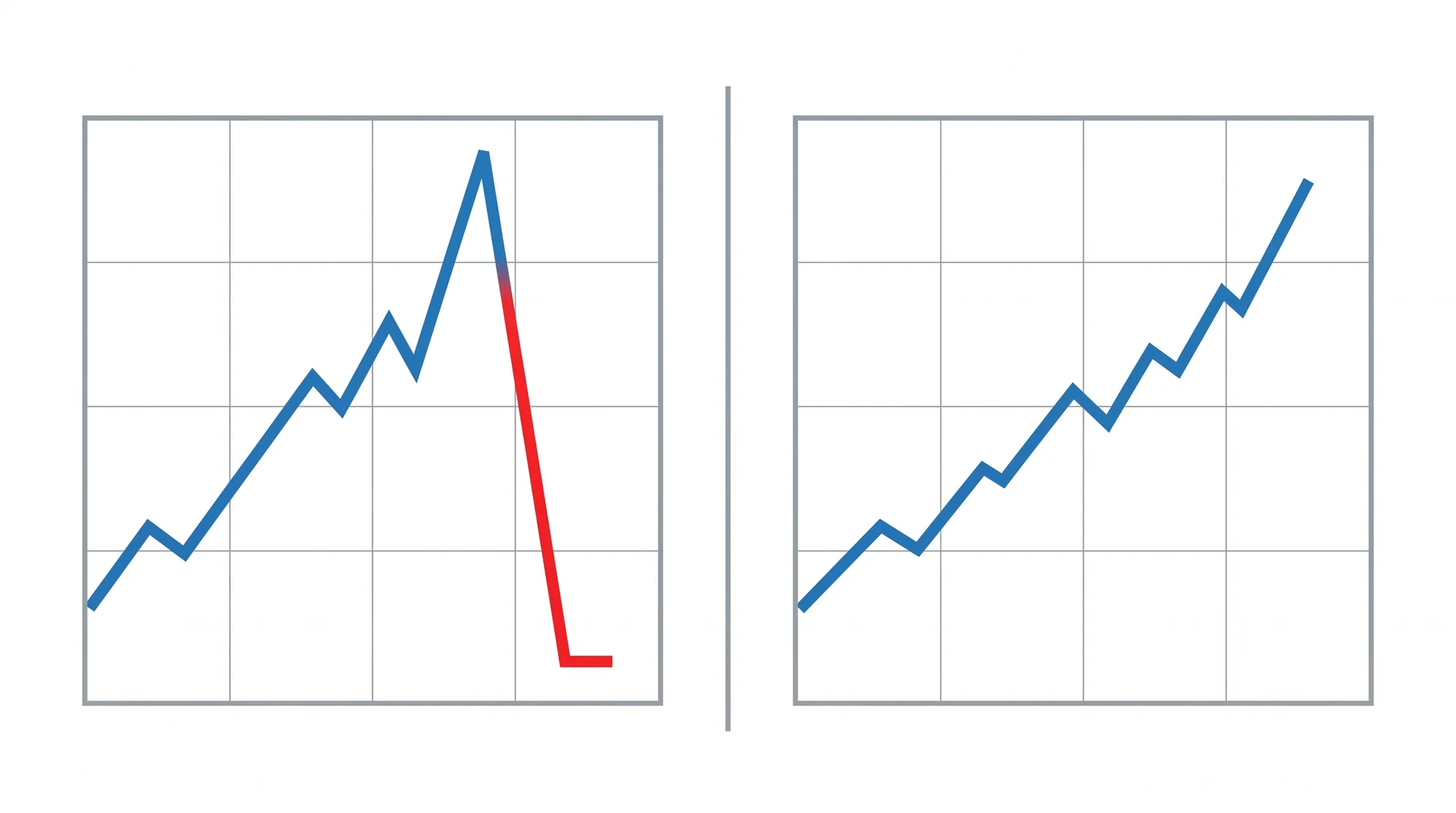
Cisco's stock fell 88% within two years (from US$79 to US$9.50). More worryingly: investors who bought at the peak had to wait 25 years before the stock price returned to that level - only in December 2025. Even then, Cisco's market cap remains 40% below its dot-com peak because the company has issued more shares since.
Will NVIDIA suffer Cisco's fate? No one can predict with certainty. But for retail investors, understanding history and knowing other AI stocks across the value chain is critical to avoid dangerous concentration risk.
This article isn't a buy call for NVIDIA or any stock. It is: - A comparative analysis of NVIDIA today vs Cisco 2000 - Key similarities and differences - A list of other AI stocks across the value chain (including Bursa Malaysia stocks) - Historical lessons for Malaysian investors
The Cisco 2000 Story: What Actually Happened?
To fully understand this, let's go back to the late 1990s.
Cisco Systems was the dominant maker of routers and switches - the network equipment that became the backbone of the Internet. During the dot-com era, every new company needed Internet infrastructure, and Cisco was the primary provider. The market narrative was incredibly powerful: "The Internet will change the world, and Cisco profits from every Internet user growth."
Cisco's Surge
From its 1990 IPO to its March 2000 peak: - Cisco shares rose over 1,000% - Market cap reached US$555.4 billion on 27 March 2000 - Trailing P/E ratio of ~196x (some sources reported as high as 472x in 1999) - Forward P/E ratio of ~131x - Cisco became the world's most valuable company for the first time
At that moment, many Wall Street analysts predicted Cisco would become the first trillion-dollar company. Some were confident the market cap could reach US$1 trillion.
Cisco's Crash
But in March 2000, the dot-com bubble began to burst. For Cisco: - Stock fell from US$79 (peak) to US$9.50 within 2 years - Decline of ~88% - Market cap plunged to ~US$60 billion by late 2002 (down 89% from peak) - Cisco stayed below its peak price for over 25 years
An investor who bought US$1,000 of Cisco shares in March 2000 only returned to original capital in December 2025 - 25 years later, as reported by CNBC. And that's ignoring inflation and opportunity cost.
Key Lessons from Cisco
- A narrative can hold for years; fundamentals catch up eventually: "The Internet will change the world" was correct - but investors who paid bubble prices got hurt
- Industry winner ≠ stock winner: Cisco remained a successful infrastructure company, but as an investment, it was a nightmare for peak buyers
- Concentration risk is dangerous: Investors who put everything into Cisco suffered massive losses
- Recovery can take a generation: Not 5 years, not 10 years - 25 years
NVIDIA Today vs Cisco 2000: Similarities
Now let's compare NVIDIA with Cisco 2000:
Similarity #1: The "No Alternative" Narrative
Cisco 2000: "Every company needs to buy Cisco routers/switches to connect to the Internet" NVIDIA 2026: "Every company needs to buy NVIDIA GPUs to train AI models"
Both companies are perceived as infrastructure providers that are impossible to replace. Investors believe there's no serious competition.
Similarity #2: Astonishing Stock Surges
| Metric | Cisco 1990-2000 | NVIDIA 2022-2025 |
|---|---|---|
| Price gain | +1,000% | +2,000% |
| Reaching "world's most valuable" status | Yes (Mar 2000) | Yes (Oct 2025) |
| Peak market cap | US$555 billion | US$5 trillion |
Similarity #3: Bullish Analyst Sentiment
In March 2000, many analysts predicted Cisco would become the first trillion-dollar company. Today, many analysts predict NVIDIA could reach US$10 trillion or more.
Similarity #4: Index Concentration
Cisco 2000: One of the top holdings in the Nasdaq 100 and S&P 500 NVIDIA 2026: Around 7%+ of the S&P 500, top holding in the Nasdaq 100
When one stock represents such a large share of the index, ETF/index fund investors are indirectly very exposed.
Similarity #5: The DeepSeek Shock - A Real Vulnerability
On 27 January 2025, Chinese AI startup DeepSeek announced an AI model trained at a cost of just US$5.6 million - far cheaper than industry projections. NVIDIA lost US$588.8 billion in market cap in a single day - the largest single-day loss in stock market history. While the price recovered afterwards, it showed how fragile valuations built on "no alternative" assumptions can be.
NVIDIA vs Cisco 2000: Important Differences
But NVIDIA isn't 100% Cisco. Several critical differences:
Difference #1: NVIDIA Actually Earns Massive Profits
| Metric | Cisco Mar 2000 | NVIDIA 2026 |
|---|---|---|
| Peak trailing P/E | ~196x | ~47x |
| Forward P/E | ~131x | ~45x |
| Quarterly revenue growth YoY | High but slowing | Doubled YoY (FY2024) |
In 2023, NVIDIA's quarterly revenue doubled versus the prior year, bringing the P/E ratio down from over 194x (June 2023) to about 72x a year later. This earnings growth eased valuation pressure.
Difference #2: Profitable Customers vs Failed Startups
In the dot-com era: - Only 14% of dot-com companies were profitable - Many of Cisco's customers failed after the bubble burst - Router demand collapsed
Today: - NVIDIA's main customers - Microsoft, Meta, Google, Amazon - are all fantastically profitable - They spend capex from real cash flows, not venture capital that could run out - AI infrastructure spending is more sustainable (at least for now)
Difference #3: Different Technical Moats
Cisco had a moat in networking standards (TCP/IP), but competition could build alternatives. Juniper Networks, Huawei, and others eventually emerged as rivals.
NVIDIA has CUDA - a proprietary software stack that runs only on NVIDIA GPUs. AI scientists and engineers are deeply familiar with CUDA, making switching costs very high. But: AMD ROCm, Apple Metal, and Google TPU are slowly catching up.
Difference #4: Speculation vs Fundamental Levels
Dot-com bubble 2000: - Retail sentiment extremely bullish - Most companies had no real product - "Eyeballs" was considered the key metric (not revenue)
AI bubble 2026 (if there is one): - Real AI revenue exists (mostly from B2B sectors, not consumer) - Hyperscaler capex is recorded in financial statements - Valuations "high but not crazy" compared to 2000
This leads many analysts to believe: NVIDIA won't crash 88%, but a 30-50% correction is possible if the narrative shifts.
Beyond NVIDIA: Know the AI Value Chain
One of the most effective ways to reduce risk in the AI theme is to understand the value chain - not focusing on a single company alone. For a foundational understanding of this structure, see our article: Rantaian Nilai AI: 5 Lapisan Yang Pelabur Wajib Faham Sebelum Melabur.
Below are the major AI value chain players besides NVIDIA, complete with Bursa Malaysia stocks that have exposure:
Layer 1: Foundry & Chip Equipment (Upstream)
This is the most upstream layer - companies that fabricate chips or supply equipment to fabs.
Global Players: - TSMC (Taiwan Semiconductor) - sole fabricator of the latest NVIDIA GPUs. NVIDIA actually depends on TSMC. - ASML (Netherlands) - monopoly maker of EUV lithography machines (the world's most complex machines) - Lam Research, Applied Materials, KLA Corp - etching, deposition, inspection equipment
Bursa Malaysia Players: - Frontken Corporation Berhad (FRONTKN, 0128) - precision cleaning services for fabs. Direct beneficiary of expanding fab capacity - Greatech Technology Berhad (GREATEC, 0208) - automation for semiconductor production lines
Layer 2: Chip Design (Midstream)
Companies that design chips - this is where NVIDIA dominates, but it's not the only one.
Global Players: - AMD (Advanced Micro Devices) - direct competitor to NVIDIA in AI GPUs (MI300X, MI325X) - Broadcom - custom AI chips for hyperscalers (Google TPU is made by Broadcom) - Marvell Technology - networking chips for data centres - Intel - struggling but still has Gaudi AI accelerators
Layer 3: OSAT & Packaging (Backend)
After chips are fabricated, they need to be packaged and tested. This is where Malaysia has strong exposure - Malaysia is actually the world's 7th largest OSAT hub.
Bursa Malaysia Players: - Inari Amertron Berhad (INARI, 0166) - Malaysia's largest OSAT, RF & optoelectronics packaging for 5G and AI infrastructure - Pentamaster Corporation Berhad (PENTA, 7160) - RM400 million order backlog skewed toward AI server & advanced chip packaging - Unisem (M) Bhd (UNISEM, 5005) - advanced packaging for AI-era data centres - Malaysian Pacific Industries (MPI, 3867) - packaging for various sectors including AI
Layer 4: Inspection & Testing
Before chips are shipped to customers, they need to be inspected and tested.
Bursa Malaysia Players: - ViTrox Corporation Berhad (VITROX, 0097) - automated visual inspection systems. A key supplier within edge-AI factory ecosystems
Layer 5: Engineering Support
Companies that provide custom equipment and precision engineering for the semiconductor industry.
Bursa Malaysia Players: - UWC Berhad (UWC, 5292) - precision engineering for semiconductor & life sciences - SAM Engineering & Equipment (SAM, 9822) - aerospace + semiconductor equipment - Coraza Integrated Technology Berhad (CORAZA, 0240) - precision sheet metal & engineering
Layer 6: Hyperscalers (Demand Side)
The end buyers of NVIDIA GPUs - companies spending billions in capex.
Global Players: - Microsoft (MSFT), Meta (META), Google/Alphabet (GOOGL), Amazon (AMZN) - all have data centre businesses - Oracle (ORCL) - rapidly growing cloud business - CoreWeave - "AI-native" cloud provider that recently IPO'd
Layer 7: Power & Infrastructure
AI data centres require extraordinary electrical power. Each data centre can consume power equivalent to a small city.
Global Players: - Vertiv Holdings (VRT) - cooling & power management for data centres - GE Vernova (GEV) - turbines for power generation - Eaton Corporation (ETN) - electrical components
Note: NVIDIA is just one layer in this 7-layer value chain. Diversifying across multiple layers can reduce risk if one player (like NVIDIA) stumbles.
Investor Playbook: What Should Malaysian Investors Do?
Here are concrete strategies, without any buy call for specific stocks:
Strategy 1: Diversify Across the Value Chain
Instead of putting 100% of your AI exposure in NVIDIA alone, consider: - 30-40% direct players (NVDA, AMD, AVGO) - 20-30% upstream (TSM, ASML) - 20-30% Malaysia OSAT (INARI, VITROX, PENTA, FRONTKN) - 10-20% power infrastructure (VRT, GEV)
This isn't an investment formula - just a mental framework to think about exposure.
Strategy 2: Smart Position Sizing
Even if you're 100% bullish on AI, don't put more than 10-15% of your portfolio in a single name. This is a basic risk management rule - including for NVIDIA.
Strategy 3: Watch Risk Signals
Some signals the Cisco history teaches us to monitor: - Hyperscaler capex declining - if Microsoft/Meta/Google reduce AI capex, GPU demand drops - Customer concentration risk - if Microsoft (~14% of NVIDIA revenue) or Meta (~10%) start making in-house chips - Geopolitical - China export bans could erase ~13% of NVIDIA revenue - Competition - AMD MI300/MI400 catching up; Google TPU; AWS Trainium
Strategy 4: For Bursa Malaysia Investors
Malaysian investors have two options: - Option A: Buy US stocks directly (requires a broker that supports US stocks, like CDS account access through specific platforms) - Option B: Buy Bursa Malaysia stocks with AI exposure (INARI, VITROX, PENTA, FRONTKN, etc.)
Option B has advantages: - No ringgit risk (everything in RM) - No 30% withholding tax on US dividends - Familiar with local sector & companies - Exposure given is indirect but real - many NVIDIA chips are actually packaged in Malaysia
But: Malaysia tech sector valuations are also high. Unisem and MPI trade at >80x historical P/E, ViTrox at 70x, Pentamaster and Greatech at >40x P/E. So you don't fully escape valuation risk.
Strategy 5: Wait & DCA
For long-term retail investors just starting, the wisest path may be: - Start with a small position (5-10% of portfolio in AI theme) - Dollar-cost average (DCA) over 12-24 months - Add on corrections >20% - Don't FOMO into the peak
Risks and Considerations
Before acting on this analysis, understand the limitations:
1. History Doesn't Always Repeat Exactly
Mark Twain once said: "History doesn't repeat itself, but it often rhymes." Cisco 2000 and NVIDIA 2026 may differ in important ways.
2. Bubbles Can Last Longer Than You Think
John Maynard Keynes said: "Markets can stay irrational longer than you can stay solvent." Even if you're certain NVIDIA is overvalued, the price can stay elevated for another 2-3 years.
3. Stocks Can Rise Through Bubbles
Even though the dot-com bubble eventually burst, Microsoft, Apple, and Amazon remained great companies. Not every stock caught in a bubble becomes a loser.
4. Concentration Risk in the S&P 500
Even if you don't buy NVIDIA directly, if you hold an S&P 500 ETF (like VOO, SPY, IVV), you have ~7% exposure to NVIDIA. This needs to be factored into overall portfolio calculations.
5. Diversification Remains Key
Whatever the theme - AI, climate, healthcare - it must fit into a diversified portfolio. Don't put 50% of your portfolio into one theme.
FAQ: Common Questions About NVIDIA, Cisco & AI Stocks
1. Will NVIDIA definitely crash like Cisco?
There's no certainty. NVIDIA has stronger fundamentals than Cisco 2000 (real revenue, profitable customers, high margins). But: sky-high valuations + concentration risk + customer concentration are similar risk factors. Corrections of 30-50% at certain points are possible even in positive scenarios.
2. How long did Cisco investors have to wait to break even?
25 years. Investors who bought Cisco at US$80 (March 2000) only nominally broke even in December 2025 - and that's ignoring inflation. In real return terms (after inflation), they're still down.
3. Should I buy NVIDIA or Bursa Malaysia AI stocks?
It's not a "which is better" question - it depends on your investor profile. If you want pure-play AI and are ready to handle forex risk, NVIDIA directly. If you want to stay in ringgit and gain indirect exposure, Malaysian OSAT stocks (INARI, PENTA, VITROX, FRONTKN) provide indirect exposure to the AI value chain.
4. What is the DeepSeek shock and why is it important?
On 27 January 2025, DeepSeek (a Chinese startup) announced an AI model trained for just US$5.6 million. This challenged the central assumption that "training AI requires billions in NVIDIA GPUs". NVIDIA lost US$588.8 billion in one day - the largest single-day loss in history. While the price recovered later, it showed how fragile valuations are when built on "no alternative" assumptions.
5. Has the AI bubble already burst?
There's no consensus. Some analysts (like Goldman Sachs, Morgan Stanley) remain bullish on AI capex through 2027-2028. Others (like David Einhorn, Michael Burry) have flagged AI as a bubble. There's no certain way to know until it has happened.
6. Which Bursa Malaysia AI stocks have the most AI exposure?
Based on order books and analyst commentary: - Pentamaster - RM400 million backlog skewed toward AI server testing - Inari Amertron - RF/optoelectronics for 5G + AI infrastructure - ViTrox - inspection systems for edge-AI factory - Frontken - precision cleaning for advanced fabs
But: all trade at high valuations (40-80x P/E). Don't assume "AI exposure" = automatic buy.
7. What should I do with my AI stock holdings now?
Depends on your situation: - If AI exposure > 30% of portfolio → consider trimming to 20% (manage concentration risk) - If AI exposure < 10% → can add gradually (DCA) - If no exposure yet and want to enter → start small (5%) after understanding the thesis
8. How can I buy US stocks (NVIDIA) from Malaysia?
You need a broker account that supports US stocks. Options include: - A CDS account with brokers that have foreign market access (M+Global, Maybank Investment Bank, RHB) - International brokers (Interactive Brokers, Tiger Brokers, MooMoo, Webull)
Considerations: - 30% withholding tax on US dividends - Capital gains aren't taxed in Malaysia (for individuals) - Forex risk (USD/MYR)
Conclusion
NVIDIA may not be Cisco 2000 in absolute terms - fundamentals are far stronger, real profitability, and a more sustainable customer base. But the historical lesson from Cisco remains valuable: no company is too big to fail as an investment, even if it remains a great operating company. Investors who bought Cisco at the peak in 2000 took 25 years to nominally break even. That's the real risk-management challenge.
For Bursa Malaysia investors, the key takeaway is diversifying across the AI value chain - from upstream (Frontken, Greatech), midstream (NVIDIA, AMD), downstream (Microsoft, Meta), to packaging (Inari, Pentamaster, Unisem) - not concentrating all exposure in one name. The AI theme is a meaningful structural shift, but the ultimate winners may not be the most popular names today.
Before making any AI investment decision, ensure you have an active trading account and a strong grasp of investing fundamentals.
To start investing in Bursa Malaysia and overseas markets like the US and Hong Kong (including access to NVIDIA, AMD, and other AI stocks), you need a CDS account - register your CDS account with Mahersaham here.
For investing fundamentals including how to read financial statements, P/E valuation, and thematic diversification strategies, get our free stock investing basics ebook.
Further Reading
- Rantaian Nilai AI: 5 Lapisan Yang Pelabur Wajib Faham Sebelum Melabur - Understanding the 5-layer AI value chain in greater depth
- Dow Jones Cipta Sejarah Tembusi 50,000: Nvidia Memacu Pasaran - NVIDIA's role in driving US markets
- Saham Untuk Pemula: 7 Kriteria Pilih Saham Pertama di Bursa Malaysia - Stock selection basics
- Inari Amertron (INARI, 0166) - Deep stock research on Malaysia's largest OSAT
- Pentamaster Corporation (PENTA, 7160) - Stock research on AI server packaging exposure