Essential Things to Know About Dividends

What Are Dividends?
Dividends are one form of corporate exercise.
Even if you are just starting out in the world of stocks, the term "dividend" is likely already familiar to you in everyday life.
You may have noticed that this term is commonly used in Malaysian society.
So, what exactly are dividends?

A dividend is a distribution of a portion of a company's profits to its shareholders, based on the number of shares they hold.
Did you know that in the stock market, there are two main ways to profit?
- 1. Capital gain
- 2. Dividend
Why Do Companies Pay Dividends?
Some companies use their excess cash (profits) to expand their business further — whether by opening new branches or purchasing equipment.
Other companies choose to distribute dividends to their shareholders.
But why?
One of the main reasons is to reward investors who have purchased the company's shares.
For those who may not know, most of a company's top management also hold a significant number of shares in the company.
Therefore, when a company pays dividends, the top management also benefits from those distributions.
Compared to retail investors like us, they naturally receive much higher dividend payouts due to the size of their shareholdings.
1. Share prices USUALLY (not always) rise after a dividend announcement.
Investors favour companies that pay dividends, as it gives shareholders confidence in the company's profitability.
2. On the ex-date, the share price will be adjusted — meaning there will be a change in the stock price.
Technical Matters
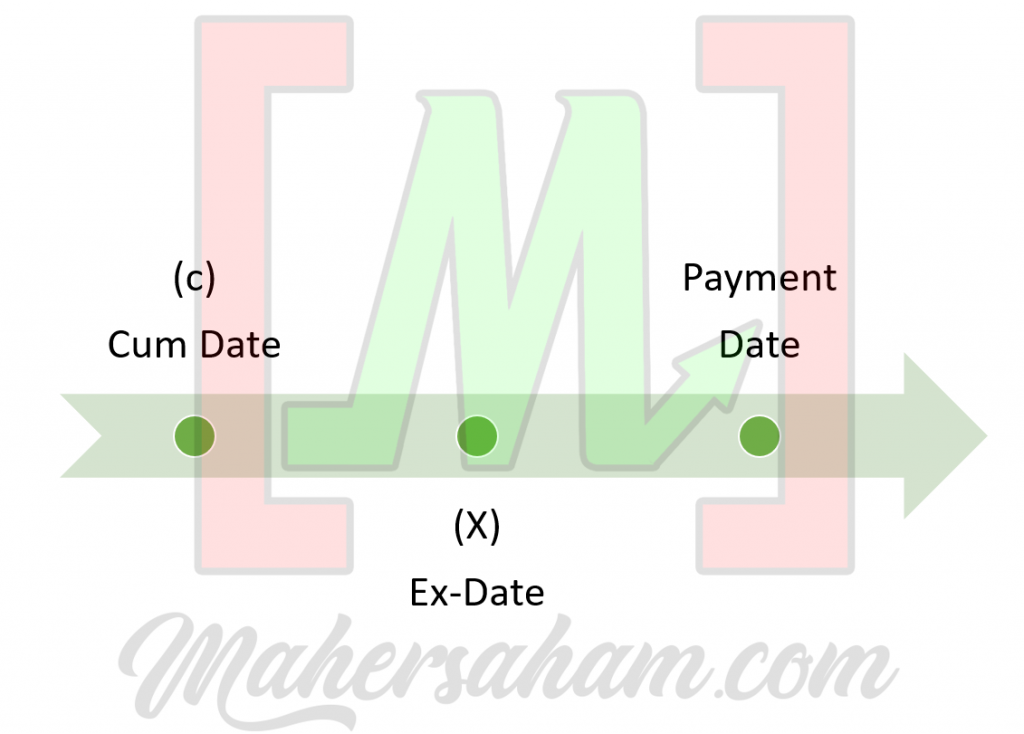
1. Important Dates
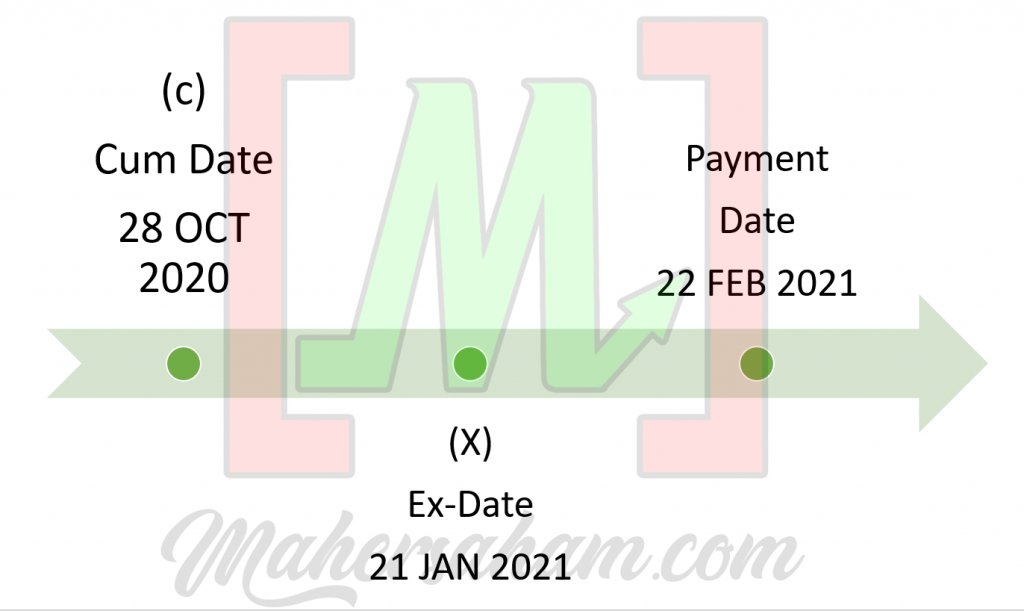
Cum Date
The cum date is the period between the company's announcement of a dividend and the ex-date.
If you purchase shares during the cum date period and hold them through the ex-date, you are entitled to receive the dividend.
Ex-Date
The ex-date is the cut-off date used to determine eligibility for the dividend.

Payment Date
This is the date on which shareholders receive their dividend payment from the company.
Dividend payments are credited directly into your bank account, not your trading account.
Which bank account? You need to refer to the bank account you registered when you opened your CDS account.
On the payment date, the dividend is automatically deposited into your bank account if you are eligible.
2. How to Identify Dividend-Paying Companies
First: Visit app.mahersaham.com
Don't worry if you don't have an account — Mahersaham offers a free account.
Simply sign up for a free account and you can use it at no cost.
After logging in, the following dashboard will appear.
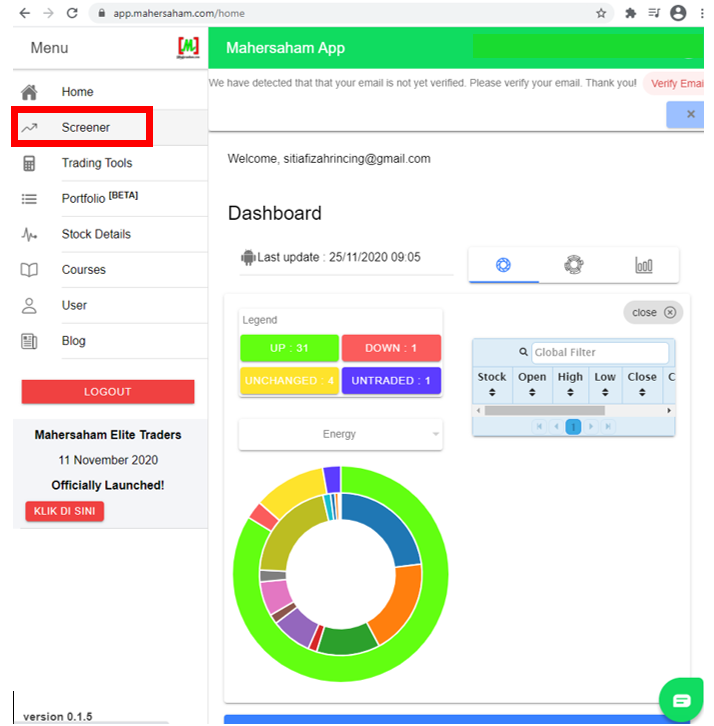
Next, click on the screener button in the red box. Then click on fundamental and select upcoming dividends.
Refer to the image below.
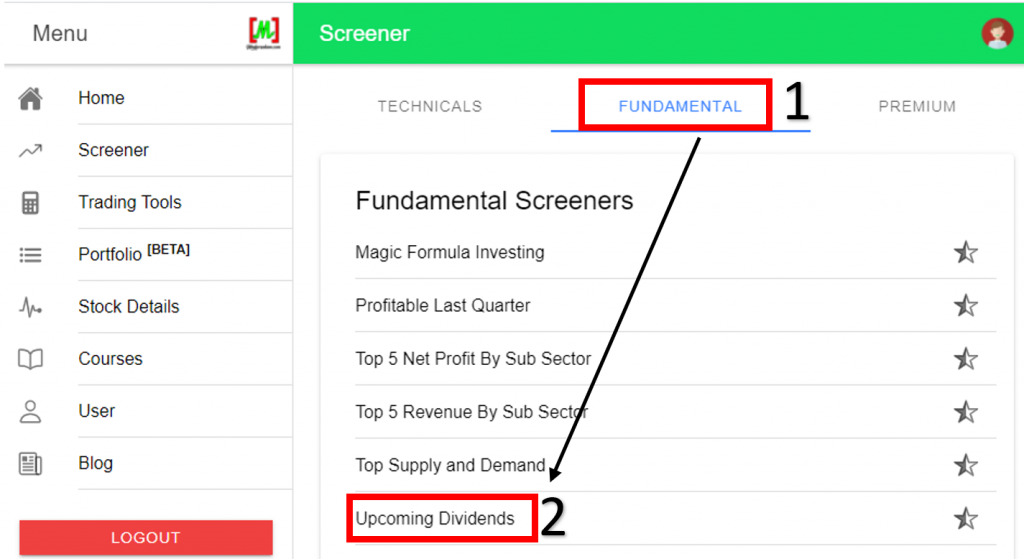
After that, you will see a screen like this.
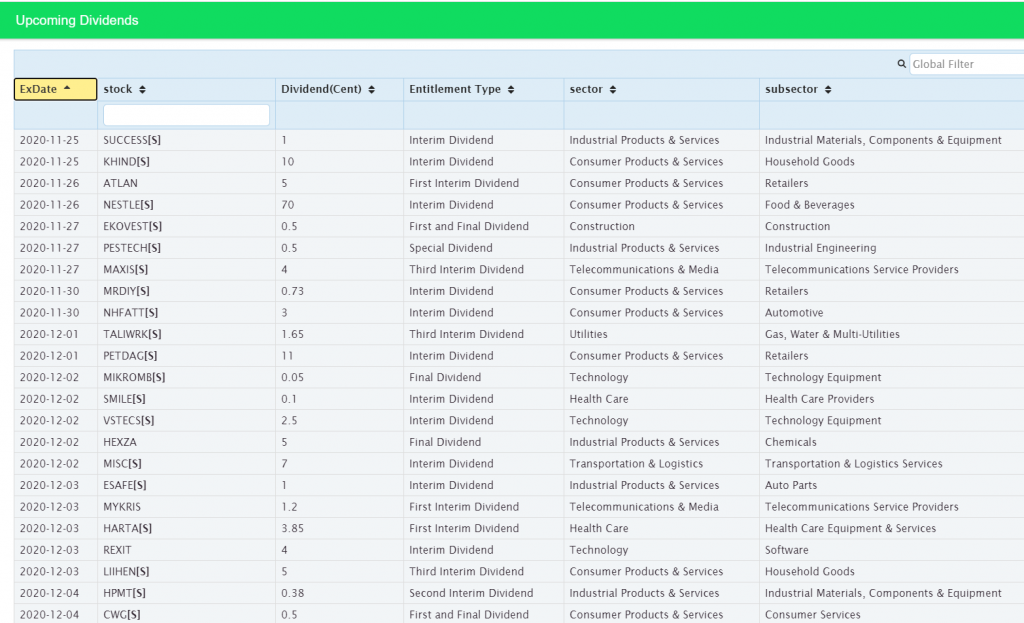
The diagram above shows a list of companies paying dividends.
If you wish to buy shares of these companies, make sure you check the ex-date and, most importantly, conduct your own analysis of the company.
Second: Visit Mplusonline.com — ensure you use Internet Explorer when accessing the platform.
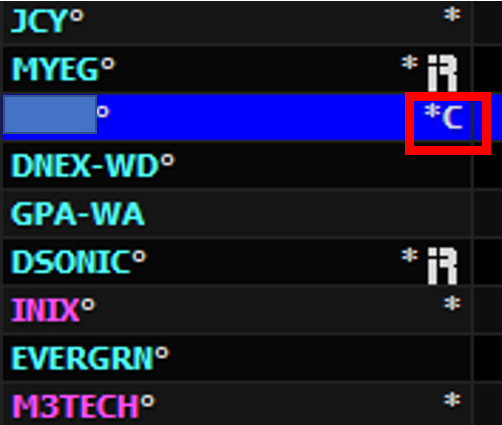
Based on the example above, if there is a "C" symbol next to the counter name on the right side, it indicates there is a cum date for a corporate exercise.
The next step is to right-click on the counter name and click on announcement.
Refer to the diagram below.
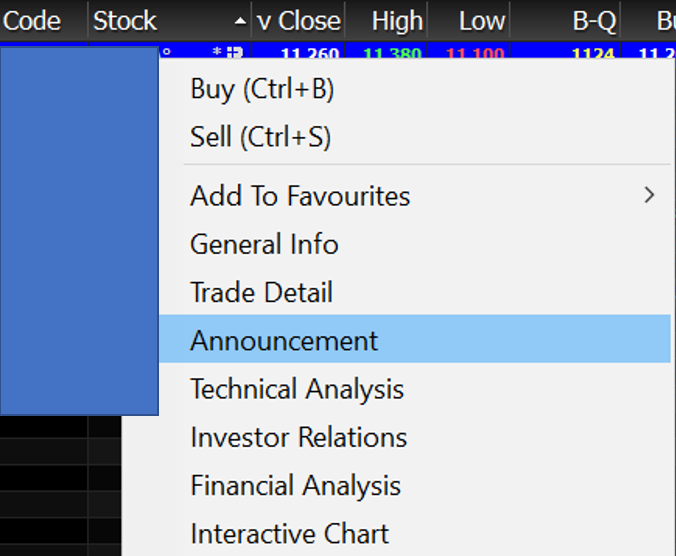
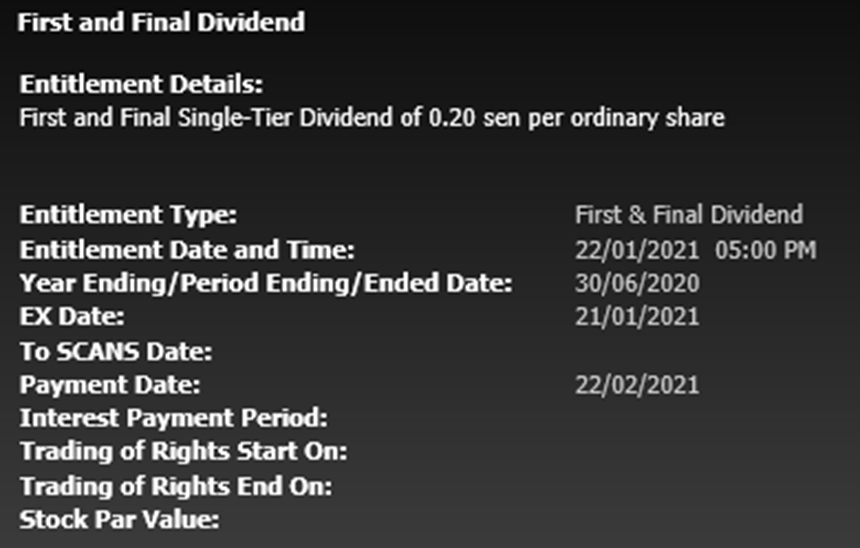
After that, the announcement for that counter will be displayed.
Register for a CDS account with Mahersaham and join exclusive classes for Mahersaham clients.
Based on the counter's announcement, there are 3 key things you need to know, as explained above: the cum date, ex-date, and payment date.
How to Calculate Your Dividend Payout
Imagine you are a shareholder of a company that pays dividends.
In a given year, the dividend declared is 0.2 sen per unit, and you hold 100 lots of shares.
How much dividend would you receive?
- 0.2 sen = RM0.002
- 100 lots = 10,000 units
- 10,000 units x RM0.002 = RM20
The total amount credited to your account would be RM20.
Things You Need to Know
- Dividends can be paid quarterly, as an interim dividend, a final dividend, or a special dividend.
- Share prices will be adjusted according to the dividend amount.
- Companies that consistently pay dividends are usually stable companies.
- Dividends are ideal for long-term investors.
Are you a short-term investor or a long-term investor?
Frequently Asked Questions (FAQ)
When will dividends be credited to my account?
Dividends are credited to your bank account on the payment date determined by the company. It usually takes a few weeks after the ex-date. Make sure the bank account details registered with your CDS account are correct and up to date.
Do all companies on Bursa Malaysia pay dividends?
Not all companies pay dividends. Typically, stable companies with strong cash flow pay dividends consistently. Growth companies may choose to reinvest profits back into the business and not pay dividends.
What is the difference between an interim dividend and a final dividend?
An interim dividend is paid midway through the company's financial year based on current performance, while a final dividend is declared after the financial year ends and must be approved by shareholders at the AGM. Some companies also issue special dividends as an additional bonus.
What is the minimum number of shares required to receive dividends?
You are eligible to receive dividends as long as you hold at least 1 unit of the company's shares before the ex-date. The dividend amount received depends on the number of units held multiplied by the dividend rate per unit announced.
Ready to start collecting dividend stocks? Open a CDS account with Mahersaham and begin your investment journey today.
Download our free stock basics ebook and understand the fundamentals of stock investing with ease.
Further reading: