Trading Halt vs Suspension on Bursa: What Happens to Your Shares & When You Can Trade Again

You open your trading app during market hours, wanting to sell or buy a stock - but the counter cannot be traded. The status shows "trading halt" or "suspended". Your heart starts to race. Is my money gone? When can I get out?
For many retail investors, this moment triggers panic. But that panic usually comes from confusion - because many do not understand the difference between a trading halt and a suspension. One is routine and usually not alarming; the other is serious and can end in delisting.
This article explains the difference between the two, why stocks get suspended, what actually happens to your shares and your money during a suspension, and most importantly - when you can trade again.
Trading Halt vs Suspension: What Is the Difference?
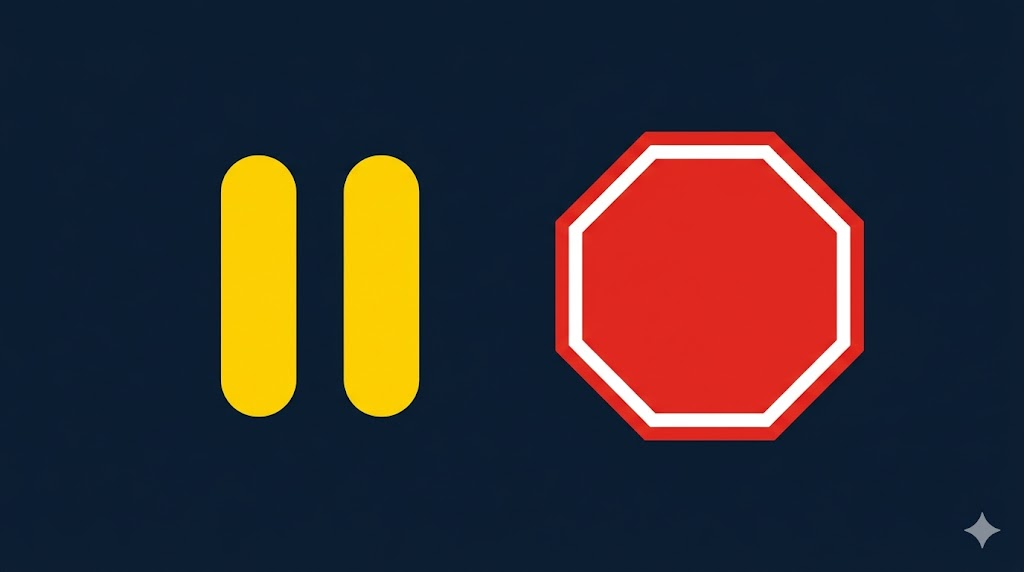
Many investors treat "trading halt" and "suspension" as the same thing. In fact, they differ in duration and severity.
A trading halt is a short, temporary pause in trading - usually no longer than one trading session. It is a routine procedure, often to allow a material announcement to be disseminated fairly to all investors. A trading halt is rarely a danger sign.
A suspension is a longer trading stoppage - it can last days, weeks, months, or more. A suspension is usually tied to more serious issues, such as a compliance failure or financial trouble. In the worst case, a suspension can end in delisting.
An easy way to remember it: a trading halt is a commercial break; a suspension is the show being stopped halfway through. Let us look at each in more depth.
Trading Halt: A Short Pause for a Material Announcement
A trading halt is designed for one main purpose - ensuring important information reaches all investors at the same time.
Imagine this situation: a company is about to announce something big - a major contract, an acquisition, or important financial results. If that announcement is made while the market is trading, some investors will see it and act before others have a chance to read it. That is not fair. So Bursa Malaysia will impose a trading halt - pausing trading briefly so everyone can read the announcement before trading resumes.
The duration of a trading halt depends on when the announcement is made. Under Bursa Malaysia's rules, if a material announcement is released before 9.00 a.m., between 1.00-2.30 p.m., or after 6.30 p.m., the halt is imposed for one trading session. If the announcement is made during trading hours, the halt is imposed only for the remaining period of that session. There is also a window period during the session break (12.30-1.00 p.m.) where an announcement does not trigger a halt.
The key thing for you to understand: a trading halt is usually not a danger sign. It is a common procedure. Even a solid blue-chip company can experience a trading halt if it is about to make a major announcement. When you see a counter in halt status, don't panic - read the announcement that comes out, and trading will resume shortly after.
Suspension: A More Serious Trading Stoppage
A suspension is a different story. It is a trading stoppage for an extended period, and it falls into two main types.
Voluntary suspension - initiated by the company itself through a request to Bursa. The company may request a suspension because there is a major development that cannot yet be fully announced - for example, complex restructuring negotiations, or a material announcement that needs longer than one trading session.
Mandatory suspension - imposed by Bursa Malaysia or the Securities Commission. This happens when the company fails to comply with listing requirements - and this is the type of suspension that most concerns investors.
The duration difference is also significant. A trading halt ends within one session; a suspension can last as long as it takes for the underlying issue to be resolved. Some stocks are suspended for months. Some never trade again - they are delisted.
Circuit Breaker: When the Whole Market Is Stopped
Besides trading halts and suspensions imposed on individual stocks, there is one more type of stoppage that involves the entire market - called a circuit breaker.
A circuit breaker is a safety mechanism that stops trading across all of Bursa Malaysia when the FBM KLCI falls sharply in a single day. Its purpose is to give the market a "cooling-off period" - stopping extreme panic selling and allowing investors to reassess the situation with a cooler head.
This mechanism works in stages. When the index falls to a certain percentage threshold, trading is stopped for a set period before resuming. If the decline continues and reaches a deeper threshold, another stoppage is imposed. At the most extreme level of decline, trading can be stopped for the rest of the day.
The key thing to understand: a circuit breaker is not a sign that there is a problem with your stock specifically. It is a response to overall market movement - usually during a major crash triggered by a global crisis, terrible economic news, or widespread panic. It affects ALL counters at once, not one company.
For retail investors, when a circuit breaker is triggered, the advice is simple: don't panic. That is exactly the purpose of the mechanism - to give you time to stop, breathe, and think rationally. Investors who make hasty decisions during a market crash often regret it later. Use that cooling-off period to assess, not to panic.
Why Do Stocks Get Suspended?
Understanding the cause of a suspension helps you assess the seriousness of the situation. Here are the main reasons:
PN17 or GN3 status and recovery plan failure. When a financially distressed company fails to submit or implement a recovery plan within the prescribed timeframe, Bursa will suspend its trading. We have explained this process in our article on PN17 and GN3 stocks - suspension is often the stage before delisting.
Late submission of financial statements. Listed companies are required to submit audited annual reports and quarterly results within the prescribed timeframe. Bursa Malaysia considers a delay in issuing financial statements as prejudicial to investors' interests - because investors need that information to make informed decisions. A prolonged delay can lead to suspension.
A major material announcement. Sometimes a company requests a voluntary suspension because there is a major development - a merger, an acquisition, or a restructuring - that needs time to be explained to the market.
Corporate exercise. Certain corporate activities such as relisting after a major restructuring can involve a suspension period.
Governance issues or power struggles. In certain cases, turmoil within the board of directors or serious governance issues can trigger a suspension.
The level of seriousness varies with the cause. A suspension for a positive material announcement is very different from a suspension because the company failed to meet basic requirements - the latter is a genuine red light.
What Happens to Your Shares & Money During a Suspension?
This is the question that worries investors most. Let us answer it clearly.
You still own the shares. A suspension does not erase your ownership. The shares remain in your CDS account, and you are still a legitimate shareholder of the company. A suspension only stops the ability to trade the shares, not the ownership.
But you cannot sell. This is the hard reality. During the suspension period, you cannot sell the shares on the open market. If you want to exit, you have to wait until trading resumes - or, in the worst case, cannot exit at all if the company is delisted.
Your capital is "locked". The value of your holding cannot be converted to cash while the suspension lasts. For investors who need liquidity, this can be a serious problem. This is why risk management and position sizing matter - don't put a large percentage of your portfolio into a single risky counter.
The "last" price may not reflect the real value. The share price displayed during a suspension is the last price before trading was stopped. When trading resumes, the price can open far lower - especially if the suspension was caused by bad news.
Dividends depend on the company's condition. A suspension itself does not block dividend payments, but a suspended company is usually in financial distress, and such companies rarely pay dividends.
When Can You Trade Again?
The answer depends entirely on the type of stoppage and its cause.
For a trading halt - trading resumes automatically after the halt period ends, usually within the same session or the next session. You have almost nothing to worry about.
For a voluntary suspension - trading resumes once the company completes the matter that triggered the request - for example, after the full announcement is made. The duration can range from a few days to a few weeks.
For a mandatory suspension - trading resumes once the company corrects the compliance issue. If it relates to late financial statements, trading resumes after the statements are submitted. If it relates to PN17, trading may resume when the recovery plan shows progress.
In the worst case - no resumption at all. If the company fails to resolve its underlying issue, the suspension can end in delisting. When this happens, the shares no longer trade on the main market, and retail shareholders often cannot recover their capital.
To find out the latest status, always refer to the Bursa Malaysia website, the company announcements section. That is the official source - not rumours on social media.
What Investors Should Do
Here is practical guidance depending on the situation:
If it is a trading halt - don't panic. Read the announcement that comes out after the halt. Assess whether the news is positive or negative for the company, then make a decision when trading resumes.
If it is a suspension - investigate the cause immediately. Go to the official Bursa announcements. Is it a voluntary suspension for a big announcement, or a mandatory suspension for a compliance failure? The two require different responses.
Read all follow-up announcements. A suspended company usually issues periodic announcements about its status. Monitor these announcements to assess whether the situation is improving or worsening.
Don't make emotional decisions. You cannot sell during a suspension - so panic does not help. Use that time to assess the company's fundamentals calmly. Learn to read a company's financial statements so you can judge whether the company has a chance to recover.
The biggest lesson - avoid it before it happens. A mandatory suspension rarely happens out of nowhere. There are usually early signs - recurring losses, PN17 status, a UMA query, or delays in submitting financial statements. Investors who monitor these signs can exit before trading is frozen. Good risk management - including proper position sizing and stop losses - is your best defence.
FAQ
1. Does a trading halt mean my stock is in trouble? Not necessarily. A trading halt is usually a routine procedure to allow a material announcement to be disseminated fairly. Even healthy companies experience trading halts. It is rarely a danger sign.
2. How long does a trading halt last? A maximum of one trading session. Depending on when the announcement is made, it can be the remaining period of that session or one full session. A trading halt does not drag on for days.
3. Can I sell a suspended stock? No. During a suspension period, you cannot sell the shares on the open market. You have to wait until trading resumes.
4. Do I lose my shares if the stock is suspended? No. A suspension does not erase your ownership - the shares remain in your CDS account. You simply cannot trade them. However, if the company is eventually delisted, the value of your investment can become near zero.
5. How long can a suspension last? It depends on the cause. A voluntary suspension for a big announcement can end within a few days. A mandatory suspension related to compliance can drag on for months, and in the worst case end in delisting.
6. What happens to the share price after a suspension ends? There is no guarantee. When trading resumes, the price can open higher or lower than the last price - depending on the reason for the suspension and developments during the period. If the suspension was caused by bad news, the price often opens far lower.
7. How do I know when a stock can trade again? Bursa Malaysia will issue an official announcement about the resumption of trading. Monitor the company announcements section on the Bursa Malaysia website for the latest information.
8. What is the difference between a suspension and a UMA query? A UMA query is a letter of inquiry about unusual price movement - trading is still ongoing. A suspension stops trading entirely. A UMA is a warning; a suspension is a harsher action.
Conclusion
A trading halt and a suspension look frightening, but they are different things with different implications. A trading halt is a short, routine pause - rarely a concern. A suspension is more serious, and its seriousness depends on its cause: a suspension for a big announcement is entirely different from a suspension because a company failed to meet basic requirements.
Importantly, remember that during a suspension you still own your shares - but you cannot sell them, and your capital is locked. That is why the best defence is not reacting after a suspension, but avoiding high-risk stocks by monitoring warning signs earlier.
Understanding market mechanisms is one skill; managing your portfolio with discipline so you do not get trapped is the bigger one.
To invest with confidence and monitor your stock status easily, you need a complete trading account. Open a CDS and trading account to invest in stocks on Bursa Malaysia as well as foreign markets such as the United States and Hong Kong.
If you are just starting out and want to understand the basics of stock investing properly, download the free Stock Market Basics Ebook as your first step.
Further Reading
- Saham PN17 / GN3: Cara Baca Berita Syarikat Bermasalah & Bila Patut Cut Loss
- UMA (Unusual Market Activity): Bila Bursa Query Saham - Tanda Bahaya Yang Pelabur Abaikan
- Stop Loss & Position Sizing: Cara Lindungi Modal Sebelum Beli Saham
- Cara Baca Annual Report Bursa Malaysia Tanpa Pening Kepala
- Pump and Dump Bursa Malaysia: 6 Tanda Saham 'Goreng' Yang Dipromosi Melalui Berita Palsu