What Is Regulated Short Selling (RSS) in Malaysia?

In the stock market, profits are not only made by buying low and selling high. You can also profit by selling first and then buying back at a lower price. This is called "SHORT". However, we know Bursa Malaysia as a one-way market -- "Buy low, sell high".
In reality, short selling does exist on Bursa Malaysia through the framework of Regulated Short Selling (RSS) and Securities Borrowing and Lending (SBL). It has been available since January 2007, after being banned for eight years by the Securities Commission Malaysia.
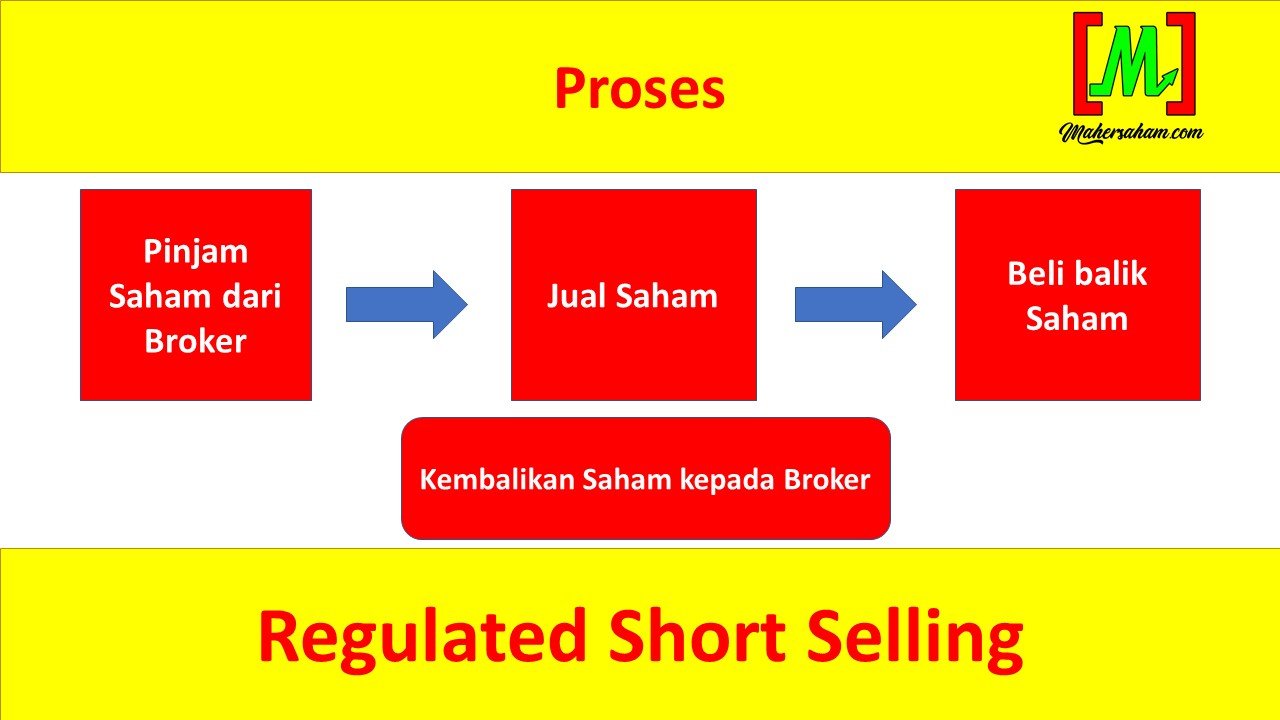
What is Regulated Short Selling (RSS)?
RSS occurs when a person sells shares they do not yet own by borrowing those shares from the Central Lending Agency (CLA). Once the shares are borrowed, the transaction is considered valid. After selling, the person will buy back the shares when the price drops lower.
What is the Central Lending Agency (CLA)?
The CLA is a company managed by Bursa Clearing, where the transaction and share lending process takes place. Investors do not deal directly with the CLA; instead, they must go through intermediaries such as brokers or investment banks like MPLUS, Maybank, CIMB, and others.
Duration of Regulated Short Selling (RSS)
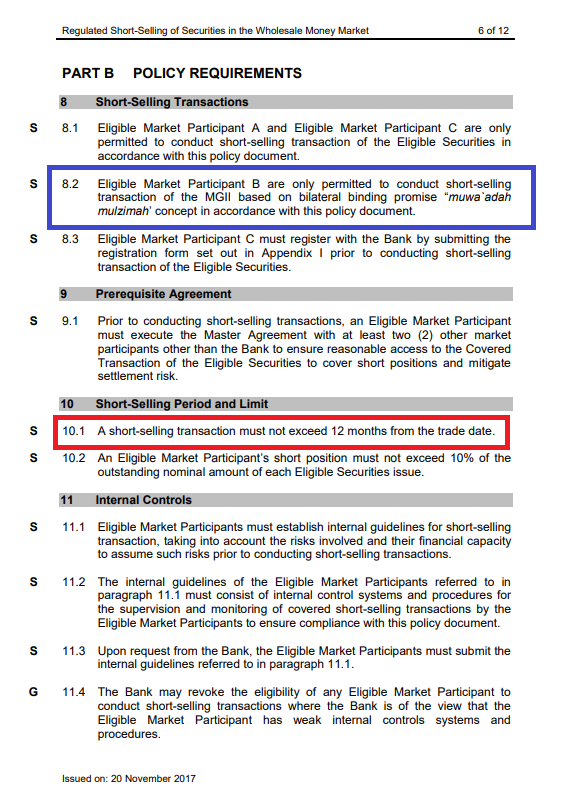
Image source from
From the image above, you can see the red box I have highlighted. BNM allows the RSS duration to be less than 12 months for each transaction.
How Short Selling Works: An Example
Azizi borrows 10,000 units of ABC BERHAD shares from Broker A at RM1.00 per unit, and promises to return them within an agreed period. Azizi then sells those 10,000 units to Dr Choudry, who needs them. A transaction occurs.
Remember, the shares Azizi sold were borrowed from Broker A. So Azizi needs to buy them back to settle his debt. Azizi waits for the price to fall because the market is in a downtrend. When ABC Berhad shares drop to RM0.80, Azizi immediately buys 10,000 units and returns them to Broker A.
This activity is what makes Azizi profit. This is called short selling.
Sounds strange? It is not strange nor complicated -- we are simply not accustomed to it because we only know 'long' transactions.
Short selling generates profit when the share price falls. It is used when stocks are in a downtrend.
Risks of Regulated Short Selling (RSS)
The main risk is that you may not be able to return what you borrowed in time. The agreement specifies certain deadlines that must be met.
Do not worry -- the Capital Market Services Act 2007, on page 159, addresses short selling regulations in detail.
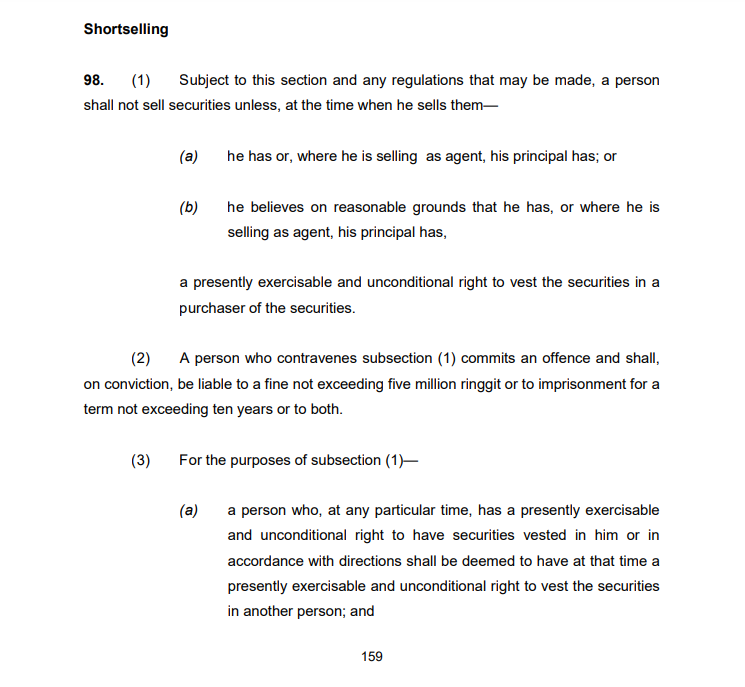
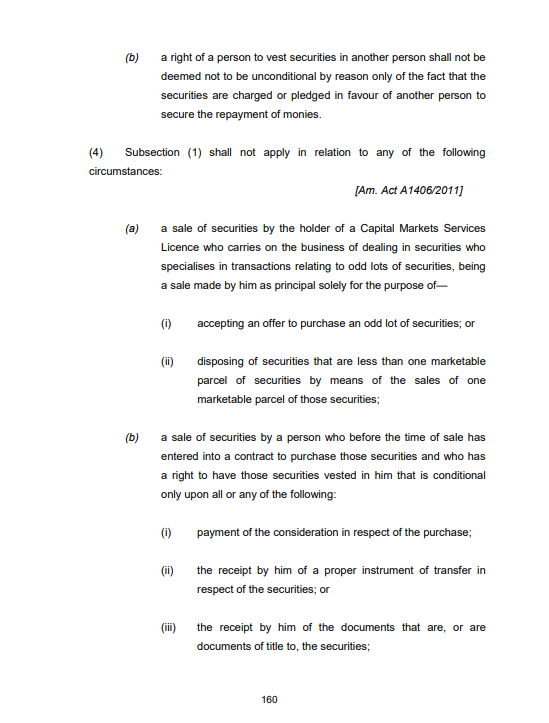
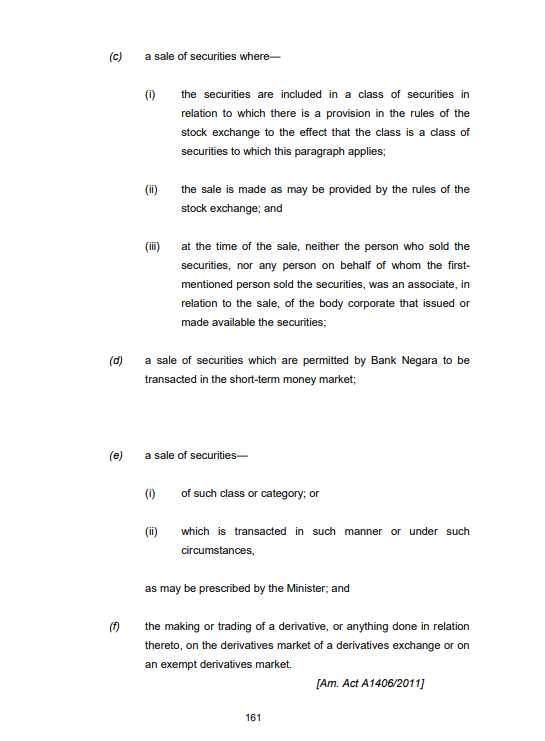
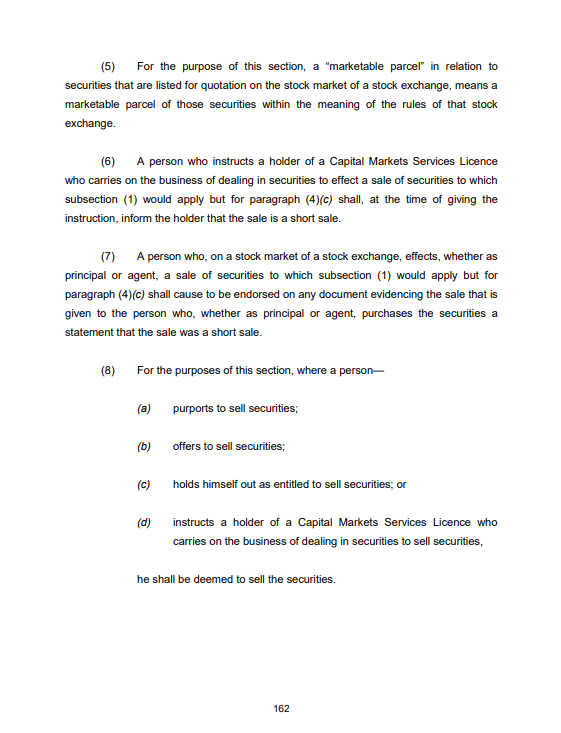
Source: Capital Markets and Services Act 2007
How to Participate in RSS
RSS requires a different account from a regular trading account. You need to check with your respective broker. Investors must borrow shares from the CLA through their broker. Investors must sell the borrowed shares at a price higher than the current market price. This is known as the "up-tick rule". Source: Bursa Malaysia RSS FAQ
Which Stocks Are Eligible for RSS?
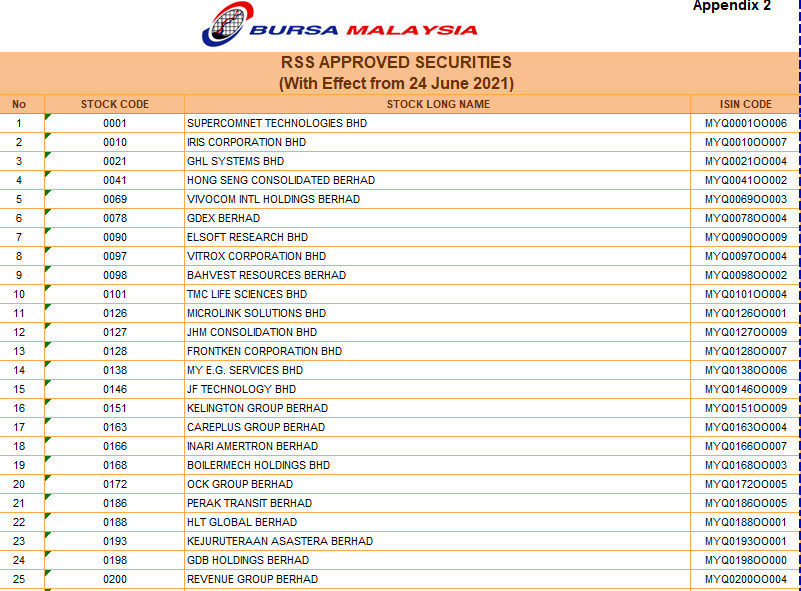
As of 24 June 2020, there were 256 approved securities for RSS. Refer to Bursa Approved Securities
Criteria for a Stock to Be Listed for RSS
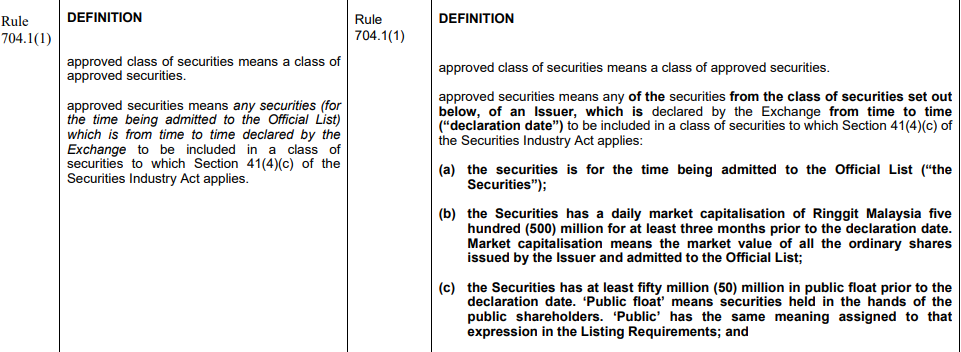

Source: Bursa Malaysia
There are 4 key criteria:
- The stock must be officially listed and approved by Bursa Malaysia
- The company must have a market capitalisation exceeding RM500 million for the most recent three months
- The share float must be at least 50 million units
- The average daily trading volume must exceed one million units over the most recent 12 months
Conclusion
We hope this guide on Regulated Short Selling (RSS) has been helpful for your understanding of the Malaysian stock market.
FAQ: Regulated Short Selling (RSS)
What is RSS in the Malaysian stock market?
Regulated Short Selling (RSS) is a mechanism on Bursa Malaysia that allows investors to sell shares they do not own by borrowing them from the Central Lending Agency (CLA), with the aim of buying them back at a lower price.
Is short selling legal in Malaysia?
Yes, short selling is legal in Malaysia under the RSS framework, which has been in effect since January 2007 after being reinstated by the Securities Commission Malaysia.
How long can an RSS position be held?
According to Bank Negara Malaysia guidelines, RSS transactions must be completed within a period of less than 12 months.
What are the risks of short selling?
The primary risk is being unable to return the borrowed shares within the agreed timeframe. If the share price rises instead of falling, you may incur significant losses.
How many stocks are eligible for RSS on Bursa Malaysia?
As of June 2020, there were 256 approved securities eligible for RSS. The list is regularly updated by Bursa Malaysia based on market capitalisation, share float, and trading volume criteria.
Improve Your Investment Knowledge
Successful investing starts with solid knowledge.
Investment Basics:
Download our free ebook for a complete guide.
Open a CDS Account:
Ready to start? Open a CDS account today.