Day Trading Guide for Beginners: What Newbies Must Know Before Starting

Many people have the misconception that day trading for beginners is the easiest shortcut to getting rich. It is no wonder, as social media today is flooded with fake fin-fluencers flaunting luxury cars and stacks of cash, supposedly earned from trading. This causes many newbies to fall into the trap, thinking that this field is as easy as playing games or gambling online.
However, the reality is vastly different.
Rule number one that you must engrave in your mind: Day trading is not a get-rich-quick scheme. It is a professional career that demands a high level of commitment, on par with careers such as engineering, medicine, or law.
Statistics do not lie — approximately 84% to 90% of traders fail to generate profits in the long run. If your original intention for entering the stock market is merely to chase easy money, you would be better off keeping your funds in ASB or Fixed Deposits. That is far safer than losing it all in the market.
Read More: Daily Stock Trading or Day Trading
To succeed and avoid becoming a victim of the market, you need to understand the fundamental principles that distinguish a professional trader from a reckless gambler.
Here, we discuss the 5 key principles in this day trading guide for beginners:
Treat Trading as a Serious Business
The most common mistake a newbie makes is treating trading as merely a hobby or a casual weekend activity. Remember, the stock market does not care who you are.
To succeed, it must be treated as a serious business. This demands a high level of discipline: wake up early, conduct research, prepare your watchlist, and be ready at your workstation with the same professionalism as if you were walking into a corporate office. Without proper preparation, you are essentially planning to fail.
Prioritise Education and Simulation
Do not expect that reading one book or watching a couple of YouTube videos will make you an expert. The foundation of success in day trading for beginners lies in solid education and repetitive practice.
Learn the ins and outs of the stock market for free at our Blog.
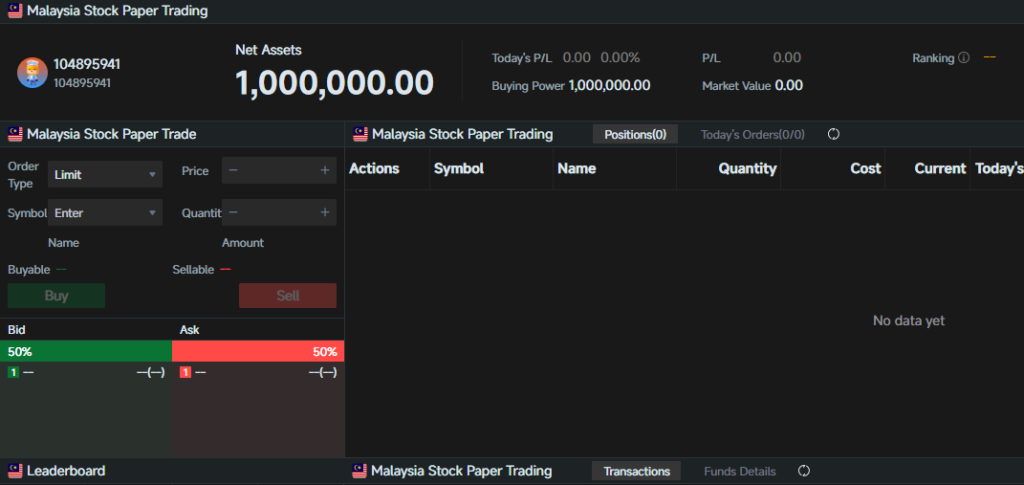
Before you get itchy fingers to deposit real money, practise paper trading (simulated trading) on a simulator platform for at least three months. Think of this phase as driving lessons — get accustomed to the road (market movements) and learn how to handle the vehicle (platform) before driving on the actual highway full of risks.
Master Risk Management
A smart trader does not chase jackpots or massive overnight gains. Their primary focus is building a strong defence first — risk management.
The basic principle is simple: find low-risk entry points with a Risk-to-Reward ratio of at least 2:1. Most importantly, never risk more than 2% of your total account capital on a single trade. The goal is to preserve your capital so you can continue trading the next day, or as the market saying goes: "live to play another day".
Read More: Introduction to Risk Management in Stocks
Emotional Discipline Is Key
The main enemy in the world of trading is not the market, investment banks, or "sharks" — it is your own emotions. Profitable trading is boring trading with zero emotions involved.
Those who trade based on fear, greed, or use "hope analysis" (hoping the price will recover even when losses are severe) are destined to fail. Professional traders adhere to their trading plan with strict discipline, uninfluenced by emotions even when the market is going wild.
Read More: Stock Investment Psychology: 13 Emotional Traps That Can Destroy Your Portfolio
Focus on the Process, Not the Results
Consistent profitability typically takes six to eight months of intensive hard work. This success is not a drastic revolution but rather an evolution of skills.
During the early phase of day trading for beginners, you are advised to focus on the quality of strategy execution and discipline, rather than constantly staring at your daily profit and loss (P&L) column. If your process is right, the money will come naturally. If your process is wrong, today's profits will be wiped out tomorrow.
Read More: The Discipline of a Trader
Work Hard From the Start
The journey to becoming a successful trader can be likened to climbing a tall mountain. No climber can teleport to the summit with mere wishful thinking. You need to diligently study, sweat, and work hard to master this skill.
Success in day trading for beginners can only be found through careful preparation, step by step, and the unwavering determination to endure challenges. Focus on knowledge, protect your capital fiercely, and respect the learning process.
Source: Andrew Aziz
FAQ – Day Trading for Beginners in Malaysia
Is day trading suitable for beginners who are just starting to invest?
Day trading requires a high level of commitment and strong technical analysis skills. Beginners are advised to learn the fundamentals of the stock market first and practise with a demo account before using real money.
What percentage of traders successfully generate consistent profits?
Statistics show that approximately 84% to 90% of traders fail to generate profits in the long term. That is why preparation in terms of knowledge, discipline, and risk management is crucial.
What is the main difference between day trading and long-term investing?
Day trading involves buying and selling stocks within a single trading day, whereas long-term investing means holding stocks for months or years. Day trading requires active monitoring throughout the trading session.
What is the minimum capital to start day trading on Bursa Malaysia?
There is no official minimum capital requirement, but you need sufficient capital to cover brokerage costs and absorb potential losses. Start with an amount you can afford to lose while learning.
Mastering the fundamentals of day trading is the first step to becoming a disciplined and successful trader in the stock market.
Open your CDS account via Register Mplus CDS Account to start trading stocks on Bursa Malaysia.
New to stocks? Download the Free Stock Basics Ebook to understand the fundamentals of stock investing before you begin.
Further reading: