Malaysia Electricity Subsidy: Who Gets It, How Much & How to Check

Did you know that the Malaysian government spent over RM5.96 billion on electricity subsidies in the first half of 2025 alone? This subsidy ensures that 99% of domestic consumers in Peninsular Malaysia do not pay the actual cost of electricity. This article explains how electricity subsidies work, who qualifies, and how to check whether you are receiving one.
How Electricity Subsidies Work
The government bears a portion of the fuel costs used by TNB to generate electricity. When the prices of natural gas, coal, and other fuels rise in global markets, the government covers the cost difference so that consumers do not have to pay the full price.
The main mechanism for distributing this subsidy is through the ICPT (Imbalance Cost Pass-Through) system, which has been replaced by AFA (Automatic Fuel Adjustment) starting July 2025.
What Is ICPT?
ICPT is a mechanism under the Incentive-Based Regulation (IBR) framework that allows TNB to adjust tariffs every 6 months based on actual fuel costs. Under ICPT, consumers either receive:
- Rebate - when fuel costs are lower than the base tariff
- Surcharge - when fuel costs exceed the base tariff
For the period January to June 2025, the ICPT rates for domestic consumers are as follows:
| Consumption Level | ICPT Rate |
|---|---|
| Up to 600 kWh | Rebate of 2 sen/kWh |
| 601 - 1,500 kWh | 0 sen/kWh (exempted) |
| Above 1,500 kWh | Surcharge of 10 sen/kWh |
This means consumers who use 600 kWh or less per month receive a rebate on every unit of electricity consumed.
Transition to AFA (July 2025)
Starting 1 July 2025, ICPT was replaced by Automatic Fuel Adjustment (AFA), which is recalculated every month, compared to every 6 months previously. Key changes:
- Recalculated every month based on current fuel prices
- Automatic adjustment cap of up to 3 sen/kWh without cabinet approval
- Domestic consumers using 600 kWh and below are exempted from AFA
Since its introduction, the AFA rate has provided rebates to consumers. For example, in October 2025, the AFA rate was -6.50 sen/kWh (rebate), while January 2026 was -4.99 sen/kWh.
Who Gets the Electricity Subsidy?
Electricity subsidies are targeted according to monthly consumption levels:
| Consumption Level | Subsidy Status |
|---|---|
| 600 kWh and below | Full subsidy - ICPT/AFA rebate, retail charge RM10 exemption, Energy Efficiency Incentive |
| 601 - 1,500 kWh | Partial subsidy - exempted from ICPT surcharge |
| Above 1,500 kWh | No subsidy - surcharge applied |
According to government data, 85% of households, or approximately 7.1 million consumers, are unaffected by tariff increases. Overall, 99% or 8.2 million domestic consumers still receive government subsidies in various forms.
Latest TNB Tariff Structure (From July 2025)
Starting 1 July 2025, domestic electricity tariffs underwent a major overhaul. The old progressive block system was replaced with a component-based system:
Old Tariff (Before July 2025) - Progressive Block
| Consumption Block | Rate (sen/kWh) |
|---|---|
| 1 - 200 kWh | 21.80 |
| 201 - 300 kWh | 33.40 |
| 301 - 600 kWh | 51.60 |
| 601 - 900 kWh | 54.60 |
| 901 kWh and above | 57.10 |
New Tariff (From July 2025) - Component-Based
Bills are now broken down into 5 main components:
| Component | Rate |
|---|---|
| Energy Charge | 27.03 sen/kWh (below 1,500 kWh) / 37.03 sen/kWh (above 1,500 kWh) |
| Capacity Charge | 4.55 sen/kWh |
| Network Charge | 12.85 sen/kWh |
| Retail Charge | RM10/month (exempted if 600 kWh and below) |
| AFA (Fuel Adjustment) | Changes monthly (exempted if 600 kWh and below) |
The new average base tariff is 45.40 sen/kWh, a 13.64% increase from 39.95 sen/kWh previously. However, with various rebates and exemptions, most households do not feel the impact of this increase.
Energy Efficiency Incentive - Rebate for Thrifty Consumers
Domestic consumers who use 1,000 kWh or less per month qualify for the Energy Efficiency Incentive, an additional rebate that reduces bills:
| Monthly Consumption | Rebate (sen/kWh) |
|---|---|
| 1 - 200 kWh | 25.00 |
| 201 - 300 kWh | 22.50 - 24.50 |
| 301 - 500 kWh | 12.00 - 21.00 |
| 501 - 600 kWh | 9.00 - 10.50 |
| 601 - 800 kWh | 4.00 - 7.50 |
| 801 - 1,000 kWh | 0.50 - 2.50 |
| Above 1,000 kWh | No rebate |
This means consumers who use 200 kWh per month actually pay an effective rate of only about 19.43 sen/kWh, far lower than the base tariff of 45.40 sen/kWh.
RM40 Electricity Bill Rebate Program (eKasih)
In addition to the general subsidy, the government also provides a special rebate for the hardcore poor:
- Rebate amount: Up to RM40 per month
- Duration: Until 31 December 2026
- 2025 allocation: RM55 million
- Recipients: Heads of Household categorized as Hardcore Poor in the eKasih system
RM40 Rebate Eligibility Requirements
- Registered and verified in the eKasih system
- Income below the Poverty Line Income (national average RM1,198/month)
- Electricity account under Tariff A (Domestic) in the name of the Head of Household
If the electricity bill is less than RM40, the payment is RM0. If the bill exceeds RM40, the consumer only needs to pay the remaining balance.
How to Check Your Electricity Subsidy Status
Here are several methods to check your subsidy and rebate status:
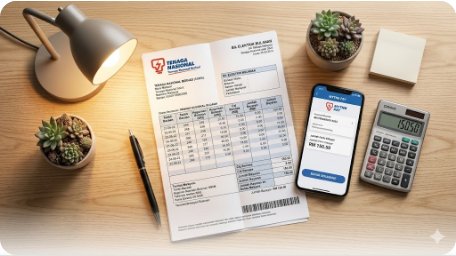
myTNB Portal
- Visit www.mytnb.com.my
- Log in with your TNB account
- View your bill breakdown including the ICPT/AFA rebate received
eKasih RM40 Rebate Check
- Visit semakanrebat.petra.gov.my
- Enter your MyKad number (12 digits)
- The system will display your eligibility status
Other Channels
- myTNB App - download from App Store or Google Play
- TNB CareLine: 1-300-88-5454
- MyGCC Hotline: 03-8000 8000
- Kedai Tenaga - visit the nearest TNB branch
Government Allocation for Electricity Subsidies
Here is the history of government electricity subsidy allocations showing the scale of financial commitment:
| Period | Subsidy Amount |
|---|---|
| 2022 (full year) | ~RM16 billion |
| 2023 | RM7.1 billion |
| 2024 (estimate) | ~RM4.1 billion |
| H1 2025 | RM5.96 billion |
| RP3 (2022-2024) | RM20.7 billion (total over 3 years) |
The H1 2025 allocation of RM5.96 billion covers domestic subsidies, support for SMEs, and a special Sabah subsidy of RM700 million.
Electricity Subsidy vs Fuel Subsidy
How does the electricity subsidy compare to other targeted subsidies?
| Aspect | Electricity Subsidy | BUDI95 (Petrol) | BUDI Individu (Diesel) |
|---|---|---|---|
| Annual amount | ~RM4-6 billion | ~RM11 billion | ~RM5 billion savings |
| Targeting method | Based on kWh consumption | MyKad at petrol pump | Cash aid of RM200 |
| Recipients | 99% domestic consumers | 16 million citizens | ~300,000 diesel owners |
| Subsidy cap | 600 kWh/month | 300 litres/month | RM200 flat |
7 Tips to Save on Your Electricity Bill
While subsidies help, you can also reduce your electricity bill on your own:
- Unplug unused appliances - phantom load can add up to 10% of consumption
- Switch to LED lights - save 25-30% on lighting costs compared to regular bulbs
- Set your air conditioner to 23-25 C - every degree lower adds 6-8% to consumption
- Choose 5-star rated appliances - energy-efficient ratings save costs in the long run
- Fill up the washing machine before using it - avoid extra cycles that waste energy
- Stay below 600 kWh/month - qualify for retail charge RM10 and AFA exemptions
- Consider solar panels - can save up to 75% on electricity bills through the NEM program
Frequently Asked Questions (FAQ)
Do all Malaysians get electricity subsidies?
Yes, 99% of domestic consumers in Peninsular Malaysia still receive subsidies in various forms. Only consumers who use more than 1,500 kWh per month are charged the full surcharge.
What is the average kWh consumption of a Malaysian household?
The average Malaysian household consumption is around 300-500 kWh per month. This means the majority of households fall within the fully subsidized category.
What is the RM10 retail charge in the new bill?
The RM10 monthly retail charge was introduced starting July 2025 as part of the new tariff structure. However, consumers who use 600 kWh and below are fully exempted.
Can I choose between standard tariff and Time of Use (ToU)?
Yes, if you have a smart meter. The ToU tariff charges a lower rate during off-peak hours (10pm - 2pm weekdays, all day on weekends) and a higher rate during peak hours.
How do I know how much subsidy I am receiving?
Check your TNB bill through the myTNB portal. The bill breakdown will show the ICPT/AFA rebate received. You can also compare the effective rate with the base tariff of 45.40 sen/kWh.
Are electricity subsidies for Sabah and Sarawak different?
Yes. Sabah receives a special subsidy with an allocation of RM700 million in 2025. Tariffs and subsidy structures in Sabah and Sarawak are managed separately from Peninsular Malaysia.
Who qualifies for the RM40 eKasih rebate?
Only Heads of Household who are registered and verified in the eKasih system as Hardcore Poor. Check your eligibility at the semakanrebat.petra.gov.my portal.
What will happen to electricity subsidies in the future?
The government is implementing phased subsidy rationalization under RP4 (2025-2027). The goal is to target subsidies to those who truly need them, similar to what has been done with diesel and RON95 petrol subsidies.
Conclusion
Malaysia's electricity subsidy is a major financial commitment by the government that benefits nearly all domestic consumers. By understanding how this subsidy works and practising efficient electricity usage, you can maximize your monthly bill savings.
Besides saving on utility bills, planning your finances wisely also includes starting to invest for the future.
Open a CDS account to start investing in Bursa Malaysia and also international stocks such as US and Hong Kong through mahersaham.com/akauncds.
Download the free Asas Saham ebook to understand the basics of investing at mahersaham.com/ebookasas.