Construction Costs Up 12.59%, 4,708 Layoffs: 3 Warnings From Malaysia's Economy Minister

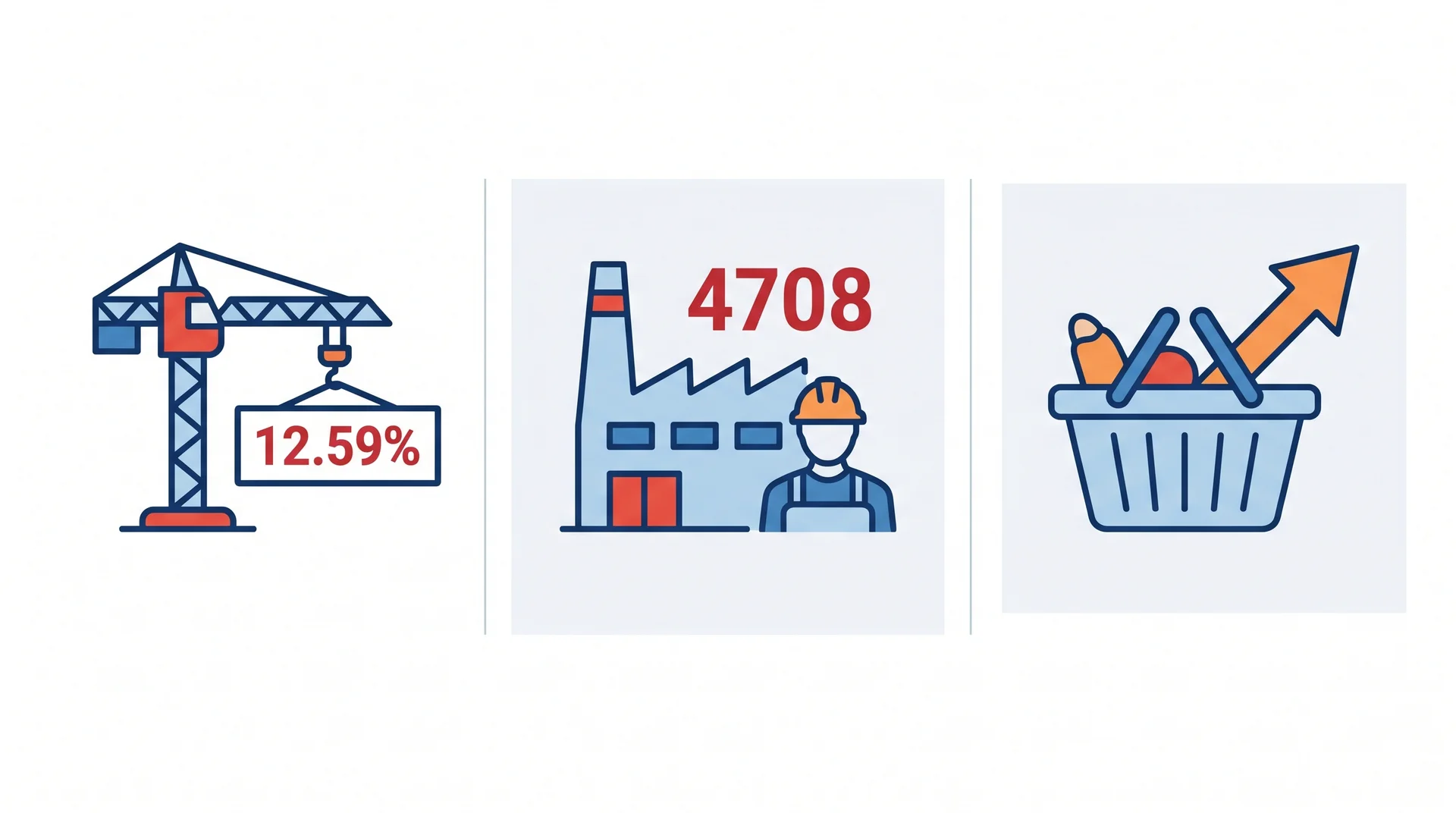
On 28 April 2026, Malaysia's Economy Minister, YB Akmal Nasrullah Mohd Nasir, issued a statement that no Bursa Malaysia investor can afford to ignore. At the National Economic Action Council (MTEN) Global Supply Crisis Briefing, he warned of three simultaneous risks pressuring Malaysia's economy: rising food costs, surging construction material prices, and labour market pressure.
What makes this more concerning: it isn't a forecast of distant trouble. The data is already showing up.
- 7 key construction materials surged an average of 12.59% during the recent oil price peak (late March 2026)
- 4,708 workers were laid off in just the first 16 days of April 2026
- 24,100 retrenchments were recorded throughout Q1 2026
At the same time, the World Bank's April 2026 Commodity Markets Outlook forecasts global commodity prices to rise 16% and energy prices to surge 24% in 2026 - their highest level since Russia's invasion of Ukraine in 2022.
For Bursa Malaysia investors, this isn't just abstract economic news. Every cost increase eventually flows into corporate financial reports - and ultimately into share prices. This article unpacks all three risks, identifies which Bursa sectors are most exposed, which are resilient, and what retail investors should consider doing.
Who Is Economy Minister Akmal Nasrullah?
Akmal Nasrullah Mohd Nasir took over the Economy Minister portfolio in December 2025, succeeding Rafizi Ramli following a cabinet reshuffle. He is widely seen as more technocratic and less politically charged than his predecessor - with a focus on policy execution over messaging.
When Akmal makes a public warning about three economic risks, it signals that internal government data has reached worrying levels. His statement followed the MTEN meeting with direct industry input - this isn't theoretical forecasting, but field-reported pressure.
Risk #1: Construction Costs Up 12.59% - Material Price Crisis
Data from the Construction Industry Development Board Malaysia (CIDB) presented at MTEN showed that prices of seven key construction materials rose an average of 12.59% during the recent oil price peak.
Affected materials:
- Bitumen (for road paving)
- Concrete
- Sand
- Steel
- Bricks
- Aggregates
- Diesel logistics
To understand why this matters so much, look at the actual cost structure of construction projects in Malaysia (CIDB data):
| Cost Component | Percentage |
|---|---|
| Building materials | 64.2% |
| Labour | 32.8% |
| Machinery | 3.0% |
"Given that building materials account for 64.2% of total construction costs, the impact of price increases is significant and immediate," Akmal Nasrullah said as reported by Business Today.
In other words: if material costs rise 12.59%, the impact on contractor profit margins isn't 12.59% - it might be two to three times that, because most construction contracts are signed at fixed prices. Contractors must absorb the cost increase or attempt to pass through to clients via variation orders - which often fail.
Bursa Construction Stocks: Risky vs Resilient
Let's look at the major construction stocks listed on Bursa Malaysia and how they might be affected:
High-Risk Construction Stocks
Gamuda Berhad (5398) - Heavy focus on MRT3 and large infrastructure projects - Risk: long-term contracts likely locked in at older prices - Flexibility: some government contracts include escalation clauses
IJM Corporation Berhad (3336) - Mixed projects: tolled highways, ports, construction - Risk: large scale = high material exposure - Context: currently in the middle of a Sunway takeover controversy - see Sunway's RM11 Billion Bid for IJM: Full Chronology
Sunway Construction Group Berhad (5263) - Subsidiary of Sunway Berhad - Strong order book but thin margins - Risk: higher input costs will compress EBITDA
Kerjaya Prospek Group Berhad (7161) - Specialty: private contracts for residential property developers - Risk: developers may delay projects if construction costs rise
WCT Holdings Berhad (9679) - Construction + property + concessions (highway, airport) - Risk: high leverage makes it sensitive to margin compression
More Resilient Plays
Players with escalation-clause contracts or projects recently won (prices already include the latest cost buffers): - Government contractors who won projects after March 2026 - they could price in the cost increase - Infrastructure players with cost-plus contracts (not fixed price)
Domestic building material producers: - Press Metal Aluminium (8869) - aluminum (export-driven, benefits from higher global prices) - Hume Cement Industries (5000) - cement (potentially can pass through prices) - Ann Joo Resources (6556), Lion Industries (4235) - steel (could benefit from higher steel prices)
Investor tip: When construction costs rise, material producers benefit (if they have pricing power), while contractors suffer (because they consume materials).
Risk #2: Labour Market Pressure - 4,708 Layoffs in 16 Days
Even more striking from the MTEN data: 4,708 workers were laid off in just the first 16 days of April 2026, based on PERKESO Employment Insurance System (EIS) data reported by The Star.
This trend wasn't sudden - it built up throughout Q1 2026:
| Month | Retrenchments |
|---|---|
| January 2026 | 10,700 |
| February 2026 | 7,500 |
| March 2026 | 5,900 |
| Q1 2026 total | 24,100 |
| April 2026 (first 16 days) | 4,708 |
"The second quarter of 2026 will be a crucial period to determine whether the cost pressures currently burdening companies will translate into operational downsizing or further job cuts," Akmal said.
Most Affected Sectors
Based on PERKESO data, retrenchments are concentrated in:
- Manufacturing - concentrated in the Klang Valley (Selangor + KL)
- Services - logistics, F&B sectors
- ICT - especially startup companies dependent on funding
- Hospitality - hotels, large F&B
- Transport - sensitive to oil prices
Bursa investor implications:
At-Risk Manufacturing Stocks: - Top Glove (7113), Hartalega (5168), Kossan (7153) - glove makers, exposed to weak global demand - Inari Amertron (0166), Unisem (5005) - semiconductors, but Unisem is reportedly optimistic on AI demand (per The Edge headline) - VS Industry (6963), ATA IMS (5905) - EMS, sensitive to global contracts
Safer Sectors: - Utilities - Tenaga Nasional (5347), Gas Malaysia (5209) - basic consumption unaffected by layoffs - Telcos - Maxis (6012), CelcomDigi (6947), Telekom Malaysia (4863) - subscriptions stable - REITs - long-term rental contracts, sheltered for now
For broader context on global labour market issues also pressuring Malaysia, read our article: Krisis Buruh Taiwan: Pelajaran Untuk Malaysia.
Risk #3: Food Costs Surge - The Import Dependency Trap
The third risk is rising food costs. Malaysia runs a food deficit - meaning we import more food than we export. When global prices rise and the ringgit weakens slightly, Malaysian consumers feel the impact.
Key triggers: - Brent crude oil ~USD94/barrel due to Middle East tensions - Domestic inflation rose to 1.7% in March 2026 (up from 1.5% in February) - Higher agricultural input prices (fertilizer, diesel) - pressure on final prices
High oil costs create layered effects: it raises transportation costs, processed food production costs, and ultimately retail prices in markets and supermarkets.
Bursa F&B (Food & Beverage) Sector
Players With Pricing Power:
Nestlé Malaysia (4707) - Strong brands (Maggi, Milo, KitKat) - Can pass through some cost increases to consumers - Per The Edge headline: 1Q net profit rose 27% - showing a resilient business model - However, P/E is already expensive - upside limited
Fraser & Neave Holdings (3689) - Diversified: dairy + non-dairy + property - Can adjust product portfolio to remain competitive - See F&N (3689) analysis on Mahersaham
Dutch Lady Milk Industries (3026) - Dependent on dairy imports - sensitive to input costs - Margins may be pressured if global milk prices rise
Higher-Risk Players:
QL Resources (7084) - integrated food (eggs, surimi, MFP) - Sensitive to fertilizer & agricultural input costs - But export revenue may benefit from a weaker ringgit
Restaurant Brands (Berjaya Food, KFC operators) - Quick Service Restaurants - demand drops if consumers tighten spending
Why Food Costs Are Dangerous for F&B Stocks
While consumer staples are generally considered defensive, important nuances apply:
- Pricing power isn't universal - Nestlé can raise prices 5%, house brands can't
- Volume risk - if consumers shift from premium to budget brands, premium players get hurt
- Distribution costs - expensive logistics will pressure margins for F&B players relying on broad distribution
World Bank Commodity Outlook: What's Coming?
The World Bank Commodity Markets Outlook April 2026 gives a broader picture:
Key 2026 Forecasts: - Overall commodity index: +16% (highest since 2022) - Energy: +24% - the largest jump since Russia's invasion of Ukraine - Brent crude: average USD86/barrel (could reach USD115 in worst-case scenario) - Fertilizer: +31% (especially urea +60%) - Agriculture: -6% overall (but food +2%) - Base metals (aluminum, copper, tin): all-time highs
Interesting contradiction: agricultural prices -6% but food +2%. This is because the drop in beverages (-30%, especially coffee & cocoa) outweighed the rise in basic food prices.
For deeper understanding of the World Bank's role in Malaysian economic policy, see: World Bank vs IMF: Apa Beza & Peranan Untuk Malaysia?.
Sectors Benefiting From Commodity Prices
While most stocks are negatively affected, some benefit:
Base Metals - Press Metal (8869) - Largest aluminum producer in Southeast Asia - Direct beneficiary of higher aluminum prices - Export-driven, so a weaker ringgit provides additional upside
Oil & Gas - Petronas Chemicals (5183), Hibiscus Petroleum (5199) - Beneficiary of higher oil prices - However: Petronas Dagangan (5681), retail distributor, may be pressured if government caps prices
Plantations - SD Guthrie (5285), Genting Plantations (2291), KLK (2445) - Palm oil could benefit if food prices rise - Sensitive to fertilizer prices up 31% - will compress margins
Energy Storage / Renewable - Solarvest (0215), Pekat Group (0233) - Demand for energy independence is rising - Long-term, market structural transformation
Inflation Context: Will BNM Raise the OPR?
Malaysian inflation remains low at 1.7% (March 2026) - far from the threshold that would force Bank Negara Malaysia to hike rates. But headline inflation doesn't tell the whole story.
For investors, it's more important to focus on core inflation - because it strips out volatile categories (food & energy) and shows the real price pressure within the economy. See our article: Inflasi Teras vs Inflasi Keseluruhan: Mana Yang Pelabur Patut Ikut?.
Anticipated scenarios: 1. Base case: BNM keeps OPR at 2.75% throughout 2026 - inflation remains manageable 2. Bear case: Brent crude rises to USD115, inflation surges to 3-4%, BNM may be forced to hike OPR
For inflation basics, read Apa Itu Inflasi? Bagaimana Ia Diukur.
Investor Playbook: What Should Retail Investors Do?
Based on the full analysis above, here are strategies worth considering:
Strategy 1: Defensive Rotation
Shift exposure from cyclical sectors (construction, small manufacturing, retail) to defensive sectors:
- Utilities: Tenaga Nasional, Gas Malaysia
- Telcos: Maxis, CelcomDigi, TM
- Healthcare: IHH Healthcare (5225), KPJ Healthcare (5878)
- REITs: KLCC REIT, IGB REIT, Sunway REIT (long-term rental contracts)
Strategy 2: Beneficiary Plays
Stocks that benefit from rising commodity prices:
- Aluminum: Press Metal (8869)
- Plantations: SD Guthrie (5285), KLK (2445) - if they can manage fertilizer costs
- Oil & Gas: Petronas Chemicals (5183), Hibiscus (5199)
- Building material producers: Hume Cement (5000), Ann Joo (6556)
Strategy 3: Cash & Stable Income
If you're not confident on market timing:
- Increase your cash position for buying opportunities on corrections
- Focus on high-dividend yield names: Maxis, Petronas Gas (6033), CelcomDigi
- Consider Malaysia Retail Sukuk for stable income without equity risk
Strategy 4: Sectors to Avoid (For Now)
- Construction contractors with many fixed-price contracts - margins will compress
- Small/medium F&B without pricing power - will lose customers to house brands
- Middle-class retail - consumers tightening spending
Strategy 5: Wait & See
For investors just starting out, Q2 2026 is an observation period. Wait until: - Q2 retrenchment data is reported (July-August 2026) - BNM's OPR meeting decision - Government announces intervention measures (subsidies, price controls)
Then make major investment decisions.
Risks and Important Considerations
Before acting on the above analysis, understand the following limitations:
1. The Crisis Could Ease If Middle East tensions resolve, oil prices could drop back. Brent USD94 could become USD70 in 2-3 months if a peace deal emerges.
2. Government Could Intervene Fuel subsidies, food price controls, and fiscal stimulus could mitigate the impact. Anwar's government has already begun preparing targeted support for unemployed graduates.
3. Stocks May Have Adjusted Already Some of this bad news may already be priced into stocks. Buying "doom" at low levels might be too late - the market may have already priced it in.
4. Markets Can Be Irrational Even if fundamentals worsen, sentiment can stay positive if liquidity is high. Don't go overly short or sell everything.
5. Diversification Remains Critical Don't put all your money on one thesis. Even if the "rising costs" thesis is strong, one shock could change the entire game.
FAQ: Common Questions About the Economy Minister's Warning
1. Why did construction costs rise 12.59%? What triggered it?
The main trigger is the global oil price spike (Brent crude ~USD94/barrel) due to Middle East tensions. This raises input costs across all building materials - bitumen (roads), transportation (diesel), and energy for cement/steel mills. The seven affected materials are bitumen, concrete, sand, steel, bricks, aggregates, and diesel logistics.
2. How many Malaysians lost their jobs in April 2026?
As of 16 April 2026, 4,708 workers had been retrenched, according to PERKESO EIS data. Throughout Q1 2026, total retrenchments reached 24,100 (January 10,700, February 7,500, March 5,900). The Economy Minister warned Q2 2026 will be a critical period.
3. What's different about Akmal Nasrullah versus former Economy Minister Rafizi Ramli?
Akmal Nasrullah took over the Economy Minister portfolio in December 2025, succeeding Rafizi Ramli. He's seen as more technocratic and less politically charged than Rafizi - with focus on policy execution rather than messaging and political controversy.
4. Which construction stocks are most at risk?
Large contractors with many fixed-price contracts are most at risk - Gamuda (5398), IJM (3336), Sunway Construction (5263), WCT (9679). Contractors who recently won projects or have escalation clauses are better protected.
5. Should I sell construction stocks now?
Not necessarily. Consider: - Your time horizon (long vs short term) - Whether your stock has already fallen significantly from peak (may be priced in) - Company financial profile (low-leverage > high-leverage) - Order book quality (new vs old contracts)
If you're a long-term investor and the fundamentals remain solid, holding may be the best choice.
6. Which sector is safest in this scenario?
Defensive sectors with stable demand: - Utilities (Tenaga, Gas Malaysia) - Telcos (Maxis, CelcomDigi, TM) - Healthcare (IHH, KPJ) - REITs with long-term rental contracts
Plus: commodity producers that benefit from higher prices - Press Metal (aluminum), Petronas Chemicals (oil & gas).
7. Will BNM raise the OPR to fight inflation?
Currently, headline inflation is still low (1.7% March 2026). BNM is likely to keep the OPR at 2.75% unless Brent crude spikes to USD115/barrel (World Bank's worst-case scenario). Watch core inflation for a more accurate signal of real price pressure.
8. How can I monitor these developments?
Key sources to track: - Bank Negara Malaysia - inflation, policy rate, monetary policy - Department of Statistics Malaysia (DOSM) - GDP, CPI, retrenchment data - PERKESO EIS - real-time employment and retrenchment data - World Bank Commodity Markets Outlook - updated every 6 months
Conclusion
Economy Minister Akmal Nasrullah's warning on 28 April 2026 isn't just economic news - it's an early signal that Q2 2026 will be a challenging period for Bursa Malaysia listed companies. Three simultaneous risks (construction costs +12.59%, surging layoffs, rising food costs) combined with the World Bank's forecast of 16% global commodity price increases create a rare combination of pressure.
For retail investors, the main takeaway isn't to panic or sell everything - but to understand the risk structure and diversify across sectors: shift from cyclical to defensive, gain exposure to commodity beneficiaries, and maintain a reasonable cash position to capitalise on opportunities arising from corrections.
Before taking any action, ensure you have a stable trading account and a strong grasp of stock investing fundamentals.
To start investing in Bursa Malaysia and overseas markets like the US and Hong Kong, you need a CDS account - register your CDS account with Mahersaham here.
For stock investing fundamentals including how to read financial statements, portfolio risk management, and defensive sector strategies, get our free stock investing basics ebook.
Further Reading
- Sunway's RM11 Billion Bid for IJM: Full Chronology, Controversy & Decision Day - Context on construction sector consolidation
- Krisis Buruh Taiwan: Pelajaran Untuk Malaysia - Global labour market context
- World Bank vs IMF: Apa Beza & Peranan Untuk Malaysia? - Understanding the World Bank's role in Malaysia's economy
- Inflasi Teras vs Inflasi Keseluruhan: Mana Yang Pelabur Patut Ikut? - How to read inflation correctly
- Apa Itu Inflasi? Bagaimana Ia Diukur - Inflation basics for investors