PR1MA Sick Projects Closed: 22,925 Malaysian Buyers Finally Get Their Keys

Imagine putting down a deposit on your first home, signing stacks of loan documents, and waiting with high hopes to move into your new place. Then the project stalls. The construction site goes quiet. Years stretch into more years. The keys you were promised never arrive.
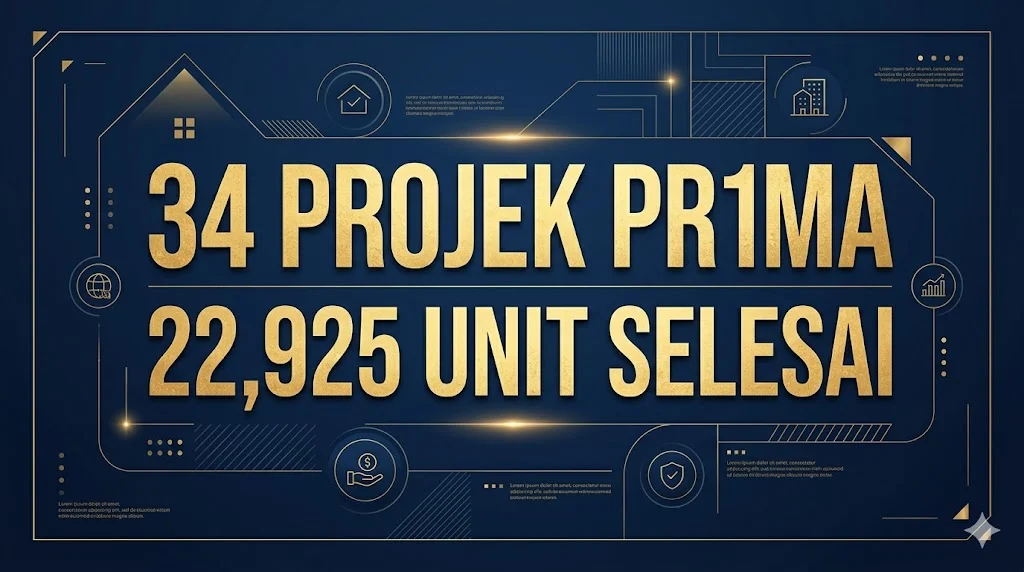
That was the bitter reality faced by tens of thousands of homebuyers under Perbadanan PR1MA Malaysia for years. But in early April 2026, a long-awaited announcement finally closed this dark chapter. Housing and Local Government Minister Nga Kor Ming declared that all 34 sick PR1MA projects inherited by the government had been fully completed, with 22,925 housing units finally handed over to their owners.
This victory is more than just a story of project completion. It is a major lesson about the risks of property investment, the resilience of national housing policy, and what investors and homebuyers should know before committing to any government housing scheme.
What Are PR1MA Sick Projects?
Before we dive into the latest news, we need to understand what is meant by a "sick project". In the context of the Malaysian construction industry, a housing project is considered "sick" when construction work has stalled by more than 30% from the agreed schedule, usually due to developer financial issues, design changes, or supply chain disruptions.
PR1MA itself (Program Perumahan Rakyat 1Malaysia) is an affordable housing initiative launched in 2011 under the PR1MA Act 2012, aimed at providing quality residences priced between RM100,000 and RM400,000 to households earning RM2,500 to RM15,000 per month. The concept looks great on paper, but on-the-ground execution has not always been as pretty as the brochures.
Out of the hundreds of projects planned since PR1MA's establishment, 34 fell into the "sick" category when the new government took over in 2022. The main causes? Economic disruption during the Covid-19 pandemic, surging construction material prices, foreign labour shortages, and in some cases, original developer mismanagement that failed to handle their cash flow properly.
The Final Chapter in Melaka: Residensi Klebang 2 and Bukit Katil
This major announcement was delivered by Nga Kor Ming following the key handover ceremony for the final two projects in Melaka, namely Residensi Klebang 2 and Residensi Bukit Katil. Together these projects comprise more than 1,200 apartment units, complete with facilities including swimming pools, multi-purpose halls, prayer rooms, childcare centres, kindergartens, and recreational areas.
"The government inherited 34 sick PR1MA projects involving 22,925 housing units nationwide. Today, we declare that all 34 projects have been fully completed, have obtained the Certificate of Completion and Compliance, and the keys have been handed over to buyers," Nga said as reported by Bernama.
For buyers who had been waiting for Residensi Klebang 2 and Bukit Katil, this is more than just a piece of paper called a Certificate of Completion and Compliance (CCC). It means they can stop paying rent on other accommodation while simultaneously paying installments on their PR1MA homes - a double financial burden that has crushed many young B40 and M40 families for years.
Why Did These Projects Get "Sick" in the First Place?
This is the question many buyers and investors are asking. If the government could resolve them within three years of the current administration, why were these projects allowed to stall for over a decade in the first place?
The answer is complex. First, the original PR1MA business model relied too heavily on appointed private developers, some of whom had limited working capital. When construction costs surged due to rising steel and cement prices after 2018, developers without financial cushions were squeezed.
Second, the Covid-19 pandemic was the killing blow. Movement restrictions shut down construction sites for months, while border closures prevented foreign workers from returning to Malaysia. Sinar Harian reported that many projects came to a complete halt between March 2020 and the end of 2021.
Third, weak financing structures. Some developers handling PR1MA projects used buyer funds to finance their other projects, a high-risk practice known as "robbing Peter to pay Paul". When other projects failed to generate cash flow as expected, the PR1MA projects ran out of capital.
For property investors, this is an important warning. Before investing in any new property project, you need to understand the developer's financial structure, completion record, and what safety nets exist if the project stalls. We have discussed this topic in greater depth in our article on property investment in Malaysia for beginners.
Implications for B40 and M40 Buyers
According to data from the Ministry of Housing and Local Government (KPKT), the majority of PR1MA unit owners come from the B40 (bottom 40%) and M40 (middle 40%) income groups. For them, a PR1MA home is more than just an asset, it is the gateway to first-time home ownership, an achievement that has become increasingly difficult for Malaysia's younger generation.
What is often forgotten is the real cost of stalled projects on this group:
- Continuous loan installment payments even though the home is not yet ready. Most home loans start charging 24 months after the loan disbursement date, whether the home is complete or not.
- Rent payments for temporary accommodation that drain monthly income.
- Opportunity costs for savings and other investments forgone because of the financial squeeze from dual commitments.
- Psychological pressure that cannot be measured in money.
With keys now in hand, these 22,925 families can finally stabilise their finances. This is a story we rarely hear in official reports, but its impact is enormous. If you belong to this group and are still wrestling with managing day-to-day finances, 10 Hard Truths About Middle-Class (M40) Money in Malaysia offers a perspective you may need to hear.
What Comes Next? The 4,351 New Unit Plan
Nga Kor Ming also announced that the government is now targeting zero sick projects by 2030, while planning to develop more than 4,351 additional PR1MA housing units across the country. This target is ambitious but realistic if the same recovery measures are applied, namely direct takeover by KPKT, strict financial audits, and careful contractor selection.
In the long term, he stressed that home ownership remains a key pillar of public well-being and household economic stability. "Housing is not only a basic necessity but also an investment that can generate long-term asset value," he said as reported by EdgeProp Malaysia.
However, he also acknowledged that the property sector still faces challenges from global uncertainties, including rising construction material costs and inflationary pressures. As such, the government will continue to closely monitor project developments and market conditions to ensure homes remain affordable while curbing speculative activities.
What This Means for the Malaysian Property Market
The resolution of these 34 sick projects has several strategic implications for the Malaysian property market:
1. Restored confidence among first-time homebuyers. For years, many young buyers have been hesitant to commit to new homes for fear of becoming victims of sick projects. With the government showing the capability to resolve legacy problems, this confidence has a chance to recover.
2. Pressure on private developers to improve governance and transparency. When the government sets higher resolution standards, developers who cannot match them will lose market trust.
3. Strengthened demand in the affordable segment, which is the largest portion of Malaysia's income pyramid. Stocks of developer companies focusing on this segment, such as those frequently discussed in corporate reports like Tan Sri Lim Hock San and LBS Bina, will continue to attract long-term investor attention.
4. Awareness of developer risk. Investors and buyers are now more inclined to check developers' track records, past project status, and financing structure before committing. This is a positive change for market health.
5. Demand for residential REITs may increase because they offer exposure to property without individual project risk. If you are new to this concept, REITs - How to Own Property on Bursa Malaysia is a great place to start.
Important Lessons for Future Homebuyers
From the story of these 34 sick projects, here are some important lessons every prospective homebuyer should hold onto:
Always check the developer's track record. How many projects have they built? How many were completed on schedule? Have they ever had projects that stalled? This information is usually available in annual reports if the developer is a listed company, or through news reports and consumer review portals.
Understand your financing structure. Where do the installment payments you make go? Do they enter a project-specific release account, or are they pooled in the developer's general fund? This determines the level of risk to your funds if problems arise.
Check completion dates and compensation clauses. Every Sale and Purchase Agreement (SPA) has a promised completion date and compensation clause if the project is delayed. Make sure you read these carefully and understand your rights as a buyer.
Consider EPF as a safer deposit source. Instead of using cash savings entirely, you can leverage EPF Account 2 withdrawals for the deposit. We have written a guide on using EPF as a deposit for buying a house that you should read.
Calculate realistic monthly installments. Do not take the maximum loan the bank offers. Instead, calculate based on your actual ability with budget room for unexpected costs. For a calculation guide, refer to the article on monthly home loan installments via EPF.
Frequently Asked Questions (FAQ)
1. What is PR1MA Malaysia?
PR1MA, or Program Perumahan Rakyat 1Malaysia, is an affordable housing initiative established under the PR1MA Act 2012. It offers homes priced between RM100,000 and RM400,000 to households earning RM2,500 to RM15,000 per month, particularly in the B40 and M40 income groups.
2. What does "sick project" mean in the housing context?
A housing project is classified as "sick" by KPKT when construction work has stalled by more than 30% from the original schedule, usually due to developer financial problems, labour shortages, or supply chain disruptions. It differs from an "abandoned project", which has a more critical status.
3. How many PR1MA sick projects have been completed as of April 2026?
All 34 PR1MA sick projects have been fully completed, involving 22,925 housing units. The final two projects handed over were Residensi Klebang 2 and Residensi Bukit Katil in Melaka.
4. What are the government's plans for PR1MA development going forward?
The government plans to build more than 4,351 additional PR1MA housing units across the country, and is targeting zero sick and abandoned projects by the year 2030.
5. Did the PR1MA sick projects affect the Malaysian property stock market?
Directly, most PR1MA projects are handled by government-appointed developers and not all are listed on Bursa Malaysia. However, indirectly, the sick project issue affected buyer confidence in the entire property sector, which weighed on the share prices of listed developer companies. This resolution has the potential to restore investor confidence in this sector.
6. How can I apply for a PR1MA home?
PR1MA home applications are made online through the official PR1MA portal. Applicants must be Malaysian citizens aged 21 and above, with household income between RM2,500 and RM15,000 per month. Each project has its own quota and specific criteria.
7. What should I do if my home is part of a stalled project?
First, contact KPKT or the original developer to get the latest status of your project. Second, keep all agreement documents and payment receipts. Third, if necessary, seek legal advice. KPKT has a dedicated unit handling sick projects and can provide intervention assistance.
8. Are PR1MA homes cheaper than the open market?
Yes, generally. PR1MA homes are partly subsidised by the government and have a price ceiling compared to open market homes in the same location. However, there are certain restrictions such as a 10-year moratorium period before units can be resold on the open market.
Conclusion
The resolution of 34 PR1MA sick projects is a victory not only for the 22,925 families who finally received their house keys, but also for the integrity of Malaysia's housing policy as a whole. This victory sends a clear message to the market: housing policy can work when implemented with strict governance and consistent political commitment.
For those of you planning to buy your first home or expand your property investment portfolio, this story is a reminder that knowledge is your best defence. Understand the project structure, check the developer's record, and never invest your money based on the sweet promises of a brochure alone.
After understanding the property market, the next step many readers take is to diversify their portfolio with other more liquid instruments such as stocks, property REITs, and ETFs.
To start investing on Bursa Malaysia or international stock markets like the United States and Hong Kong, you first need a CDS account - open a CDS account with Mahersaham here.
If you are new and want to build a solid investment foundation, download the Mahersaham Stock Basics Ebook for free for a step-by-step guide.