Recency Bias in Stocks: Why Traders Assume Yesterday's Trend Will Continue Tomorrow

Picture this. A stock rises five days in a row. Every morning you open your broker app, and it is green again. By the sixth day, you cannot resist any longer. You buy in big because your brain whispers, "This trend is strong, it will surely keep rising tomorrow." Two days later the stock drops and you are stuck holding at the very top.
If this scenario hits a little too close to home, you have just met one of the most subtle yet expensive mental biases in investing: recency bias. It is the reason so many traders assume that whatever happened yesterday will repeat tomorrow, even though market history proves the opposite again and again.
What Is Recency Bias?
Recency bias is the human brain's tendency to give excessive weight to recent events while underestimating long-term data and broader history. In the context of stocks, it means you make decisions based on what just happened over the past few days or weeks, then assume that pattern will continue indefinitely.
Here is the short answer: recency bias tricks you into believing that "yesterday's trend equals tomorrow's forecast". When the market rises, you feel it will keep rising forever. When it falls, you become convinced it will keep falling without end. Both feelings mislead you, because markets move in cycles, not straight lines.
Interestingly, recency bias is not a sign that you are foolish or weak. It is a fundamental feature of the human brain. Information we have just experienced is easier to recall, feels more "vivid" in the mind, and automatically feels more important than older data that has faded from memory.
The Real Cause: The Availability Heuristic
To understand recency bias, we need to go back to the work of two famous psychologists, Daniel Kahneman and Amos Tversky, in the 1970s. They introduced the concept of the availability heuristic, a mental shortcut in which the brain judges the likelihood of something happening based on how easily examples of that event come to mind.
The logic is simple. Recent events are easier to recall than older ones. Because last week's stock rally is still fresh in your mind, your brain concludes that the rise is "normal" and will continue. In contrast, a market crash three years ago has faded, so you treat it as irrelevant.
This is the gap between perception and reality. Your brain thinks it is doing rational analysis, when in fact it is merely following the data that is most easily accessible in memory. Recency bias is the child of the availability heuristic, with one important twist: it focuses specifically on what is new, not just on what is easy to remember.
How Recency Bias Attacks Traders
Recency bias disguises itself in many forms. Here are the ways it most often ruins traders' decisions on Bursa Malaysia:
- Chasing momentum at the top. After a stock surges, you enter late because you are convinced the trend still has far to run. You become the last buyer before the reversal.
- Panic selling at the bottom. After a few weeks of a red market, you are convinced it will keep falling, so you sell at a loss, right before the market recovers.
- Judging fund managers by the latest quarter. You abandon a strategy that has won for 10 years just because it underperformed for the past three months.
- Overconfidence after a few wins. Three profitable trades in a row make you feel you have "figured out the market", so you recklessly increase your position size.
- Excessive trauma after one big loss. A single bad losing trade keeps you afraid to enter the market for months, even when a good setup appears.
Notice that recency bias works in both directions. It does not just make you overly optimistic when the market rises. It also makes you overly pessimistic when the market falls. Both states push you to buy high and sell low, the exact opposite of what successful investors should do.
A Real Example on Bursa Malaysia
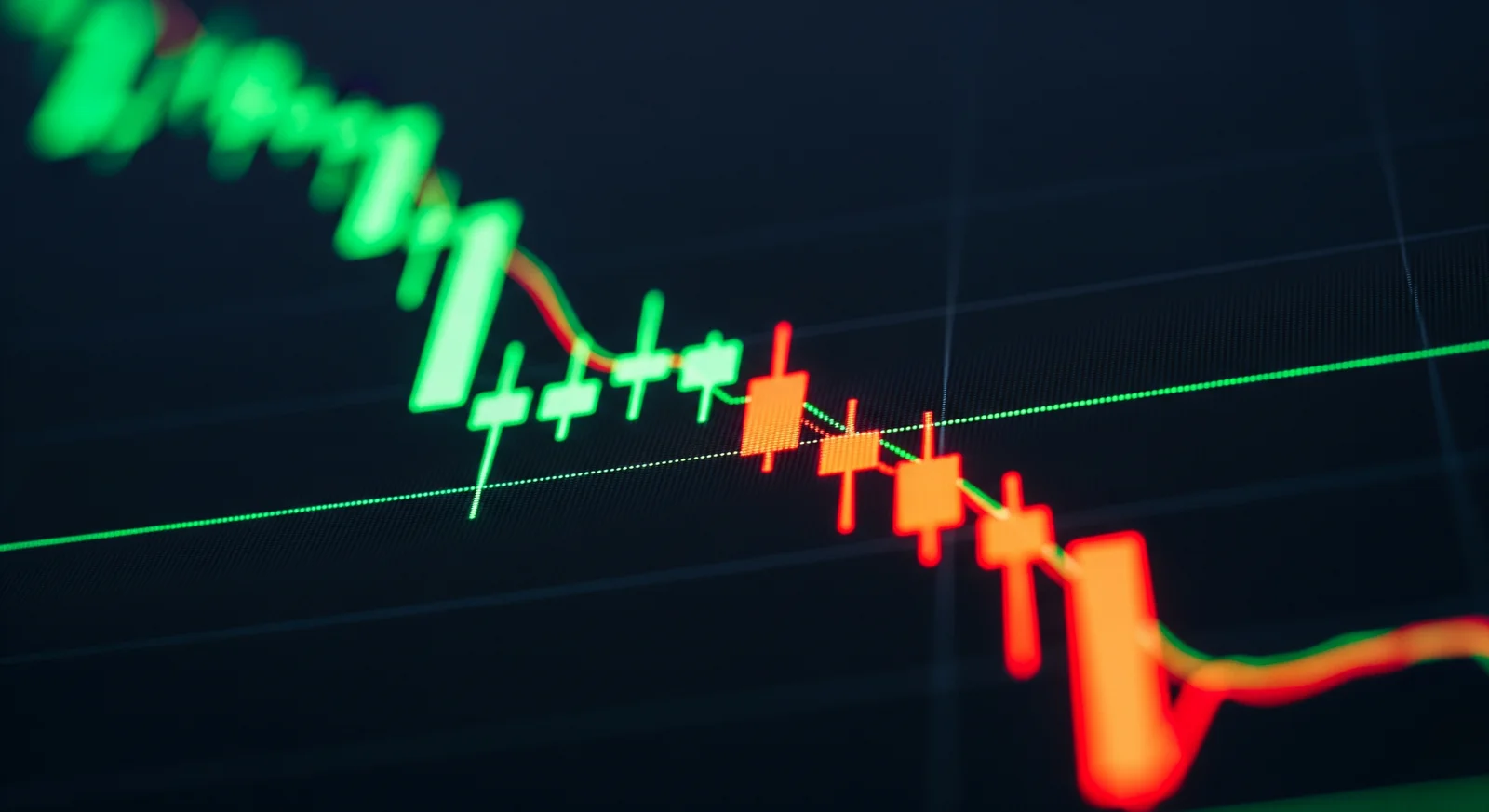
There is no clearer example of recency bias than the rubber glove phenomenon of 2020. When the pandemic struck, demand for rubber gloves soared and the share prices of companies like Top Glove, Supermax and Hartalega multiplied within a few months. Every week the chart rose, and every week more retail investors piled in, convinced the "glove trend" was here to stay.
Many investors' brains at the time only saw the recent data: prices rising, company profits soaring, positive news every day. They ignored one more fundamental and more important fact, namely that the extraordinary demand was temporary. When vaccines began rolling out and conditions returned to normal in 2021 and 2022, glove share prices collapsed. Many who entered at the top were stuck with heavy losses for years.
The same pattern repeated with technology and semiconductor stocks, renewable energy stocks, and every time a hot new theme emerged in the market. Recency bias makes investors believe the current theme is "different this time", when boom and bust cycles are a permanent law of markets. The Securities Commission Malaysia, through its InvestSmart programme, has repeatedly stressed that wise investing requires emotional maturity, not merely chasing the hottest theme.
Recency Bias vs Momentum: Where Is the Dividing Line?
This is where many traders get confused. Doesn't a momentum strategy literally buy stocks that are rising? Yes, but there is a big difference between disciplined momentum and recency bias.
A true momentum trader uses a clear system: a predefined entry point, exit point, and stop loss. They do not assume the trend will continue forever. Instead, they ride the trend with a strict exit plan. QuantifiedStrategies explains that the problem arises when decisions are made emotionally based on a few days of recent movement, with no system.
Recency bias, on the other hand, has no system. It is just a feeling. You enter because you "feel" the trend is strong, and you have no plan for when to exit if it reverses. The dividing line is simple: if your decision comes from rules written before you entered, that is strategy. If it comes from emotion triggered by a chart from a few days ago, that is recency bias.
The Real Cost: Buy High, Sell Low
Recency bias is expensive because it systematically pushes you to make decisions at the worst possible time. After the market rises strongly, recency bias makes you feel comfortable and bold, so you buy when prices are already high. After the market crashes hard, recency bias makes you feel afraid, so you sell when prices are already cheap.
Asset management firms like Schwab show that investors often add risk after a good year because recent gains feel "normal", then become overly fearful after a few weeks of decline. This pattern explains why so many retail investors consistently underperform the market. They are not short of information. They simply react to the most recent and most emotional information.
Money lost to recency bias rarely shows up as a single dramatic loss. Instead, it erodes a portfolio slowly through hundreds of small decisions driven by recent emotion rather than a long-term plan.
Recency Bias in Falling Markets
Most people associate recency bias with the euphoria of buying when the market rises. But its dark side appears when the market falls. After a few red days in a row, your brain starts painting a doomsday scenario. "The market is broken, everything will keep falling." This feeling is so strong that you sell all your holdings at the worst possible moment.
History shows that markets always recover from corrections, even though no one can predict the exact timing. Investors who sell out of panic at the bottom suffer two losses: the real loss from selling at a loss, and the opportunity loss when the market recovers without them. Recency bias in a falling market is the quietest portfolio destroyer because it disguises itself as "smart risk management".
How to Fight Recency Bias
You cannot erase recency bias completely because it is hardwired into the human brain. But you can build systems that reduce its power. Here are practical steps:
- Write a trading plan before you enter. Set your entry point, profit target, and stop loss in writing. A decision already written down cannot be disturbed by yesterday's chart emotions.
- Zoom out the chart. Before making a decision, look at the long-term chart (1 to 5 years), not just the daily chart. A five-day trend looks big on a daily chart but means nothing on a yearly chart.
- Check historical data, not feelings. Ask yourself: how often does a five-day trend actually continue? The data usually shows it is far more random than it feels.
- Use dollar cost averaging. By investing a fixed amount at regular intervals, you remove recent emotion from the equation and avoid buying big at the top.
- Keep a trading journal. Record the reason for every decision. When you reread it, you will see how often recent emotional decisions led to losses.
- Wait 24 hours before big decisions. Recent emotion is strongest in the first few hours. Giving yourself a day is often enough for recency bias to fade.
The key is to replace reaction with process. Every time you feel "this trend must continue", stop and ask: is this analysis, or just the effect of what I have just seen?
Recency Bias and the Family of Other Mental Biases
Recency bias rarely comes alone. It works together with other cognitive biases to ruin your decisions. Anchoring bias makes you cling to your original buy price, while recency bias makes you cling to recent movement. Confirmation bias makes you only seek news that supports your current belief, further reinforcing recency bias.
Understanding that these biases work as a single system is an important step toward maturity as an investor. You do not need to be perfect. You only need to be aware of when your brain is taking a shortcut, and build guardrails to protect yourself from rushed decisions.
FAQ
What does recency bias mean in stocks?
Recency bias in stocks means the tendency to give excessive weight to recent price movements, then assume the trend of the past few days or weeks will continue, while ignoring long-term data and cycles.
Is recency bias the same as FOMO?
They are related but not the same. FOMO (fear of missing out) is the feeling of being afraid to miss an opportunity. Recency bias is the cognitive cause behind it, namely the belief that the recent trend will continue, which triggers FOMO.
How do I know if I am being influenced by recency bias?
Common signs include making decisions based on the past few days of movement, feeling that "this trend must continue" without supporting data, and changing a long-term strategy because of short-term performance.
Does recency bias only affect short-term traders?
No. Long-term investors are also affected, for example when selling a good stock after a few months of weak performance, or chasing a fund that just won big last quarter.
What is the difference between recency bias and a momentum strategy?
A momentum strategy uses a system with clear entry and exit points. Recency bias is just emotion with no exit plan. Momentum is disciplined, recency bias is reckless.
Can recency bias be eliminated completely?
No, because it is hardwired into the human brain. But its effects can be reduced with systems such as a written trading plan, a journal, and reviewing long-term data before making decisions.
Why is recency bias dangerous when the market falls?
Because it convinces you the market will keep falling, so you sell at a loss right before the market recovers. This causes a real loss and an opportunity loss at the same time.
Conclusion
Recency bias is one of the main reasons many traders who are skilled at reading charts still lose money. It tricks you into believing that what happened yesterday will repeat tomorrow, when markets move in cycles that do not respect your short-term memory. Winning does not come from predicting trends accurately, but from building systems that protect you from recent emotion.
The first step to investing more wisely is understanding that your brain is not a neutral forecasting tool. It leans toward whatever is new and emotional.
To start investing with discipline on Bursa Malaysia and international markets, you need the right account first.
Open a CDS and trading account to start investing in Bursa Malaysia as well as foreign stocks such as the United States and Hong Kong markets.
If you are just starting out and want to understand the basics of stock investing more deeply, download our free stock investing basics ebook as a starting point.