Audit Opinions Explained: The Early Warning Most Investors Skip

Every year, companies listed on Bursa Malaysia publish annual reports running 200 to 300 pages. Most investors jump straight to the income statement, check the net profit, and close the document.
Yet there is one short section, usually just two to four pages, sitting immediately before the financial statements. It is titled "Independent Auditors' Report". That section tells you whether the numbers you are about to read can be trusted at all.
This article was prompted by a real case on Bursa Malaysia on 31 July 2026, when an engineering company received a qualified opinion from its auditor over RM50.31 million in contract assets tied to a project in Iraq. We will use that case as a live example to understand what an audit opinion actually means, and why it often appears long before any other bad news.
The Short Answer: What Is an Auditor's Report?
An auditor's report is a written statement from an independent audit firm on whether a company's financial statements give a true and fair view. Auditors do not prepare the accounts, they only examine them and give an opinion.
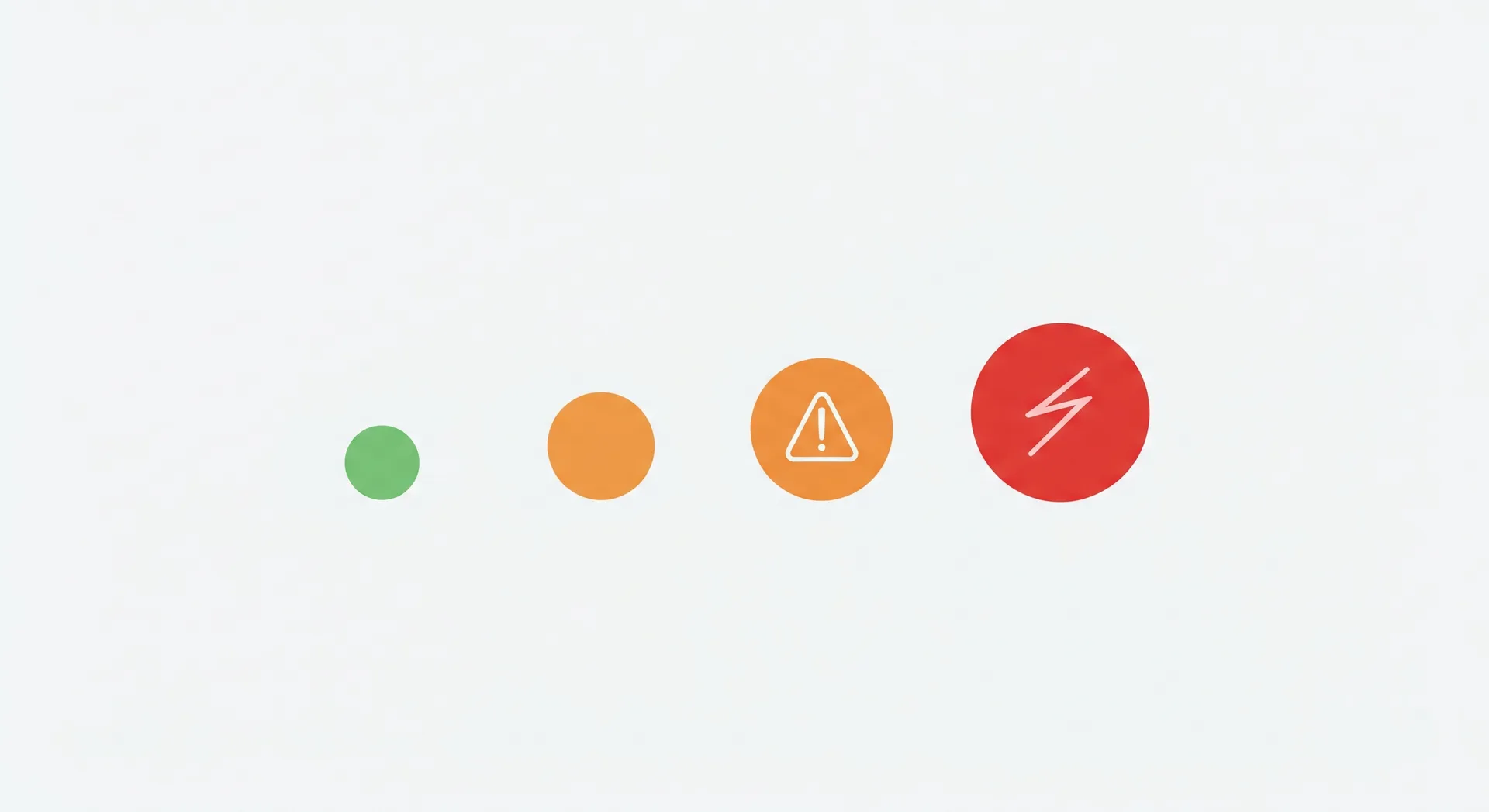
That opinion falls into four types: unqualified (clean), qualified, adverse, and disclaimer. The further it moves from clean, the more serious the issue. Two of the four can directly trigger PN17 status on Bursa Malaysia.
Where to Find It
Many investors have never seen this document simply because they did not know it existed. There are three places to look:
In the annual report. Find the "Financial Statements" section. The auditor's report always sits before the balance sheet and income statement. In a PDF, search for "Independent Auditors' Report".
In Bursa announcements. If the auditor issues anything other than a clean opinion, the company must file a separate announcement on Bursa Malaysia. The announcement title usually reads "AUDIT REPORT - MODIFIED OPINION". This means you do not have to wait for the full annual report.
In quarterly reports. Notes to quarterly results often mention unresolved audit issues carried over from the previous year.
One important point: quarterly reports on Bursa Malaysia are not audited. Only the annual financial statements go through a full audit. That is exactly why the big surprises tend to surface in annual results rather than quarterly ones.
The Four Types of Audit Opinion
This is the part worth understanding properly. Under the auditing standards applied in Malaysia and overseen by the Malaysian Institute of Accountants, there are four categories of opinion.
1. Unqualified Opinion (Clean Opinion)
This is the best outcome. The auditor is satisfied that the financial statements give a true and fair view and were prepared in line with accepted accounting standards. The large majority of listed companies receive this type of opinion.
Keep this in mind: a clean opinion is not a statement that the company is profitable or that the stock is a good investment. It only means the reported numbers can be relied upon. A company posting heavy losses can still receive a clean opinion, as long as those losses are recorded correctly.
2. Qualified Opinion
The auditor has found a specific issue that is material, but not pervasive. In other words, there is one particular area of the accounts they could not verify or disagree with, while the rest remains reliable.
The standard wording reads something like: "In our opinion, except for the effects of the matter described in the Basis for Qualified Opinion section..." That phrase "except for" is the key marker.
This is amber-light territory. Not fatal, but you need to read carefully to understand exactly what the issue is.
3. Adverse Opinion
The auditor states that the financial statements do not give a true and fair view. The problem is not confined to one area but is broad enough that the accounts as a whole are misleading.
This is rare and very serious. Serba Dinamik Holdings is a well-known Bursa Malaysia example, where external auditors issued an adverse opinion because they could not obtain sufficient audit evidence to support the company's revenue and trade receivables balances.
4. Disclaimer of Opinion
The auditor steps away entirely. They state that they cannot express any opinion because there is not enough evidence to reach a conclusion.
If an adverse opinion says "these numbers are wrong", a disclaimer says "we have no idea whether these numbers are right or wrong". In many situations a disclaimer is more alarming than an adverse opinion, because it suggests the company's own records are incomplete.
Transmile Group received a disclaimer in 2006, and fraud involving overstated revenue and profits later came to light. More recently, Sarawak Cable triggered PN17 criteria after its auditor issued a disclaimer of opinion on its FY22 financial statements.
Three Things Often Confused With the Opinion Itself
This is where investors most often get it wrong. The three items below appear in auditors' reports but do not all mean the opinion is unclean.
Emphasis of Matter
The auditor draws the reader's attention to something already disclosed in the notes to the financial statements, because it is fundamental to understanding them.
The critical point: under ISA 706, including an Emphasis of Matter paragraph does not affect the auditor's opinion. The opinion can remain clean. It is a pointing finger, not a penalty.
Material Uncertainty Related to Going Concern
Going concern refers to a company's ability to keep operating for at least 12 months from the reporting date. When an auditor raises a material uncertainty related to going concern, they are saying there is significant doubt about whether the company can survive another year.
This can appear alongside a clean opinion. That sounds contradictory, but the logic holds: if the company has properly disclosed the risk in the notes, the financial statements are in fact true and fair. The auditor is simply underlining the risk.
For investors, this is one of the strongest signals in the entire annual report. Do not dismiss it just because the opinion still reads "unqualified".
Key Audit Matters (KAM)
These are the matters the auditor considered most challenging or requiring the most judgement during the audit. KAMs are normal and almost every listed company has them. They are not a warning.
They are still useful, though. They tell you where the most subjective estimates sit in that company's accounts, such as goodwill valuation, revenue recognition on long-term contracts, or inventory values.
A Real Case: Two Years, Two Different Signals
Pestec International Berhad offers something we rarely get to see: two different types of auditor signal in two consecutive financial years at the same company.
Financial year ended 31 March 2025. The auditor at the time issued a clean opinion, but with a material uncertainty related to going concern. The group's current liabilities exceeded current assets by RM26.49 million, while at company level the gap was RM114.36 million. The group also recorded a net loss of RM341.5 million. The board responded that the holding company had agreed to provide continuing financial support.
Financial year ended 31 March 2026. This time it was different. A Bursa announcement dated 31 July 2026 was titled "AUDIT REPORT - MODIFIED OPINION / MATERIAL UNCERTAINTY RELATED TO GOING CONCERN : QUALIFIED OPINION". Auditor Nexia SSY PLT issued a qualified opinion because it could not obtain sufficient audit evidence to determine whether contract assets worth RM50.31 million should be impaired.
The cause was not accounting fraud. The electrical substation project in Baghdad had reached 86.73 percent completion, but escalating conflict in the region prevented site visits from going ahead as planned. Without site visits the auditor could not verify work progress, and without that verification it could not confirm the recorded value of the contract asset.
What investors can take from this case:
- A qualified opinion does not necessarily mean fraud. Sometimes it stems from external obstacles beyond the company's control, such as war or natural disaster.
- Geopolitical risk can land in the accounts. Country risk is not just international news, it eventually shows up as a figure the auditor cannot verify.
- Watch the year-on-year direction. Moving from a clean opinion with a going concern note to a qualified opinion is a step down, and that pattern tells you more than reading a single year in isolation.
- Read the company's response. Pestec stated it would continue assessing the contract asset position, stay in regular contact with the project owner, and expects the matter to be resolved within six months, subject to security conditions stabilising.
When an Audit Opinion Pulls a Company Into PN17
This is where the auditor's report stops being a technical accounting matter and starts directly affecting shareholders. Under Bursa Malaysia's Listing Requirements, a company is classified as PN17 if it triggers at least one criterion, and three of them relate directly to the auditor:
1. The auditor issues an adverse opinion or a disclaimer of opinion in the latest audited financial statements. This is a direct trigger, with no additional condition.
2. The auditor highlights a material uncertainty related to going concern, and at the same time shareholders' equity is 50 percent or less of share capital.
3. Shareholders' equity is 25 percent or less of share capital and is less than RM40 million.
Note something important here. A qualified opinion on its own is not a PN17 trigger. It sits one level below adverse and disclaimer. It still matters, though, because an issue that starts as a qualification can deteriorate into a disclaimer the following year if it goes unresolved.
This is also why the auditor's report works as an early warning. By the time a company is formally announced as PN17, its share price has usually already fallen a long way. The signals in the auditor's report typically appear months, sometimes a full year, earlier.
Khee San Berhad is an example of a company that entered PN17 over going concern issues, after external auditors noted that it had incurred losses and negative operating cash flows and was in a net current liability position.
Six Steps to Read an Auditor's Report
You do not need an accounting background for this check. Give it five minutes whenever an annual report is released.
Step 1: Look for the word "Opinion" in the heading. If it reads "Qualified Opinion", "Adverse Opinion", or "Disclaimer of Opinion", stop and read closely. If it just reads "Opinion", that is a clean opinion.
Step 2: Search for "except for". This is the standard phrase marking a qualified opinion. Whatever follows it is the issue.
Step 3: Search for a "Material Uncertainty Related to Going Concern" paragraph. If it is there, read it in full even if the opinion remains clean.
Step 4: Read the Key Audit Matters. Not to hunt for problems, but to learn where the most subjective estimates sit.
Step 5: Compare against last year. Has the opinion improved, held steady, or deteriorated? The direction of travel matters more than any single year.
Step 6: Check who the auditor is and whether it changed. An abrupt change of audit firm, particularly right after an issue was raised, is worth questioning.
What an Auditor's Report Does Not Tell You
For balance, it is important to understand the limits.
Auditors do not assess whether the business model is any good. They offer no view on whether a stock is cheap or expensive. They also do not guarantee the absence of fraud, because audits are conducted on a sampling and materiality basis rather than by examining every transaction.
Audits are also backward-looking. They cover a year that has already ended. A company's situation can change materially between the financial statement date and the date you read it.
So the auditor's report is one input into your research, not the whole of it. It works best combined with a reading of the same company's balance sheet and cash flow statement.
FAQ
Does a qualified opinion mean the company is committing fraud?
Not necessarily. A qualified opinion means the auditor could not verify one specific area of the accounts, or disagreed with its accounting treatment. The cause can be an external obstacle such as conflict or disaster that prevented verification, rather than fraud.
What is the difference between an adverse opinion and a disclaimer of opinion?
An adverse opinion means the auditor is confident the financial statements are wrong and misleading. A disclaimer means the auditor cannot express any opinion at all because there is insufficient evidence. Both are serious and both trigger PN17 criteria.
Does a clean opinion mean the stock is safe to buy?
No. A clean opinion only confirms that the reported numbers can be relied upon. It offers no view on business prospects, valuation, or whether the investment suits you.
Are quarterly reports audited?
No. Quarterly reports on Bursa Malaysia do not go through a full audit. Only annual financial statements are audited, which is why major issues tend to surface in the annual results.
Why can a going concern warning appear alongside a clean opinion?
Because if the company has properly and adequately disclosed the risk in the notes, the financial statements are still considered true and fair. The auditor is simply drawing attention to that risk.
How long does a company usually take to resolve a qualified opinion?
It depends on the cause. In Pestec's case, the company expects the Iraq contract asset matter to be resolved within six months, subject to security conditions stabilising. Other issues, such as incomplete accounting records, can take considerably longer.
Where can I read audit report announcements for Bursa Malaysia companies?
All audit report announcements with modified opinions are freely accessible through the company announcements section of the Bursa Malaysia portal, without needing to download the full annual report.
Is a change of auditor a red flag?
Not automatically, since companies do change audit firms for routine reasons such as cost or tenure. But a change occurring right after an audit issue was raised is worth questioning and examining more closely.
Conclusion
The auditor's report is among the shortest sections of an annual report, yet it is the only one that tells you whether every other number in the document can be trusted. The four opinion types, together with going concern and Emphasis of Matter, form an early warning system that is already freely available to every investor.
The Pestec case in 2026 shows that these signals can arise from unexpected sources, including geopolitical conflict in a foreign country. What matters is not memorising the terminology, but getting into the habit of opening that section every time you research a company.
Once you are comfortable reading auditor's reports, the next step is applying that to the actual companies you follow.
To invest in Bursa Malaysia as well as foreign stocks such as US and Hong Kong equities, you will need a CDS and trading account opened through a licensed remisier.
If you are just starting out and want a more structured grounding in market basics, our free stock market basics ebook is a good place to begin.
Further Reading
- PN17 / GN3 Stocks: How to Read News on Distressed Companies
- Goodwill & Impairment: Hidden Red Flags in the Balance Sheet
- Balance Sheet 101: Assets, Liabilities & Shareholders' Equity
- Cash Flow Statement: Spotting a Company's Real Performance
- How to Read a Bursa Malaysia Annual Report Without Getting a Headache