BHIC Sells Pulau Jerejak Shipyard Land for RM28 Million, Books RM14.4 Million One-Off Gain

Boustead Heavy Industries Corporation Bhd (BHIC, 8133) has just announced a move worth investors' attention: the company is disposing of its old shipyard land in Pulau Jerejak, Penang, for RM28.00 million in cash. From this transaction, BHIC expects to book a one-off gain of RM14.39 million. This is more than just an ordinary land sale - it is a classic example of how a listed company monetises long-idle non-core assets to strengthen its cash position.
In this article, we break down all the key details of the deal: who the seller and buyer are, what exactly is being sold, why the site sat idle, and most importantly - what it means for you as a Bursa Malaysia investor.
Deal Summary: What Actually Happened
On 31 March 2026, BHIC's wholly-owned subsidiary Boustead Penang Shipyard Sdn Bhd (BPS) entered into a conditional sale and purchase agreement (SPA) with Karya Koperat Sdn Bhd. According to The Edge Malaysia, the transaction involves the disposal of three lots of leasehold land in Pulau Jerejak.
Here are the key details of the transaction:
- Seller: Boustead Penang Shipyard Sdn Bhd (a wholly-owned subsidiary of BHIC)
- Buyer: Karya Koperat Sdn Bhd, a unit of Ark Resources Holdings Bhd (ARK, 7007)
- Asset: Approximately 26 acres (26.5 acres) of leasehold land in Pulau Jerejak, Penang
- Sale price: RM28.00 million, satisfied entirely in cash
- One-off gain: Approximately RM14.39 million
- Transaction type: Non-Related Party Transaction under Chapter 10 of the Bursa Listing Requirements
- Expected completion: Third quarter (Q3) 2027, subject to approvals
The land was previously used to support the BHIC group's shipbuilding, ship repair and offshore fabrication activities. According to DagangNews, the primary purpose of the disposal is to strengthen the group's cash position.
Why Did the Pulau Jerejak Shipyard Sit Idle?
To understand why BHIC is willing to let go of this asset, we need to look at its history. The Pulau Jerejak shipyard was once part of BHIC's shipbuilding and ship repair operations. However, utilisation of these shipyard assets declined significantly after October 2018, following the completion of a topside fabrication project.
After that, operations ceased entirely amid weaker market conditions. The main cause was the prolonged downturn in global oil prices, which affected Malaysia's oil and gas sector as well as the domestic shipbuilding and MRO (Maintenance, Repair and Overhaul) industry. When oil and gas activity slowed, demand for offshore fabrication work at yards like Pulau Jerejak collapsed in tandem.
The link between oil prices and the performance of energy-related companies is nothing new - it is a recurring theme on Bursa Malaysia. Investors who want to understand this dynamic can refer to our discussion on the catalysts behind oil and gas stocks. The Pulau Jerejak site eventually remained idle since June 2024, becoming an asset that generated no income yet still carried holding costs.
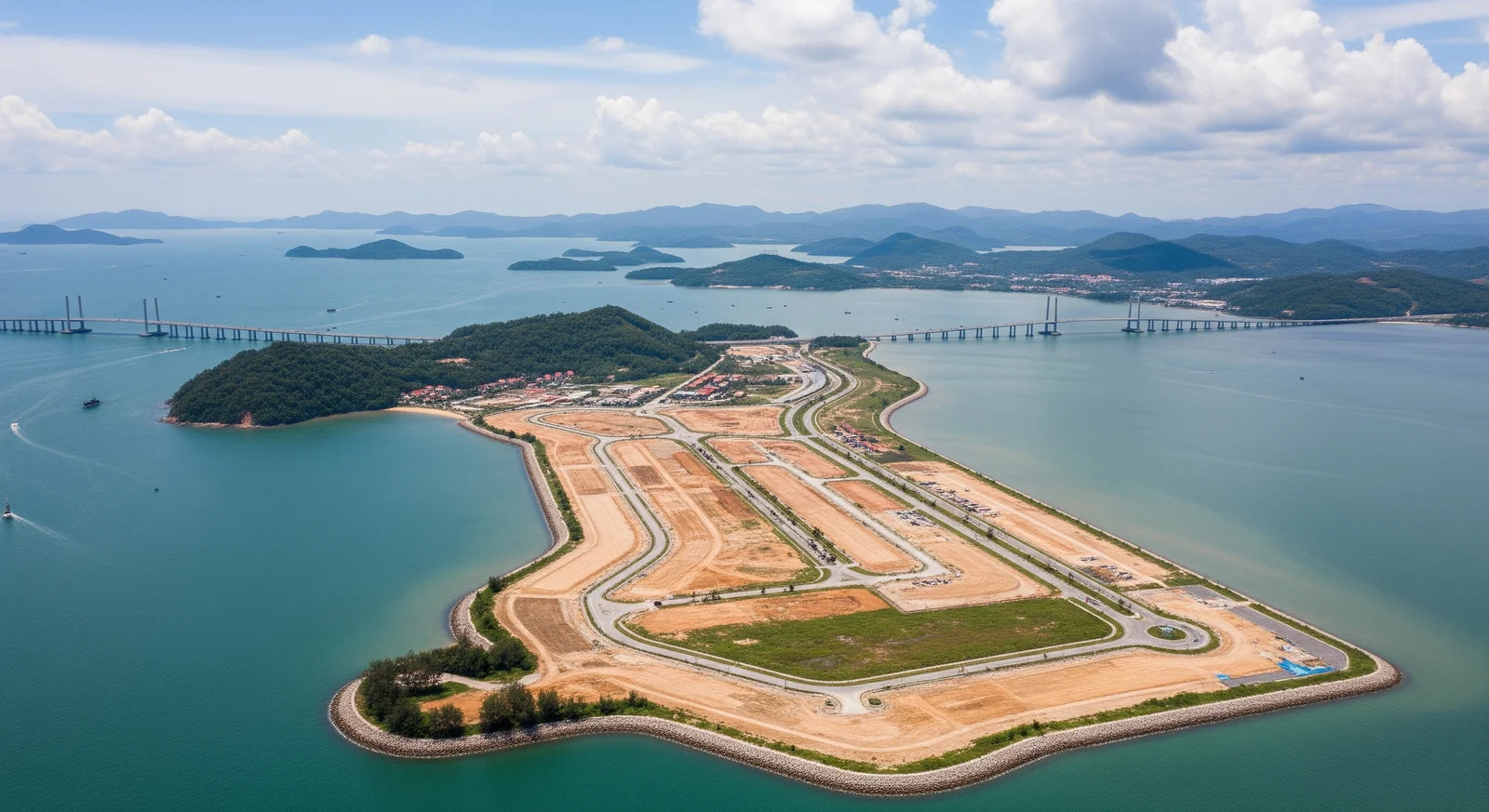
The location of the site is rather unique. It sits in the southeastern part of Pulau Jerejak, between the Penang Bridge and the Sultan Abdul Halim Mu'adzam Shah Bridge (Second Bridge), near Bayan Lepas. At present, the site is accessible only by boat - roughly a 4km ride from the Seagate jetty.
Who Is the Buyer? Getting to Know ARK Resources & the Redevelopment Plan
The buyer, Karya Koperat Sdn Bhd, is a unit of Ark Resources Holdings Bhd (ARK, 7007) - a property and construction company listed on Bursa Malaysia. According to Bloomberg's company profile, ARK Resources was founded in 1983 and is headquartered in Bayan Lepas, Penang. The company operates through three main segments: Property Development, Construction, and Management and Investment Holding.
ARK provides civil, geo-technical, soil improvement, mechanical and electrical engineering works, alongside property development and turnkey construction. In other words, this buyer is no random speculator - it is an experienced, Penang-based property player that clearly wants to add strategic landbank in the state.
What are ARK's plans for the site? According to Penang Property Talk, no specific development concept has been finalised yet. However, ARK intends to rezone the land from the "industrial strictly for shipyard purposes" category to uses that allow residential, commercial and/or industrial development. This land conversion is part of the acquisition conditions and will broaden the site's future development options.
In short, ARK is making a landbanking move - buying land at a reasonable price today, with the expectation of developing it in the future once the zoning and market conditions are right.
Financial Impact on BHIC: One-Off Gain & Cash Injection
For BHIC, the transaction brings two clear benefits. First, a one-off gain of RM14.39 million. This gain arises because the RM28 million sale price is higher than the net book value of the land in BHIC's balance sheet. When an asset is sold above its book value, the difference is recorded as a gain.
It is important for investors to understand what "one-off" means here. The RM14.39 million gain is a one-time event - it is not recurring operating income. In the income statement, it will appear as an exceptional item that lifts net profit in the quarter the deal completes, but it will not repeat in subsequent quarters. Investors who want to dig deeper into distinguishing core earnings from one-off gains like this can refer to our guide on how to read an income statement.
Second, a cash injection of RM28 million. This is the primary reason BHIC is carrying out this disposal. Cash from selling an idle asset can be used to strengthen the balance sheet, reduce financial burden, or fund core operations. For a company that has faced cash flow challenges in the past, converting a "dead" asset into "live" cash is a healthy capital management move. To understand how assets and cash are recorded in financial statements, our Balance Sheet 101 guide can help.
What Is a Non-Related Party Transaction (Chapter 10)?
BHIC's announcement classifies this transaction as a Non-Related Party Transaction under Chapter 10 of the Bursa Malaysia Listing Requirements. What does that mean?
Chapter 10 of Bursa governs "transactions" by listed companies - including acquisitions or disposals of assets. When the size of a transaction exceeds certain percentage ratios relative to the company's net assets or market capitalisation, it may require public disclosure and, in some cases, shareholder approval.
"Non-Related Party" means the buyer (ARK/Karya Koperat) has no relationship with BHIC's directors, major shareholders, or related parties. This differs from a Related Party Transaction (RPT) which involves insiders and typically attracts stricter scrutiny due to conflict-of-interest risk. The non-related party status gives confidence that the transaction is conducted on an "arm's length" basis - that is, on fair commercial terms between two independent parties.
If you are new to corporate actions like this, we have a comprehensive guide on corporate exercises on Bursa Malaysia that explains the various types of company transactions and their impact on shareholders.
Shareholder Approval & the EGM Circular
Given the size and nature of the transaction, BHIC is expected to issue a circular to shareholders and may require approval through an Extraordinary General Meeting (EGM). This circular typically contains the full details of the transaction, management's justification, an independent valuation (if applicable), and the board of directors' recommendation.
For existing BHIC investors, this is an opportunity to scrutinise the document when it is released. Things to watch for include: whether the RM28 million price is reasonable relative to the market valuation of the land, what conditions precedent must be met before the deal completes, and how the cash proceeds will be used.
The transaction is conditional and expected to complete by Q3 2027 - meaning it is subject to several approvals, including the possible conversion of land conditions. Investors should be aware that this distant completion date carries execution risk.
What Does It Mean for BHIC Investors?
Strategically, this move aligns with the trend of companies monetising non-core assets. At its core, BHIC is a defence company - its main activities involve shipbuilding, MRO, and manufacturing for the Royal Malaysian Navy (RMN), including the Littoral Combat Ship (LCS) project and the refurbishment of Scorpene-class submarines. The idle commercial shipyard in Pulau Jerejak is not part of this defence core.
By releasing an idle asset, management signals that it is focused on strengthening the balance sheet and concentrating capital on the core business. This is generally viewed positively by the market, especially if the company previously bore the holding costs of an unproductive asset.
However, investors should put this transaction in the right perspective. The RM14.39 million one-off gain and RM28 million in cash are meaningful figures, but they do not fundamentally change BHIC's core business outlook. The company's long-term health still depends on the execution of defence projects, MRO contracts, and the management of the LCS project, which previously faced delays. To assess a company's real cash performance, our Cash Flow Statement guide is very useful.
Asset disposals like this are also part of the broader flow of corporate news on Bursa Malaysia. You can see other examples in our roundup of Malaysian corporate news 2026, which also features asset disposals by large companies.
What to Watch For
Before making any investment decisions based on this news, consider the following:
- Execution risk: The transaction is conditional and expected to complete in Q3 2027. A lot can change over this period, including approval for land rezoning.
- The one-off gain is not recurring: Do not mistake the RM14.39 million for a permanent boost to earnings. It appears only once.
- Relative size: The RM28 million transaction value should be viewed against BHIC's overall size to gauge its impact on the balance sheet.
- The core business remains: BHIC's real performance is still determined by defence and MRO contracts, not a one-time land sale.
Frequently Asked Questions (FAQ)
How much did BHIC sell the Pulau Jerejak land for?
BHIC, through its subsidiary Boustead Penang Shipyard, is selling approximately 26 acres of leasehold land in Pulau Jerejak for RM28.00 million, satisfied entirely in cash.
Who is the buyer of the land?
The buyer is Karya Koperat Sdn Bhd, a unit of Ark Resources Holdings Bhd (ARK, 7007), a property and construction company based in Bayan Lepas, Penang.
How much gain did BHIC book from this disposal?
BHIC expects to record a one-off gain of approximately RM14.39 million, because the sale price exceeds the net book value of the land.
Why is BHIC selling this land?
The shipyard land has been idle since operations ceased amid the global oil price downturn and the slowdown in the oil and gas sector. The main purpose of the disposal is to strengthen the group's cash position by monetising an unproductive non-core asset.
What will ARK Resources do with the land?
ARK intends to rezone the land from the industrial-shipyard category to residential, commercial and/or industrial uses, opening the way for future redevelopment of the site. No specific development concept has been finalised so far.
When is the transaction expected to complete?
The transaction is conditional and expected to complete by the third quarter (Q3) of 2027, subject to approvals including the possible conversion of land conditions and shareholder approval.
Does this transaction involve related parties?
No. It is classified as a Non-Related Party Transaction under Chapter 10 of the Bursa Listing Requirements, meaning the buyer has no relationship with BHIC insiders and the deal is conducted on independent, arm's length terms.
Does selling the shipyard affect BHIC's defence operations?
Not directly. The Pulau Jerejak site is an idle commercial shipyard and is not part of BHIC's defence core. The group's main defence activities - including naval shipbuilding, MRO for the Royal Malaysian Navy, and the Littoral Combat Ship project - are handled at other facilities such as the yard in Lumut, Perak. This disposal only releases an unproductive non-core asset.
Is this news enough to buy BHIC shares?
No. The one-off gain and cash injection are positive, but they do not change BHIC's core business outlook, which still depends on defence and MRO contracts. Always do thorough research and consider the company's overall fundamentals before investing.
Conclusion
BHIC's disposal of the Pulau Jerejak shipyard land is a good example of how a listed company converts an idle asset into cash and gains. At RM28 million with a one-off gain of RM14.39 million, BHIC strengthens its balance sheet while allowing ARK Resources to add strategic landbank in Penang. Yet a smart investor will see this transaction as a capital management move, not a fundamental transformation of the business.
Understanding corporate actions like this is an important part of the journey to becoming a more knowledgeable investor on Bursa Malaysia. The next step is making sure you have the access to act on market opportunities.
If you are serious about starting to invest, you need a CDS and trading account. Open your CDS account to invest in Bursa Malaysia as well as foreign stocks such as the US and Hong Kong markets, all from a single account.
And to build a solid foundation of knowledge, download our free Stock Market Basics Ebook as a starting point for your investment journey.
Further Reading
- A Complete Look at Corporate Exercises on Bursa Malaysia: What Investors Need to Know
- Malaysian Corporate News 2026: Nestlé Disposes Asset, Bina Puri Sells LATAR, MISC Wins PNG Contract
- How to Read an Income Statement: Understanding Revenue, Net Profit & Cash Reality
- Balance Sheet 101: Understanding Assets, Liabilities & Shareholders' Equity
- Oil and Gas Stock Catalysts: 7 Key Drivers Investors Need to Know