Michael Burry Stock Market Crash Prediction 2025

Big Bet Through "Put Options" Against AI Stocks
The name Michael Burry is no stranger to global investors. He is the legendary investor who famously predicted the 2008 financial crisis — a story immortalised in the film The Big Short.
Now, in 2025, Burry has once again shaken the markets with a bold move: betting against AI stocks such as Nvidia and Palantir.
This move raises a critical question among investors — are we heading towards a new stock market crash?
Who Is Michael Burry and What Is He Doing
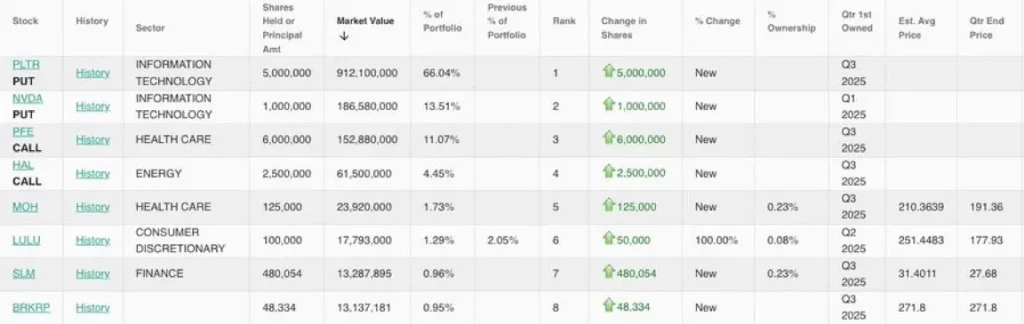
Through his investment firm Scion Asset Management, Burry recently filed a 13F report showing he purchased a significant amount of "put options" against two major AI stocks:
- Nvidia (NVDA): approximately 1 million shares, valued at over US$186.6 million
- Palantir Technologies (PLTR): approximately 5 million shares, valued at nearly US$912 million
In total, this short position amounts to over US$1.1 billion, which represents roughly 80% of his entire investment portfolio.
In other words — he is preparing for a major collapse in the AI sector.
What Is a Put Option and How Does It Work
For investors less familiar with this term, a put option is a financial contract that gives the holder the right to sell a particular stock at a specified price (strike price) within a certain time period.
Simply put:
If the stock price falls below the strike price, the put option holder profits.
If the stock price rises, the option loses value or expires worthless.
Simple example:
If Burry buys a put option on Nvidia at $120 and the stock falls to $90, he can sell at $120 through the contract — earning a substantial profit from the price difference. This is how professional investors like Burry hedge or bet against market declines without physically holding the shares.
Why Michael Burry Is Betting Against AI Stocks

The film "The Big Short" tells the story of Michael Burry's success during the 2008 subprime mortgage crisis. Read more here.
According to Burry, the market is overhyped on artificial intelligence technology.
Since 2023, stocks like Nvidia and Palantir have surged multiple times over due to the explosion of interest in generative AI, data centres, and graphics chips.
However, from a fundamental standpoint, Burry sees clear warning signs:
- Valuations are far too high compared to actual earnings.
- Stock prices are rising faster than revenue growth.
- Investors are buying based on future narratives, not current financial reality.
Burry witnessed the same phenomenon during the dot-com bubble in 2000 and the 2008 subprime crisis — both of which ended with sudden crashes.
How Nvidia and OpenAI Dominate the Global AI Economy — and Why Michael Burry Sees Major Risk Behind It
In today's investment world, the two most powerful names in the artificial intelligence (AI) sector are Nvidia and OpenAI.
These two giants are not merely technology leaders — they are the backbone of the entire "AI money ecosystem" — a complex network of companies, investments, and commercial agreements worth trillions of dollars.
Yet behind this boom, legendary investor Michael Burry — the real person behind the film The Big Short — is now warning that the AI bubble is growing and will burst.
The Financial Network of AI Giants: What's Happening
According to Bloomberg reports, the latest map of relationships between major AI players shows extraordinary flows of capital and technology.
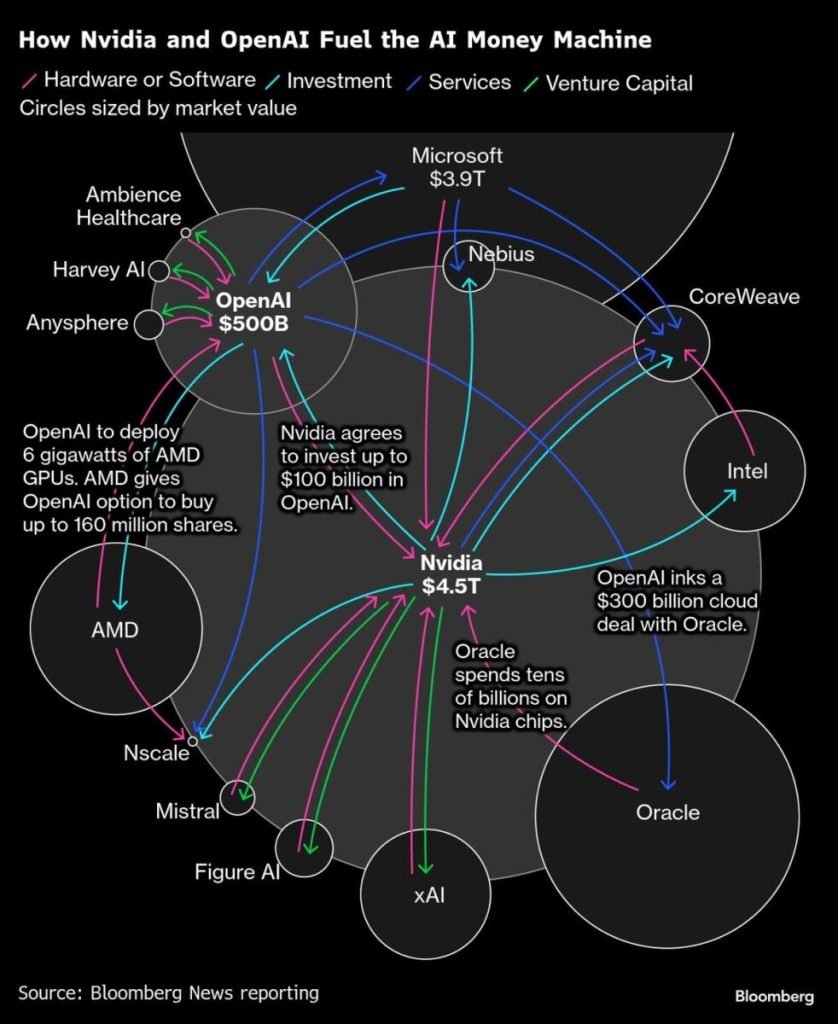
The diagram titled "How Nvidia and OpenAI Fuel the AI Money Machine" explains how power and money circulate in a closed loop:
- OpenAI is now valued at an estimated US$500 billion, backed by giants such as Microsoft (US$3.9 trillion), Nvidia (US$4.5 trillion) and Oracle (US$300 billion).
- Nvidia not only supplies GPU chips to OpenAI but has also agreed to invest up to US$100 billion into OpenAI — creating a two-way relationship between supplier and investor.
- AMD is also listed as a hardware provider, with an agreement to supply 6 gigawatts of GPUs and giving OpenAI the option to purchase up to 160 million AMD shares.
- Oracle has signed a cloud deal worth US$300 billion with OpenAI, whilst spending billions purchasing Nvidia chips for its data centre infrastructure.
- Companies like xAI (Elon Musk), Figure AI, Mistral, and Ambience Healthcare receive direct investment from OpenAI and Nvidia — making them part of the "golden chain" of the AI industry.
In summary, money circulates among the same players — Nvidia sells chips to OpenAI, OpenAI uses capital from Microsoft and Oracle, then Nvidia reinvests back into OpenAI.
This creates a closed ecosystem that looks robust from the outside, but from a financial perspective is exposed to double valuation loop risk.
How Michael Burry Could Profit from This Situation
If his prediction proves correct and AI stock prices fall in 2025, his put options will surge in value.
For example, a 20-30% decline in Nvidia or Palantir shares could deliver multiple returns on his initial investment capital.
However, if the market continues to rise, the value of these contracts could diminish or expire worthless.
This strategy is high-risk, but the profit potential is equally massive — which is why it serves as the primary weapon for macro investors like Burry to "win big whilst others are complacent".
Lessons for Malaysian Investors
Burry's warning does not mean the market will crash immediately. But it is a clear signal that the market is currently in a zone of excessive optimism.
Several important points for local investors to consider:
Put options are not Shariah-compliant investment instruments. Purchasing such instruments is akin to gambling.
Do not chase hype. AI stocks may be impressive, but true value still matters.
Review your portfolio risk. If you hold too many positions in the technology sector, consider rebalancing.
Focus on fundamentals. Companies with consistent profits and strong cash flow are more resilient when markets shake.
Learn about hedging concepts. Even if you do not use options like Burry, understanding the principles can help you manage risk.
History Always Repeats Itself in Different Ways
Burry reminds us that markets are not always rational.
A stock can be popular this year but forgotten the next. Just like the internet bubble of old, investors today trust stories more than numbers.
A New "Big Short" in the AI World?
Michael Burry is not merely speculating — he is sending a message to global investors that extreme valuations will not last forever.
Whether the market crashes or not, his move forces us to ask one critical question:
Are you investing based on facts — or simply hoping prices keep going up?
Michael Burry Knows What He Is Doing
Michael Burry does not guess. He is a "Value Investor".
He does not follow hype.
He studies data, understands fundamentals, and when others panic — he sees opportunity.
And this is the true foundation of the investment world that many do not know:
Great profits come from deep understanding, not luck.
FAQ - Michael Burry and Stock Market Crash Predictions
1. Who is Michael Burry and why are his predictions important?
Michael Burry is a renowned investor famous for his short bet during the 2008 financial crisis. His predictions are significant because they are based on deep fundamental analysis of economic data and market assets, not mere speculation.
2. What is Michael Burry's analysis for the 2025 crash prediction?
Michael Burry sees signs of imbalance in the market such as excessively high stock valuations, massive debt levels, and unsustainable monetary policies. He believes these factors could lead to a major market correction in the coming years.
3. How can Malaysian investors protect their portfolios?
Investors can protect their portfolios by identifying fairly valued stocks, focusing on companies with strong fundamentals, diversifying across different sectors, and avoiding excessive leverage. Fundamental analysis as practised by Michael Burry is key.
4. Are Michael Burry's predictions always accurate?
Burry's predictions are not always precisely timed, but his fundamental analysis approach has proven effective over the long term. Investors should use his predictions as food for thought rather than definitive decisions, and conduct their own research.
Level Up Your Investment Knowledge
Understanding market trends helps you make better investment decisions.
Investment Basics:
Learn how to analyse the market. Download our free Stock Market Basics Ebook for a complete guide.
Open a CDS Account:
Don't have an account yet? Open a CDS Trading Account now to start investing.
Read Also:
Discover the impact of OPR on the stock market.