Singapore Oil Inventories Hit Near 13-Year Low: What It Means for Bursa O&G Stocks

Singapore is the beating heart of petroleum product trading, refining and storage in Asia. So when the island's tanks begin to run down to their lowest levels in nearly 13 years, it is far more than a statistical footnote - it is a meaningful signal of just how tight regional energy supply has become. For investors holding oil and gas (O&G) stocks on Bursa Malaysia, this development deserves a closer look.
In this article we break down the actual inventory data, the reasons behind the sharp drawdown, its link to the crisis in West Asia, and what it means for the local O&G sector and your portfolio.
What Is Actually Happening in Singapore?
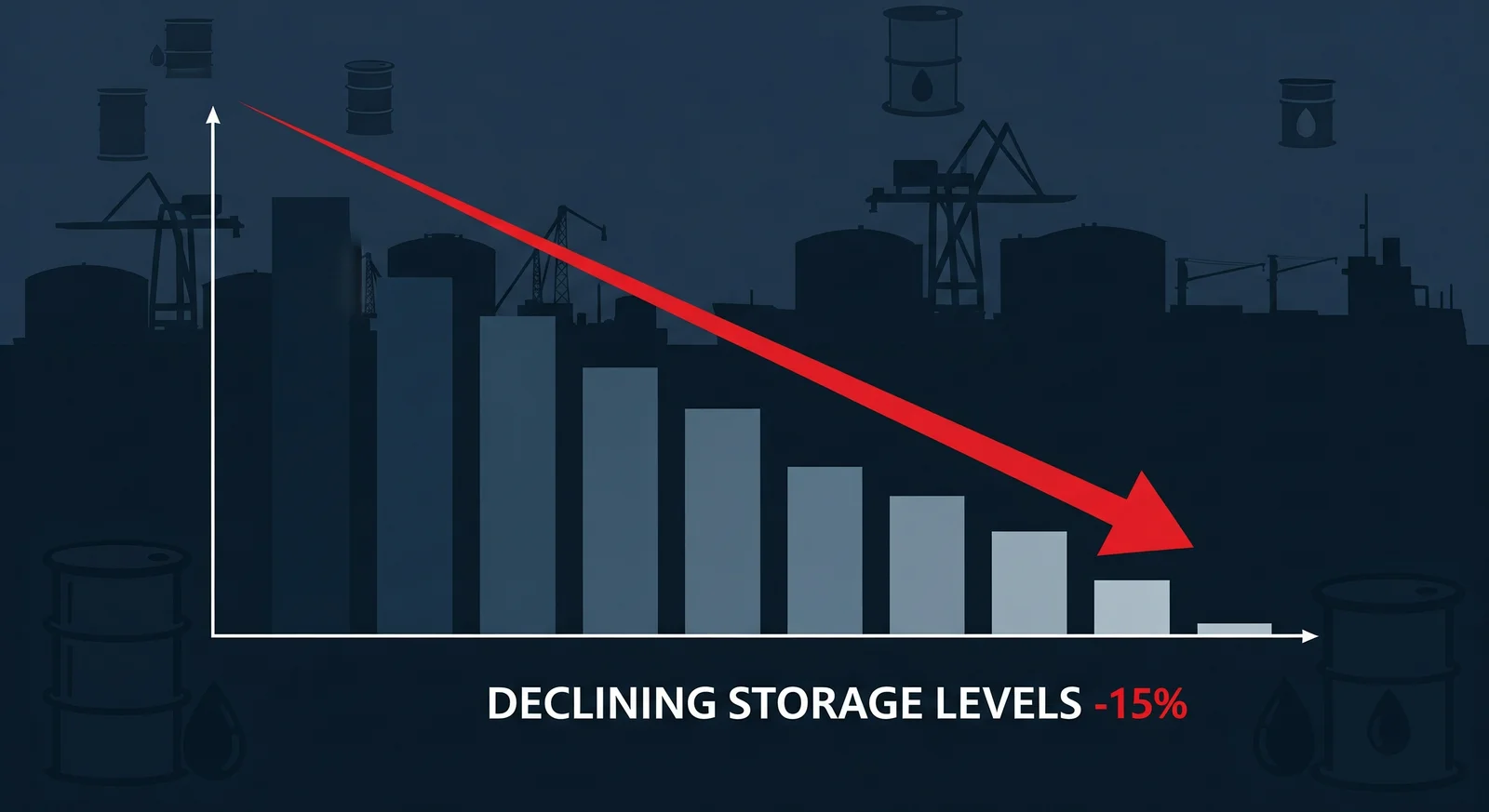
According to weekly Enterprise Singapore data reported by Reuters, total onshore oil product stocks in Singapore slumped to just 34.41 million barrels in the week to 10 June 2026. That is the lowest level since July 2013 - almost 13 years ago.
The story was also carried by The Edge Malaysia in its CEO Morning Brief dated 12 June 2026. This was not a one-day event but the result of several weeks of continuous drawdown.
To grasp how tight conditions are, let us break the inventory into its main categories:
- Residual fuel (fuel oil): Stocks fell to around 14.84 million barrels - the lowest in close to eight years. According to Engine, fuel oil stocks plunged roughly 25% in early June alone.
- Middle distillates: Comprising mostly diesel/gasoil and jet fuel/kerosene, stocks fell to around 6.93 million barrels - the lowest since early March and a third straight weekly decline.
The main culprit? Net imports of heavy distillates fell by 36.3% week-on-week, with no increase in volumes from West Asia. When inflows stall but demand keeps drawing, storage tanks naturally empty out.
Why Singapore's Inventories Matter to the World
Singapore is no ordinary small nation. It is one of the world's largest refining and storage hubs and the price benchmark for petroleum products across Asia. What happens to Singapore's storage tanks often serves as an early indicator of the energy supply-demand balance across the Asia Pacific, Malaysia included.
When inventories at a hub like this drain to the lowest in more than a decade, the message is clear: supply is tight. Energy markets move on expectations, and low inventory data typically supports firmer pricing sentiment - at least in terms of refining margins and finished-product prices.
The Real Driver: West Asia Crisis and the US-Iran War
The key force behind this drawdown is the conflict in West Asia. Since US-Iran tensions flared, a large share of oil shipments from the region has been curtailed. Oil inventories at global storage hubs - not just Singapore - have been shrinking because shipments from the region remain restricted.
The Strait of Hormuz, the narrow waterway carrying close to a fifth of the world's oil supply, sits at the centre of this crisis. We have explained the strategic importance of this chokepoint in 2026 Strait of Hormuz Crisis: How It Affects Malaysians. When flows through Hormuz are disrupted, the ripple effect reaches all the way to Singapore's storage tanks.
Yet geopolitics shifts quickly. By mid-June 2026, Brent crude actually fell more than 4% to below US$86.50 a barrel on 11 June - the lowest since early March - on growing hopes that the US and Iran might reach a peace deal. Reports cited a 14-point draft agreement that included lifting oil sanctions and a commitment from Tehran to reopen the Strait of Hormuz within 30 days.
This is the paradox investors must understand: low physical inventory signals tight supply, but oil prices can fall at the same time if the market expects tensions to ease. Prices are driven by forward expectations, not just current conditions. To understand this complex relationship, read How Global Oil Prices Affect the Stock Market & Profit Opportunities for Investors.
Implications for the O&G Sector on Bursa Malaysia
As an oil and gas exporter, Malaysia has many listed companies directly exposed to energy price movements. When global oil prices rise, upstream companies that explore and produce oil typically benefit the most.
Among the names investors watch closely:
- Hibiscus Petroleum (5199): A pure exploration-and-production (E&P) company, so its earnings are highly sensitive to oil prices. During the March 2026 price spike, its shares once surged 18.13% to RM1.89 in a single session. On 11 June 2026 it traded at around RM2.12.
- Dialog Group (7277): About 35% of its profit comes from upstream operations, alongside a tank-terminal storage business that is itself relevant to this storage theme.
- Hengyuan Refining (4324): As a refiner, its margins hinge on finished-product prices versus crude costs - tight Asian refining margins can be a positive.
Bursa Malaysia's energy sector is indeed reactive to news like this. According to The Edge Malaysia, energy stocks have rallied and outperformed the broader market when oil prices spiked. For a list of catalysts that drive this sector, see Oil and Gas Stocks Malaysia.
Beware the "Buy on Rumour, Sell on News" Volatility
While low inventory data looks bullish for O&G stocks, investors should tread carefully. Energy stocks are notorious for sharp, fast-reversing moves. When oil prices jump, the shares leap; but when sentiment shifts - say, on news of a peace deal - investors take profit quickly and prices slide back.
This is precisely why you should not chase a stock on a single headline. Singapore's low inventory is one data point, not a profit guarantee. Other factors such as OPEC+ decisions, the strength of global demand, and a geopolitical resolution can flip price direction in short order. Even the EIA in its Short-Term Energy Outlook assumes different price scenarios depending on the status of the Strait of Hormuz.
A more mature strategy is to understand a company's fundamentals - debt levels, production costs, and cash-flow generation - rather than simply reacting to commodity prices. We have discussed West Asia geopolitics and its effect on energy stocks in depth in Malaysia's Oil Industry: From the First Well in Miri to PETRONAS Operations.
Frequently Asked Questions (FAQ)
What does "Singapore oil inventories at a 13-year low" mean?
It means the total petroleum product stocks held in onshore tanks in Singapore (around 34.41 million barrels in the week to 10 June 2026) have fallen to their lowest level since July 2013. This points to tight supply as imports drop while demand continues.
Why do Singapore's oil stocks matter to Malaysia?
Singapore is the refining, storage and price-benchmark hub for petroleum products in Asia. Its inventory data often acts as an early indicator of regional energy supply conditions, which in turn influences prices and sentiment toward O&G stocks on Bursa Malaysia.
What is the main cause of this inventory drop?
The primary driver is the US-Iran conflict in West Asia, which has curtailed oil shipments from the region. Net imports of heavy distillates into Singapore fell 36.3% week-on-week, draining the storage tanks.
Does this mean oil prices will definitely rise?
Not necessarily. Low inventories signal tight supply, but oil prices are driven by forward expectations. On 11 June 2026, Brent actually fell below US$86.50 a barrel on hopes of a US-Iran peace deal, even as physical stocks stayed low.
Which Bursa O&G stocks are affected?
Upstream players such as Hibiscus Petroleum (5199) and Dialog Group (7277) are most sensitive to oil prices, while refiners like Hengyuan Refining (4324) are driven by refining margins. All of these stocks are highly volatile - do your own research before investing.
How can I start investing in O&G stocks?
You need a trading (CDS) account to trade on Bursa Malaysia. After that, study company fundamentals, understand the oil price cycle, and manage risk well, as this sector is exposed to hard-to-predict geopolitical factors.
Conclusion
Singapore's oil inventories plunging to a near 13-year low reflects how tight Asian energy supply has become amid the West Asia crisis. For Bursa Malaysia investors, it is a reminder that the O&G sector is highly exposed to geopolitics - full of opportunity, but also full of volatility risk. The key to success is not chasing headlines, but understanding fundamentals and managing risk with discipline.
If you want to seize opportunities in the energy sector or diversify your portfolio, the first step is owning a trading account that gives you market access.
Open your CDS account to start investing in stocks on Bursa Malaysia as well as foreign markets such as the US and Hong Kong.
Download our free Stock Market Basics Ebook to learn how to analyse stocks before you invest.
Further Reading
- 2026 Strait of Hormuz Crisis: Oil Prices Surge, Food Costs Rise - How It Affects Malaysians
- Oil and Gas Stocks Malaysia: Sumatec & the Rakushechnoye Story
- Brent vs WTI vs Tapis: What's the Difference Between These Three Crude Oils?
- Malaysia's Oil Industry: From the First Well in Miri to PETRONAS Upstream and Downstream Operations
- How Global Oil Prices Affect the Stock Market & Profit Opportunities for Investors