Thailand Shrimp Restrictions: New Opportunities for Local Fisheries Producers

When a government restricts an import, many see it purely as a political or trade issue. But for stock investors, a move like this usually raises one key question: who stands to gain when an import competitor is shut out? That is exactly what is unfolding after Malaysia suspended imports of five Thai shrimp species effective 1 June 2026, with the Department of Fisheries Malaysia openly describing the restriction as an opportunity for local producers to ramp up output.
This article explains what is actually happening in the Malaysia-Thailand trade dispute, the concept of import substitution that underpins this opportunity, and what this opportunity means for the local fisheries, aquaculture and food industry. We will also lay out the risks so you do not get carried away by a single headline.
What Is This Malaysia-Thailand Trade Restriction?
Effective 1 June 2026, Malaysia temporarily suspended imports of five Thai shrimp species. The five species involved are Penaeus esculentus (brown tiger prawn), Fenneropenaeus merguiensis (banana prawn), Penaeus vannamei (whiteleg shrimp), Penaeus monodon (giant tiger prawn) and Penaeus stylirostris (blue shrimp). At the same time, the Ministry of Agriculture and Food Security (KPKM) tightened sea bass imports from Thailand by requiring a Certificate of Analysis for every consignment.
According to Free Malaysia Today, the shrimp suspension is temporary and will remain in place until Thai authorities provide a complete response to Malaysia's questions on food safety and biosecurity, subject to further review. This is not a permanent ban, but a trade pressure tied to standards compliance.
Why Did This Dispute Happen?
The dispute began when Thailand first imposed restrictions on Malaysian sea bass and shrimp products, alleging foreign material in the products. Malaysia then responded with restrictions on the five Thai shrimp species, citing biosecurity and aquatic animal safety compliance. Malaysian authorities framed the move as reciprocal, mirroring the strict conditions Thailand had applied to Malaysian products.
The tension is not trivial. As reported by Sinar Harian, Thailand was reportedly upset and signalled readiness to bring the issue to the World Trade Organization (WTO) and ASEAN, viewing Malaysia's restrictions as potentially breaching international trade rules. For investors, this means the duration and outcome of the restriction remain uncertain and could shift with diplomatic negotiations.
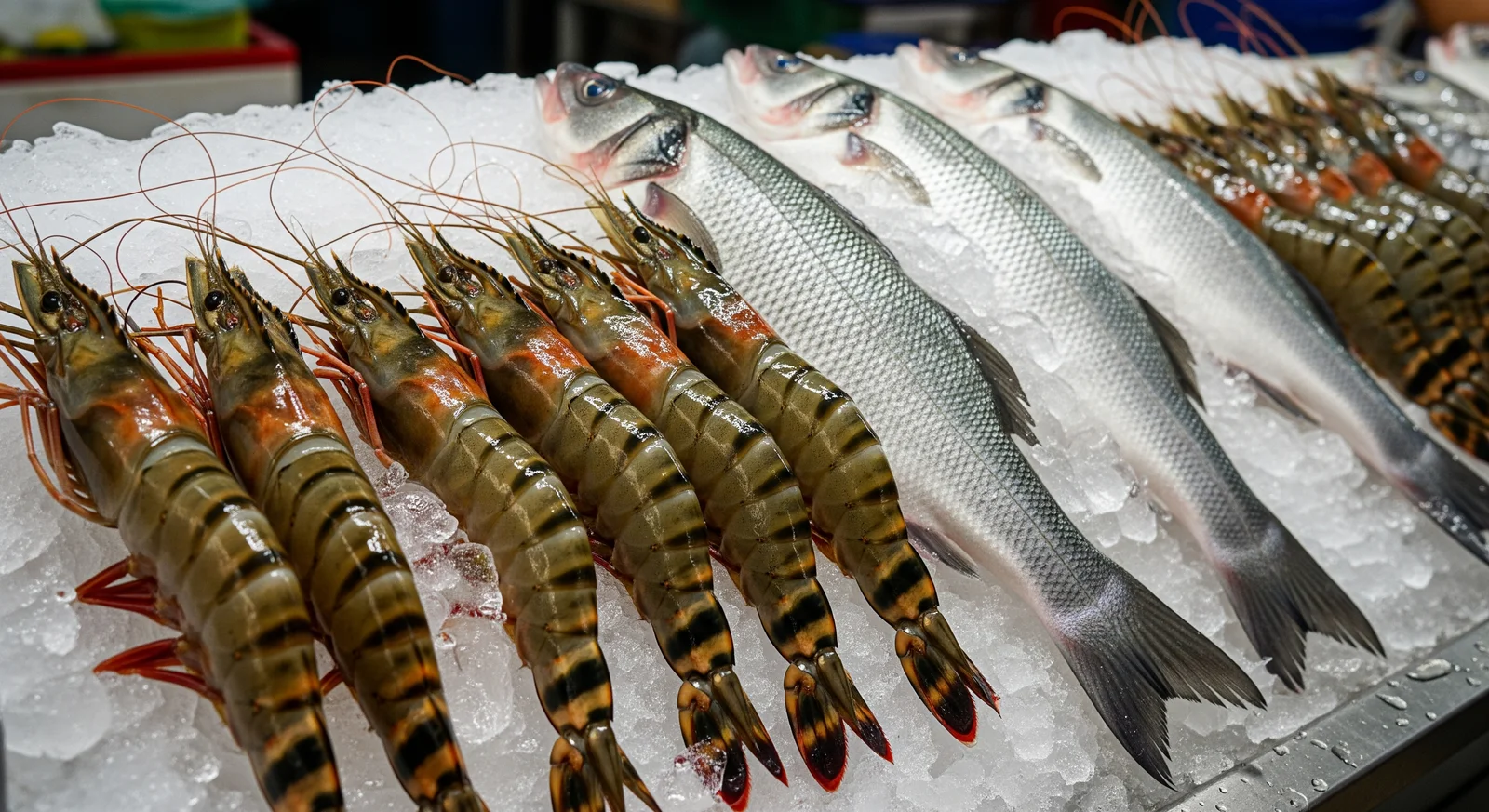
What the Fisheries Department Says: An Opportunity for Local Producers
This is the most interesting part for investors. According to The Edge and The Star, the Department of Fisheries Malaysia affirmed that the country's prawn supply remains stable and sufficient to meet domestic demand. The local aquaculture industry is said to have adequate capacity to gradually offset any supply shortfalls.
More importantly, the department sees the restriction as an opportunity for local producers to increase output, strengthen the domestic supply chain, and reduce reliance on imports. That is the crux of the story for investors: demand previously met by Thai imports is now open to local players.
On scale, Thailand ships an average of roughly 6,000 to 8,000 metric tonnes of shrimp to Malaysia annually, representing around 5 percent of Thailand's total shrimp exports. Reports also mention a target of absorbing about 400 metric tonnes of surplus local shrimp output per month to fill the gap left by Thai imports. While these figures look small relative to the whole industry, they give local producers breathing room to meet demand with reduced import competition.
Import Substitution: Why Investors Should Understand It
Import substitution is when products that were previously imported get replaced by local output. When imports are restricted or hit with barriers, domestic demand does not disappear - it simply shifts to local suppliers. For listed companies in the affected sector, this can potentially mean higher sales volume, better pricing power, or fuller utilisation of plant capacity.
But investors must carefully distinguish between a long-term structural opportunity and a temporary spike. A temporary trade restriction may only benefit one or two quarters. The more valuable opportunity is when it catalyses long-term food security policy, which is already a government priority. You can read more about this policy in our article on food security in Malaysia.
Why Does Malaysia Rely on Thai Shrimp Imports?
To understand the value of this opportunity, you need to understand why imports existed in the first place. Malaysia is a shrimp producer, but imports from Thailand fill several gaps: Thailand's more competitive production costs thanks to its large industry scale, certain cheaper species, and local food processors' need for consistent, high-volume raw material. Thailand is one of the world's largest shrimp exporters, so Thai shrimp often enters Malaysia's food chains, restaurants, and processing at competitive prices.
When these imports are restricted, the demand space does not vanish. Restaurants, processors, and retailers still need shrimp. This is what opens the door for local producers - but it also means local producers must be able to offer reasonable prices and quantities, otherwise consumer prices could rise. For investors, the question is: do local companies actually have the capacity to fill this gap, or is it just a story on paper?
A Broader Angle: Food Security and the F&B Sector
Beyond direct shrimp producers, this theme touches a bigger narrative - national food security. Heavy reliance on food imports is a structural weakness of the Malaysian economy that is often debated, especially when import costs spike due to a weak ringgit or global supply chain disruptions. Episodes like geopolitical tensions raising food prices, as discussed in our article on the Strait of Hormuz crisis and its impact on Malaysians, show how fragile a food supply that depends too much on external sources can be.
Policies that encourage local food production, whether through import restrictions or incentives, can potentially benefit listed agro-food companies over the long term. For long-term investors, this food security theme is more valuable than a temporary trade restriction. Companies investing in expanding aquaculture capacity, farming technology, and local food processing could become structural winners, not just one-day sentiment winners.
Risks and Reality: Do Not Get Carried Away by One Headline
Before you rush in, consider the following realities. First, this restriction is temporary and can be lifted at any time once Thailand provides a satisfactory response. Second, the scale of 400 metric tonnes a month or 6,000 to 8,000 tonnes a year is small relative to the annual revenue of large diversified companies whose revenue runs into billions of ringgit. The real benefit may not be material in the financial statements.
Third, there is geopolitical risk - if Thailand brings the issue to the WTO and wins, Malaysia may have to reopen the market. Fourth, these companies' share prices may have already moved up on news sentiment, meaning the "opportunity" may already be priced in by the market. Buying after a news-driven spike is often risky. Understanding whether this sales bump will last requires reading a company's financial statements carefully - see our guide on how to read an income statement.
How Investors Should Evaluate an Opportunity Like This
Trade news like this should be a starting point for research, not an automatic buy signal. Here is a simple framework:
- Size of exposure: What percentage of the company's revenue actually comes from shrimp or seafood? A pure-play aquaculture producer is more sensitive than a large conglomerate where shrimp is only a small part of the business.
- Capacity and capability: Does the company have the farm or plant capacity to genuinely ramp up output, or is it already running at maximum?
- Current valuation: Is the stock already expensive after the news spike? Compare valuation ratios as explained in our article on PE ratio by sector.
- Theme durability: Is this a temporary opportunity (trade restriction) or structural (long-term food security policy)?
Frequently Asked Questions (FAQ)
How long will the Thai shrimp import restriction last?
The restriction is temporary and will remain until Thai authorities provide a complete response to Malaysia's questions on food safety and biosecurity, subject to further review. No fixed end date has been announced.
Does this mean fisheries stocks will definitely rise?
No. The restriction opens an import substitution opportunity, but whether it translates into actual profit depends on a company's capacity, the size of its shrimp exposure, and the duration of the restriction. Share prices may also already reflect news sentiment.
Which company is most sensitive to this theme?
Pure-play shrimp aquaculture producers are potentially the most sensitive because much of their business centres on shrimp. Large diversified conglomerates have exposure but the impact may be smaller relative to the whole business.
What is import substitution?
Import substitution is the replacement of imported products with local output. When imports are restricted, domestic demand shifts to local producers, potentially boosting their sales.
Will shrimp supply in Malaysia be affected?
According to the Department of Fisheries Malaysia, local shrimp supply remains stable and sufficient, and the local aquaculture industry has the capacity to gradually offset any shortfalls.
What is the biggest risk of this investment theme?
Key risks include the temporary nature of the restriction, its small scale relative to large companies' revenue, the possibility of Thailand winning at the WTO, and share prices that may have already risen on sentiment.
Where can I get official information on Malaysia's fisheries sector?
The official portal of the Department of Fisheries Malaysia (DOF) provides official data and statements on the country's fisheries and aquaculture industry.
Conclusion
The Thai shrimp import restriction is a classic example of how a single trade headline can open a thematic investment opportunity. The Department of Fisheries Malaysia itself sees it as room for local producers, and listed companies in the fisheries, aquaculture and food sector sit in a position that could benefit. Still, this opportunity must be assessed with a cool head - the scale of the restriction is small, its nature temporary, and the market may have already reacted.
If you want to start investing in Bursa Malaysia stocks and explore sectors like fisheries and food, the first step is opening a trading account.
Open your CDS account to start investing in Bursa Malaysia as well as foreign stocks such as the United States and Hong Kong markets.
Download the free Stock Investing Basics Ebook to understand the fundamentals of company analysis before you make any investment decision.
Further Reading
- Food Security in Malaysia: What the Government Does, What Individuals Can Do
- The Strait of Hormuz Crisis: Soaring Oil Prices, Costlier Food - What It Means for Malaysians
- How to Read an Income Statement: Understanding Revenue, Net Profit & a Company's Cash Reality
- PE Ratio: How to Tell if a Stock Is Cheap or Expensive by Sector