Malaysia's Customs Revenue Jumps 25% to RM23.6 Billion in Q1 2026: What It Means for Investors

The Royal Malaysian Customs Department (RMCD/JKDM) has just reported revenue collection of RM23.60 billion in the first quarter of 2026 (Q1 2026) - a 25% jump from the RM18.82 billion collected in the same period last year. This is more than a dry fiscal headline for bureaucrats; it offers important signals about the strength of the domestic economy, the health of government finances, and several Bursa Malaysia sectors that investors should be watching.
In this article, we break down where this revenue comes from, why it surged, and most importantly - what it means for you as a Bursa investor.
Quick Answer: What Happened?
JKDM collected RM23.60 billion in the first three months of 2026, up RM4.78 billion or 25% versus Q1 2025. According to Customs Director-General Datuk Amran Ahmad, the increase was driven by several strategic initiatives, including the Trace and Recovery Operation (TRO) 3.0, which enforced tax compliance more strictly. For investors, higher collection reflects trading and consumption activity that remains robust, while also strengthening the government's fiscal position.
Where Does Customs Revenue Come From?
JKDM is one of the country's two main revenue-collecting agencies (the other being the Inland Revenue Board, which collects income tax). Customs revenue comes from several key sources:
- Sales and Service Tax (SST) - sales tax on manufactured and imported goods, plus service tax on selected services. This has been the largest contributor to Customs collection since SST replaced GST in 2018.
- Import and export duties - imposed on goods entering and leaving Malaysia according to the tariff schedule.
- Excise duties - levied on selected goods such as vehicles, cigarettes, liquor and sugary drinks.
- Departure levy and tourism tax - charged on passengers leaving the country by air and on foreign hotel guests.
One important note: the official Q1 2026 report focuses on the total figure of RM23.60 billion and does not break the number down by individual tax category. A detailed breakdown by source (how much came from SST, how much from import duties, and so on) has not been confirmed in the official statements released so far. That said, based on prior-year trends, SST has consistently been the backbone of Customs collection.
For context, throughout 2025 JKDM recorded its highest-ever collection of RM76.18 billion, beating the original projection of RM67.25 billion by RM8.93 billion. This was up from RM65.57 billion in 2024. That strong momentum is now carrying into 2026.
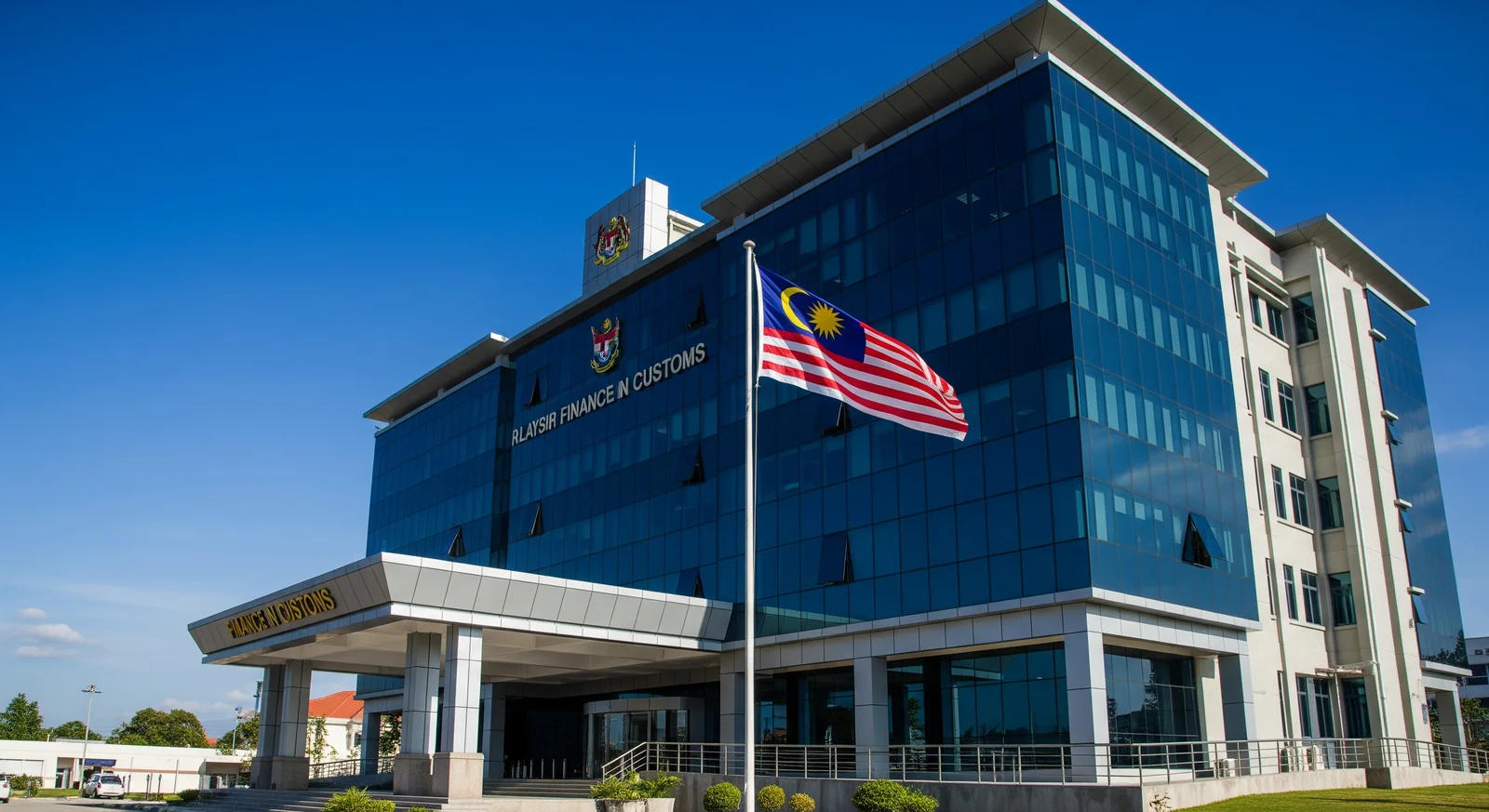
The Customs Collection Trend: Five Straight Years of Growth
To appreciate just how significant the Q1 2026 figure is, we need to look at the long-term trajectory. JKDM's revenue collection has risen consistently over several years:
- 2022: RM52.93 billion
- 2023: RM55.17 billion
- 2024: RM65.57 billion
- 2025: RM76.18 billion (record high)
- Q1 2026: RM23.60 billion (up 25% year-on-year)
This upward trend is no accident. It reflects a combination of a growing economy, the digitalisation of the tax system, and increasingly sophisticated enforcement. Interestingly, JKDM is also becoming more efficient at collecting - the cost to collect every RM100 of revenue is now reported at around RM2.13, a sign of good cost management for a government agency. For investors, this kind of fiscal efficiency matters because it shows the government can raise revenue without excessive administrative overhead.
If this momentum continues at the same pace throughout the year, full-year 2026 collection could comfortably exceed the RM76 billion recorded in 2025 - in line with JKDM's target of reaching RM100 billion by 2028.
Why Did Collection Surge 25%?
A jump of RM4.78 billion in a single quarter is a substantial increase. Three main factors explain this:
1. Stricter Enforcement (TRO Operations)
The Trace and Recovery Operation (TRO) 3.0, implemented throughout 2025, had a positive impact on tax compliance through more aggressive enforcement. As a result, investigation papers were opened against 225 companies, 52 were fined, and 17 more are facing court action for failing to comply with tax regulations.
To maintain momentum, JKDM has now launched TRO 4.0 Series 1/2026, targeting 1,425 sales tax, service tax and tourism tax registrants who submitted tax returns but did not make payments. This nationwide operation runs from 15 to 28 June 2026. In other words, a large part of the revenue increase comes not from new taxes, but from collecting existing taxes that should already have been paid.
2. SST Scope Expansion
Effective 1 July 2025, the government significantly expanded the scope of SST. According to ASEAN Briefing, newly taxable services include:
- Financial services (including selected banking and insurance) at an 8% rate
- Rental and leasing services at an 8% rate
- Construction services at a 6% rate
- Private education services above RM60,000 per student per year at a 6% rate
- Certain beauty services exceeding the RM500,000 annual threshold
This expansion increased the number of businesses required to register and collect SST, directly widening the tax net. Since the expansion took effect in mid-2025, Q1 2026 is among the first periods to show its full effect compared with the year before the expansion.
3. Robust Trade and Consumption Activity
Customs revenue is closely tied to real economic activity. When imports rise, import duties and SST on imported goods go up. When people spend, service tax and excise duties increase. The Malaysian economy grew 5.4% in Q1 2026, with total trade hitting record levels. This brisk activity naturally generates more indirect tax revenue.
What Does It Mean for the Economy & Government Finances?
Higher tax revenue gives the government more fiscal room. This matters because Malaysia is in the midst of fiscal consolidation - reducing the budget deficit without sharply cutting development spending.
Strong collection means the government relies less on borrowing to finance spending, which helps keep the debt-to-GDP ratio in check. It also sends a positive signal to international credit rating agencies. In a world where sovereign ratings can be downgraded when fiscal discipline weakens - as recently happened to Indonesia - Malaysia's ability to collect revenue efficiently is an advantage.
JKDM itself is confident its collection can reach RM100 billion by 2028. If achieved, this would further strengthen the government's revenue base to fund subsidies, cash aid, and infrastructure projects under the Madani Economy framework.
The Angle for Bursa Investors: 3 Things You Need to Know
This is the part most relevant to you. How does this news translate into investment decisions?
1. Sectors Affected by the SST Scope
The SST expansion directly touches several sectors. Construction (now subject to a 6% service tax) and financial services (8%) bear additional compliance costs. For listed construction companies, this tax can pressure margins if it cannot be passed on to customers. The consumer sector also bears watching - if SST raises the prices of goods and services, household purchasing power could be affected, especially for discretionary items.
There is an upside, though: stricter enforcement creates a more level playing field. Tax-compliant listed companies no longer compete against tax-evading traders. In theory, this benefits large, formal players.
2. Fiscal Sentiment and the Ringgit
A healthier fiscal position usually supports the Ringgit and lowers the country's risk premium. A stable or strengthening Ringgit affects different sectors differently - positive for importers and companies with USD-denominated debt, but potentially pressuring exporter margins. Investors should map their portfolio's exposure to currency movements. Strong fiscal sentiment also tends to attract foreign fund flows into the local equity market.
3. A Gauge of Domestic Consumption Health
Rising indirect tax collection is a proxy for consumption and trade activity. As long as collection keeps growing organically (not solely because of enforcement), it signals that domestic demand remains strong. That is good news for consumer, retail, automotive and banking sectors that are sensitive to the economic cycle. Long-term investors can use macro data like this to validate investment theses in stocks tied to the domestic economy. To understand how taxes like SST differ from GST and their economic impact, read our GST vs SST comparison.
What Investors Should Watch Next
While this news is broadly positive, savvy investors will look beyond the headline. Here are a few things to watch in the coming quarters:
- Source of the increase - organic or enforcement? If the rise comes mainly from enforcement operations like TRO, the effect may not repeat every quarter. Increases driven by real consumption and trade are more sustainable and more meaningful as economic indicators.
- SST impact on company margins. Monitor quarterly results of construction, financial and consumer companies to see whether the new service taxes squeeze margins or are successfully passed on to customers.
- Cost-of-living pressure. If SST broadly raises prices of goods and services, consumer purchasing power could weaken - which could hurt retail and discretionary-goods sales.
- Government fiscal discipline. Higher revenue only matters if it is used to reduce the deficit, not to inflate spending. Consistent fiscal consolidation supports the credit rating and long-term market sentiment.
For investors focused on domestic stocks, macro data like Customs collection is one piece of a larger puzzle. Combine it with fundamental analysis of individual companies to make sounder decisions.
Frequently Asked Questions (FAQ)
How much did Customs collect in Q1 2026?
JKDM collected RM23.60 billion in Q1 2026, up 25% or RM4.78 billion from RM18.82 billion in the same period of 2025.
What is the main reason for the rise in Customs revenue?
Three main factors: stricter tax compliance enforcement through TRO 3.0 and TRO 4.0 operations, the expansion of SST scope from 1 July 2025, and robust trade and domestic consumption activity.
What is the TRO (Trace and Recovery) operation?
TRO is a JKDM enforcement operation to trace and collect taxes that should have been paid but remain outstanding. TRO 4.0 Series 1/2026 targets 1,425 tax registrants who submitted returns but did not make payment.
Was the revenue broken down by tax type?
No. The official Q1 2026 report only states the total of RM23.60 billion and does not break the figure down by SST, import duties, or excise duties separately. A detailed breakdown cannot be confirmed at this stage.
How does Customs revenue affect Bursa Malaysia investors?
It signals the strength of domestic consumption, affects sectors hit by SST (construction, finance, consumer), and strengthens the government's fiscal position, which supports market sentiment and the Ringgit.
What was the full-year 2025 Customs collection?
JKDM recorded its highest-ever collection of RM76.18 billion in 2025, beating its RM67.25 billion projection and up from RM65.57 billion in 2024.
Conclusion
The 25% surge in Customs revenue to RM23.60 billion in Q1 2026 carries layered meaning - it reflects an active economy, more efficient tax enforcement, and an increasingly solid government fiscal position. For Bursa investors, it is not just a headline, but an indicator of domestic consumption health and the sectors worth monitoring.
Understanding macro data like this is part of becoming a smarter, more informed investor.
If you want to take action and start investing in companies that benefit from a growing economy, the first step is owning an account to trade on the stock market.
Open your CDS account today to start investing not only on Bursa Malaysia, but also in foreign stocks such as the United States and Hong Kong.
Before that, download our free Stock Market Basics Ebook to understand the fundamentals of stock investing before you begin.
Further Reading
- GST vs SST: Which Is Better for Malaysia?
- Bursa Malaysia Prioritises Quality Over Quantity: RM28 Billion IPO Focus for 2026
- How China Is Dominating Global Trade After Trump's Tariffs
- Moody's Downgrades Indonesia's Credit Outlook to Negative
- US National Debt Hits $36.5 Trillion: What's the Impact on the Global Economy?