Trump Always Chickens Out (TACO): From Tariff Wars to Iran, the Pattern Every Investor Must Know

On March 23, 2026, a Truth Social post by President Donald Trump sent shockwaves through global markets. Trump claimed the US and Iran were having "very good and productive conversations" toward a "complete and total resolution" of hostilities in the Middle East. Within minutes, the US stock market surged by USD 1.7 trillion while crude oil prices plunged by 15%.
But the story didn't end there. Hours later, Iranian state media denied any negotiations had taken place. Iran's parliament speaker labeled Trump's statement as "fake news" designed to manipulate financial and oil markets. Half of the market gains promptly vanished.
For investors who had been watching Trump's behavioral patterns, this was no surprise. It was yet another classic episode of what's known as TACO.
What Is TACO - Trump Always Chickens Out?
TACO stands for "Trump Always Chickens Out" - referring to a recurring pattern where Trump announces major threats (tariffs, sanctions, military action), markets drop due to uncertainty, then Trump backs down or softens his stance, and markets bounce back.
This pattern has been so consistent that it has become a standalone investment strategy on Wall Street known as the "TACO trade".
Who Coined the Term TACO?
The term TACO was first used by Robert Armstrong, a Financial Times columnist, in his opinion column dated May 2, 2025. Armstrong wrote about tariffs and their impact on US markets, introducing what he called "the TACO theory: Trump Always Chickens Out".
The term went viral after Trump himself was asked about it by reporters and called it a "nasty question". Trump's reaction only made the term more popular among investors and market analysts.
TACO Timeline: From Liberation Day to the Supreme Court
To understand TACO, we need to look at the full timeline of Trump's tariff war:
Liberation Day - April 2, 2025
Trump announced sweeping tariffs he dubbed "Liberation Day." Through Executive Order 14257, he declared a national emergency over the US trade deficit and invoked the International Emergency Economic Powers Act (IEEPA) to authorize comprehensive tariffs.
Base tariff rates were raised to 10% for nearly all countries, with higher rates for major trading partners - including up to 145% on China. Malaysia was also hit with a 24% tariff.
The First Retreat - April to May 2025
Within weeks of Liberation Day, Trump began backing down. The highest tariffs were suspended for 90 days for most countries. Rates for several nations were reduced through "negotiations." This was the first major TACO - fierce threats followed by softening.
US Supreme Court Strikes Down Tariffs - February 20, 2026
In the landmark case Learning Resources Inc. v. Trump, the US Supreme Court ruled 6-3 that "IEEPA does not authorize the President to impose tariffs." Chief Justice John Roberts wrote the majority opinion, joined by Justices Sotomayor, Kagan, Gorsuch, Barrett, and Jackson.
The US government estimated it had collected USD 166 billion from over 330,000 businesses through IEEPA tariffs now declared unconstitutional. Refund processing is underway.
The Quick Pivot - Section 122
Within hours of the court's decision, Trump signed a new executive order imposing a 10% global tariff under Section 122 of the Trade Act of 1974 - valid for 150 days until July 24, 2026.
This demonstrated the TACO pattern in a different form: not just retreating, but adapting and finding alternative paths.
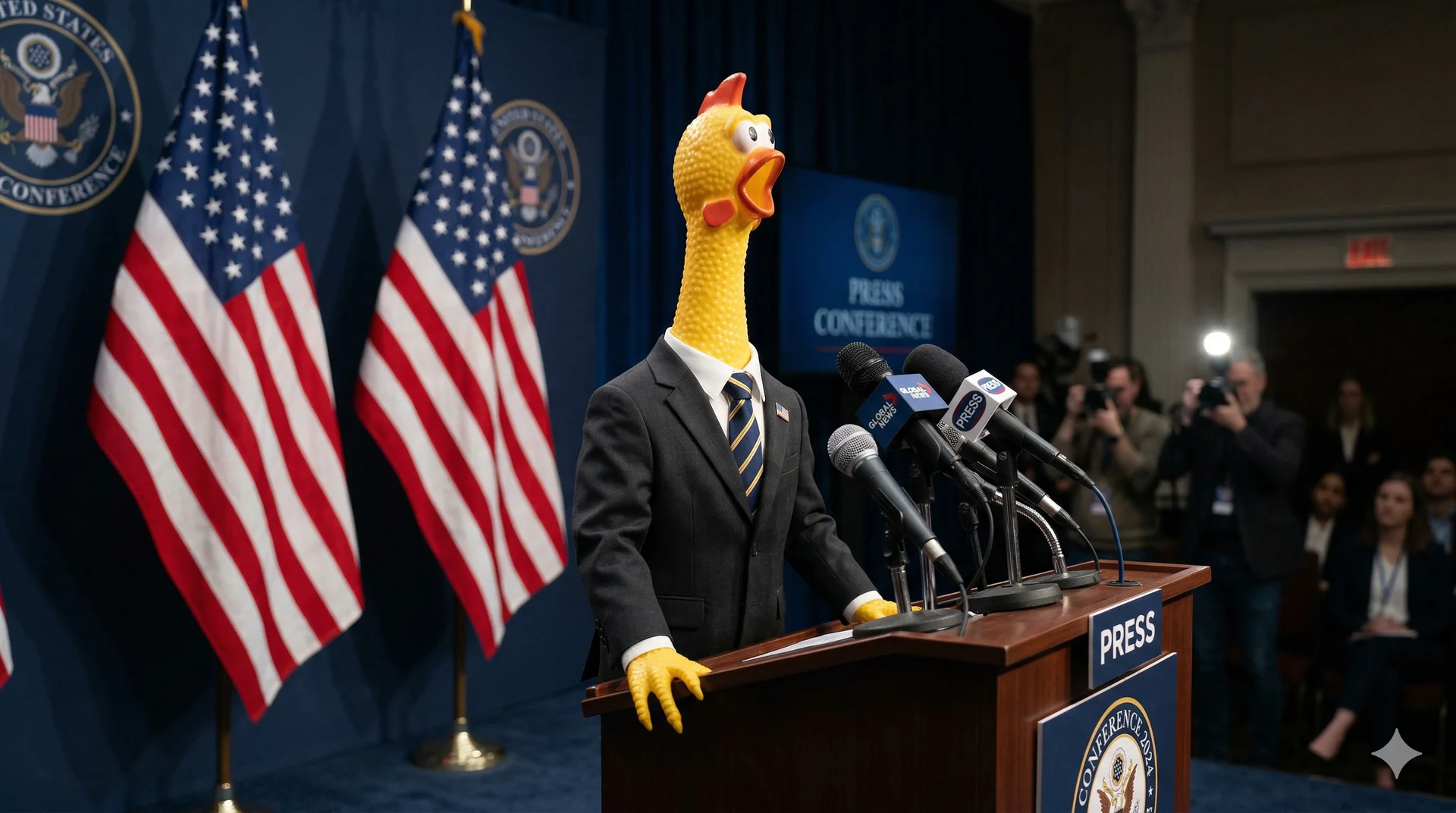
How the TACO Trade Works
The TACO trade is a strategy investors use to profit from Trump's recurring pattern. The mechanism is straightforward:
Step 1 - Threat: Trump announces new tariffs or aggressive action. Markets fall due to uncertainty.
Step 2 - Buy: Investors who understand the TACO pattern buy stocks at depressed prices after the drop.
Step 3 - Retreat: Trump backs down, delays, or softens threats within days or weeks.
Step 4 - Sell: Markets bounce back. Investors sell at higher prices for profit.
This pattern became so predictable that market reactions to Trump's threats diminished over time. According to CNBC, when Trump made new tariff announcements in February 2026, European markets barely dipped compared to the massive selloff during the original Liberation Day - investors had become accustomed to the pattern.
The Latest TACO: The Iran Case, March 2026
If TACO started with trade tariffs, it has now spread to the geopolitical arena. And the Iran case reveals the limits of this strategy.
What Happened
On March 23, 2026, Trump claimed via Truth Social that the US and Iran were negotiating toward a resolution. Markets surged USD 1.7 trillion and crude oil prices dropped around USD 17 (15%).
But Iran quickly denied everything. Iranian state media called Trump's statement an attempt to manipulate markets. Within hours, half the market gains disappeared.
Why Iran Is Different
The TACO trade works because it depends on "rational counterparties." In the tariff wars, China, the EU, and Canada were rational economic actors who needed stability and were willing to take face-saving deals.
Iran is a different story. According to Fortune, Iran is not a rational economic actor in this context. The Strait of Hormuz remains closed, and every day it stays shut, the world loses over 15 million barrels of oil from inventories.
As CNN put it: "It takes two to TACO" - both sides need to be willing to compromise for this pattern to work.
Risks of the TACO Strategy for Investors
While the TACO trade may seem straightforward, it carries several serious risks:
1. Not All Threats Are Bluffs
Sometimes Trump actually follows through. The 145% tariff on China was no bluff - it was implemented and remained in place for months before eventually being reduced. Investors who bought the dip expecting a quick TACO suffered significant losses.
2. Cumulative Effects Are Real
Even if individual tariffs get suspended, the cumulative impact of persistent uncertainty takes a real toll on the economy. Supply chains have been reconfigured, production costs have risen, and inflationary pressures have mounted.
3. Markets May Stop Believing
Each time TACO occurs, investors grow more skeptical. But this means when a genuine threat arrives, markets may not react sufficiently - creating risk of a sharper sudden decline.
4. Geopolitical TACO Is More Dangerous
The shift of TACO from trade to geopolitics (Iran, Greenland) carries far higher risks. Military conflicts cannot be TACO'd as easily as trade tariffs.
Impact on Malaysian Investors
Malaysian investors are not immune to TACO effects. Here are the key implications:
Local Stock Market
Every time Trump makes tariff threats, export-related stocks on Bursa Malaysia are affected. The semiconductor, glove, and manufacturing sectors that depend on the US market see significant volatility.
Oil Prices and the Ringgit
Malaysia as a net oil producer is impacted by crude oil price swings from geopolitical TACOs (especially the Iran crisis). The Malaysian ringgit is also influenced by US dollar strength fluctuating with TACO patterns.
New Tariff Investigations
The US has launched investigations into Malaysia regarding excess capacity in the electronics and steel sectors. This means TACO is not just a global story but could directly impact the Malaysian economy.
What Investors Can Do
- Don't panic sell every time Trump makes an announcement - wait 24-48 hours to see if it's a TACO or a real threat
- Diversify your portfolio - don't over-rely on a single market or sector
- Monitor official sources - distinguish between Trump's social media posts and actual policy actions
- Keep cash reserves - market drops from Trump's threats can be buying opportunities if you're prepared
Frequently Asked Questions (FAQ)
What does TACO mean in investing?
TACO stands for "Trump Always Chickens Out" - referring to a pattern where President Trump announces major threats (tariffs, military action), causing markets to drop, then backs down or softens his position, and markets rebound. Investors who understand this pattern can profit through a buy-the-dip strategy.
Who coined the term TACO?
The term was coined by Robert Armstrong, a Financial Times columnist, in his opinion column dated May 2, 2025. It went viral after Trump was asked about it and called it a "nasty question."
Is the TACO trade safe?
Not necessarily. While the pattern has repeated several times, there is always risk that Trump actually follows through on his threats. Investors who rely entirely on the TACO trade without risk management can suffer significant losses.
How does TACO affect the Malaysian market?
TACO impacts Malaysia through several channels: commodity price volatility (especially oil), ringgit fluctuations against the US dollar, and direct tariff effects on Malaysian export sectors like electronics and manufacturing.
What is the difference between tariff TACO and geopolitical TACO?
Tariff TACO involves trade threats that can be negotiated with rational trading partners. Geopolitical TACO (like the Iran case) is more dangerous because it involves actors who may not be willing to compromise, making the retreat-and-advance pattern far less predictable.
Why did the US Supreme Court strike down Trump's tariffs?
On February 20, 2026, the US Supreme Court ruled in Learning Resources Inc. v. Trump that IEEPA does not authorize the president to impose tariffs. The 6-3 decision means USD 166 billion in collected tariffs must be refunded.
Is TACO still relevant after the Supreme Court ruling?
Yes. Although the court struck down IEEPA tariffs, Trump quickly pivoted to Section 122 to impose a 10% global tariff. The TACO pattern remains active - only the mechanism has changed.
What is the best investment strategy during the TACO era?
The best strategy is: don't react emotionally to Trump's announcements, wait 24-48 hours to assess the real situation, diversify your portfolio across geographies and sectors, and keep cash ready for buying opportunities during dips.
Conclusion
TACO - Trump Always Chickens Out - is more than just an internet meme. It is a real geopolitical and economic pattern with serious implications for investors worldwide, including Malaysia. From Liberation Day tariffs to the Iran crisis, this pattern has repeatedly shaped market movements worth trillions of dollars.
However, investors must remain cautious. TACO is not a guarantee - it is an observation about past patterns that may not repeat in the future. Sound investment decisions require thorough analysis, not just betting that Trump will back down.
If you want to start investing in the stock market and understand how global events like TACO affect your investments, the first step is opening a trading account.
Open a CDS trading account to start investing on Bursa Malaysia as well as international stocks including US and Hong Kong markets - so you can capitalize on global market opportunities.
Download our free Stock Market Basics Ebook to understand fundamental investing concepts before you begin.
Further Reading
- US Supreme Court Strikes Down Trump Tariffs - Implications for Malaysia
- Iran War 2026: How It Changes the Malaysian Investment Landscape
- China's Strategy to Dominate Global Trade After Trump Tariffs
- US Investigates Malaysia Over Electronics & Steel Excess Capacity
- Dow Jones Hits 50,000: The Reality of AI Boom and Trump Tariff Effects